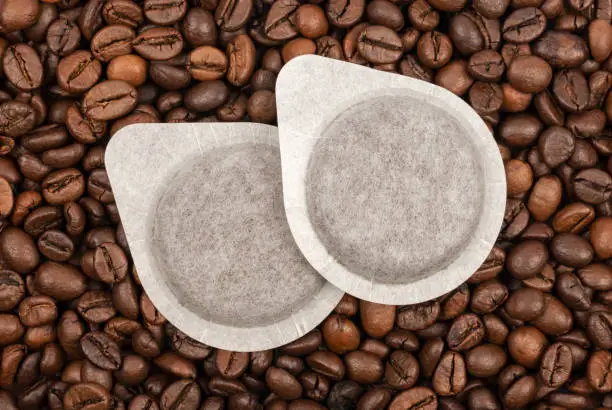

The Demand for Freshness in Single-Serve Coffee
The single-serve coffee market has evolved rapidly, demanding higher standards from independent roasters. For specialty coffee brands, transitioning to K-Cup or Nespresso-compatible capsules introduces a critical vulnerability: oxidation.
When ground coffee interacts with oxygen, its delicate volatile compounds dissipate rapidly, destroying the nuanced tasting notes. To maintain brand integrity, manufacturers must adopt industrial-grade nitrogen flushing to halt this degradation process.
Preserving the intricate flavor profiles of freshly roasted coffee presents a significant challenge when scaling pod production. Exposure to oxygen rapidly degrades coffee quality, making advanced sealing technology an absolute operational essential.
For instance, commercial-grade systems from SANEU integrate rotary nitrogen injection systems capable of achieving nitrogen levels up to 99.9%. This effectively displaces oxygen, locking in the aroma for months without compromising the specialty coffee experience.
Overcoming Production Bottlenecks
Transitioning from Manual to Automated Packaging
Scaling a B2B or B2C coffee enterprise inevitably strains early-stage manufacturing infrastructure. While semi-automatic machines serve startup phases, they quickly become bottlenecks as order volumes and distribution channels expand.
Relying on manual or semi-automated packaging introduces critical inefficiencies that erode profit margins. Operators face escalating direct labor costs, fluctuating throughput, and a heightened risk of human error during long production shifts.
Furthermore, manual intervention directly impacts seal consistency, leading to a higher defect rate. To maintain profitability and quality, upgrading to fully automated assembly lines is a non-negotiable step for mid-market roasters.
- Labor Efficiency: Reallocates workforce from repetitive packing to quality control.
- Seal Integrity: Applies uniform thermal and pneumatic pressure to every pod.
- Defect Reduction: Minimizes material waste caused by human misalignment.
Ensuring Precision and Consistency
In commercial coffee production, fractional discrepancies in pod weight compound into massive financial losses over time. Microgram precision weighing is not just about flavor consistency; it is a fundamental cost-control metric.
If a machine overfills capsules by even 0.5 grams, producing thousands of pods per hour will rapidly drain raw material inventory. Automated dosing systems utilize servo-driven auger fillers to guarantee exact weights.
Conversely, under-filling leads to weak extractions, directly damaging customer retention. High-end automated lines integrate real-time weight checking and automatic rejection mechanisms to ensure perfect yield ratios.
Evaluating High-Efficiency Production Systems
When auditing new machinery, production managers must prioritize Parts Per Minute (PPM) capabilities alongside format flexibility. High-efficiency automated lines fundamentally alter a brand’s ability to fulfill bulk wholesale orders.
Multi-lane systems or rotary packaging configurations offer varying advantages depending on facility footprint. While rotary machines are compact and highly efficient for single formats, multi-lane linear systems excel in high-volume, continuous throughput.
Modern production lines must also offer rapid tooling changeovers. The ability to seamlessly switch between Nespresso, Keurig, or Lavazza formats on a single line maximizes capital expenditure (CapEx) efficiency.
- Throughput Scalability: Systems capable of scaling from 50 to 200+ PPM.
- Format Compatibility: Modular tooling for quick capsule style changeovers.
- Operational Footprint: Maximizing output per square foot of warehouse space.
The Shift Towards Sustainable Packaging
The coffee industry’s environmental footprint has prompted a major shift in material sourcing. With consumers increasingly demanding eco-friendly alternatives, forward-thinking brands are moving away from traditional single-use plastics.
Modern production equipment must therefore be equipped to handle compostable and biodegradable materials. These sustainable polymers often require precise thermal calibration during the sealing process to prevent melting or weak bonds.
According to recent reports on global packaging trends by major business publications like Forbes, the transition to compostable and biodegradable materials is no longer just a niche consumer preference, but a regulatory inevitability across major global markets.
Adapting to these materials allows brands to align with ESG (Environmental, Social, and Governance) goals. Upgrading machinery to seal plant-based capsules ensures your operations remain compliant with future packaging legislation.
Key Takeaways
| Area | Key Takeaway | Impact/Data |
| Quality Control | Mandate nitrogen flushing | Hits 99.9% N2 level |
| Cost Management | Automate microgram dosing | Stops 0.5g overfill waste |
| Production Scale | Deploy multi-format lines | Scales to 200+ PPM |
| ESG Compliance | Adapt thermal sealers | Meets future packaging laws |
Conclusion: Future-Proofing Your Coffee Operations
Investing in advanced packaging infrastructure is the most reliable strategy for scaling a specialty coffee brand. The combination of nitrogen flushing technology and automated precision guarantees that the product reaching the consumer tastes exactly as the roaster intended.
By eliminating manual bottlenecks and embracing sustainable materials, brands position themselves for resilient long-term growth. The initial capital investment in automation is quickly offset by dramatic reductions in labor, waste, and defect rates.
Ultimately, robust production systems are not just operational upgrades; they are strategic assets. They deliver a measurable Return on Investment (ROI), empowering coffee businesses to expand their market share with unwavering confidence.