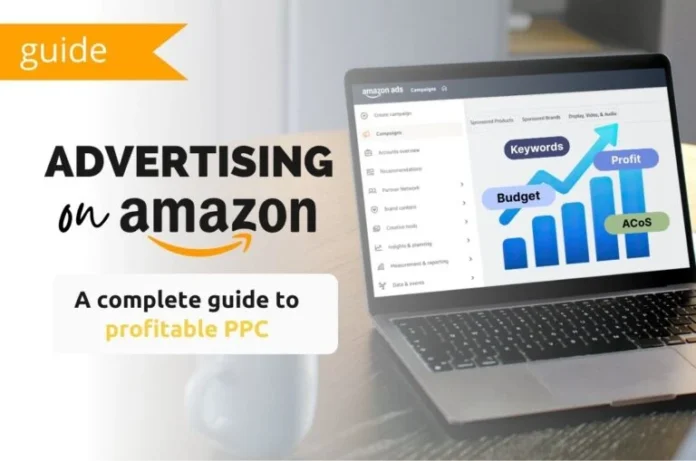

Running your own Amazon PPC campaigns feels like it should save money. There’s no agency fee, no monthly retainer, no middleman standing between you and your ad account — just you, Seller Central, and a few YouTube tutorials. But for most sellers, DIY Amazon advertising doesn’t actually save money. It just moves the cost somewhere less visible: wasted ad spend, missed sales, slower growth, and hours that could have gone into building the business itself.
Amazon Ads looks simple on the surface — set a budget, pick some keywords, launch a campaign. That simplicity is exactly what makes it dangerous. The platform is easy to get started on and genuinely difficult to run profitably, and the gap between those two things is where the hidden costs live.
Here’s where they really add up.
1. Wasted Ad Spend From Broad, Untested Targeting
Auto campaigns and broad match keywords are the fastest way to get a campaign live — and often the fastest way to burn through budget on irrelevant search terms that were never going to convert. Amazon’s algorithm will happily spend a seller’s entire daily budget matching a product to loosely related searches unless someone is actively watching, trimming, and refining.
Without consistent negative keyword management and search term report analysis, a meaningful share of ad spend typically goes toward clicks that never had a real chance of converting. On thin margins, that inefficiency alone can be the difference between a profitable campaign and a break-even one.
2. Time That Doesn’t Show Up on a Spreadsheet
Every hour spent digging through search term reports, adjusting bids, and testing campaign structures is an hour not spent on product development, sourcing, packaging, customer service, or the dozen other things a growing Amazon business needs. For founders wearing every hat, DIY advertising has a real opportunity cost, even if it never appears as a line item on a P&L.
This cost compounds. A seller who spends five hours a week manually adjusting bids isn’t just losing five hours — they’re losing five hours every week, indefinitely, unless something changes. Over a year, that’s hundreds of hours that could have gone toward higher-leverage work.
3. Missed Opportunities in Campaign Structure
Amazon’s ad system rewards a well-organized account. Separating branded from non-branded campaigns, structuring by match type, layering in Sponsored Brands and Sponsored Display strategically, and building out defensive campaigns around competitor ASINs are all ways experienced advertisers extract more performance from the same budget.
Most self-managed accounts default to a flat, simple structure — often a single auto campaign and maybe one manual campaign — because building and maintaining anything more sophisticated takes both platform knowledge and ongoing time investment. That simplicity isn’t necessarily wrong for a brand-new product with no sales history, but it tends to cap performance well below what the same budget could achieve with a properly layered structure.
4. Slow Reaction to Underperformance
Amazon advertising isn’t a “set it and forget it” system. ACOS creep, wasted spend on dead keywords, and missed bid opportunities on high-converting search terms tend to go unnoticed for weeks at a time when nobody is monitoring the account daily. A keyword that was profitable in Q1 can quietly become a money-loser by Q3 as competition and CPCs shift — and without regular account reviews, that shift often goes undetected until the damage is already reflected in shrinking margins.
By the time a DIY seller catches an inefficiency like this, the budget has often already been spent several times over.
5. The Learning Curve Itself Is a Cost
Amazon’s ad platform changes frequently — new placements, updated bidding strategies, algorithm shifts, new campaign types. Staying current requires ongoing education, and mistakes made while learning are paid for directly out of ad budget, not out of a separate “training” line item. What looks like free, in-house management is really tuition — paid in real advertising dollars, one experimental campaign at a time.
This is especially costly for sellers managing multiple SKUs or expanding into new categories, where lessons learned on one product don’t always transfer cleanly to the next.
6. Strategy Gets Sacrificed for Maintenance
Perhaps the most overlooked cost: DIY advertisers often spend so much time on account maintenance — checking dashboards, adjusting bids, responding to daily fluctuations — that there’s little bandwidth left for actual strategy. Bigger-picture questions like seasonal budget planning, new product launch strategy, or competitive positioning get pushed aside in favor of reactive, day-to-day account management. Over time, this reactive posture tends to produce flat or declining performance, even when the seller is putting in real effort.
When DIY Makes Sense — and When It Doesn’t
For very early-stage sellers with minimal ad budget and just one or two SKUs, managing campaigns in-house can be a reasonable way to learn the platform firsthand and understand how Amazon Ads actually work before handing that responsibility to someone else. There’s real value in that hands-on experience.
But once ad spend scales — particularly past a few thousand dollars a month, or once a catalog grows past a handful of products — the inefficiencies of self-management usually start costing more than professional management would have. At that point, the real question isn’t “can I do this myself?” It’s “is doing this myself actually the cheapest option, once wasted spend, missed opportunities, and my own time are factored in?”
For most sellers who’ve outgrown the DIY stage, the honest answer is no.
The Bottom Line
DIY Amazon advertising isn’t free — it just hides its costs in wasted spend, missed growth, and the founder’s own time. For sellers who’ve scaled past the early stage, working with a team that manages Amazon accounts daily — like Kenji ROI’s Amazon PPC management services — often makes up the difference in efficiency alone, before even accounting for the strategic upside of dedicated, full-time attention on the account.
Author Bio:
This article was contributed by the team at Kenji ROI, a full-service Amazon marketing agency specializing in PPC management, listing optimization, and brand storefront design for ecommerce sellers.