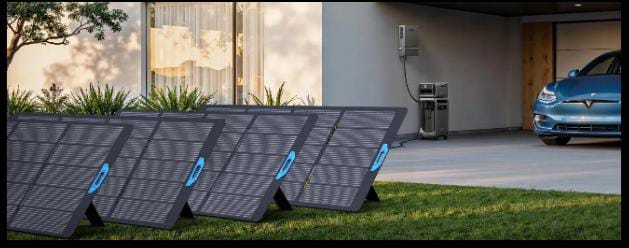

Portable power stations with solar panels combine battery storage, charge control, and inverter output into one flexible backup power system. They let you capture sunlight, store that energy, and run devices without gasoline, fumes, or constant engine noise. For homeowners, they provide emergency electricity during outages. For campers, RV users, and off-grid travelers, they offer quiet, renewable power almost anywhere with sun exposure. Understanding how these systems charge, how much power they store, and what affects runtime helps you choose a setup that matches your appliances, mobility needs, and backup goals.
How Portable Power Stations Work With Solar Panels?
Converting Solar Energy Into Stored Battery Power
A portable power station with solar panels works by collecting sunlight through photovoltaic panels and turning it into usable electricity. The panels generate direct current power, which flows into the station’s charge controller. That controller regulates voltage and current so the battery can charge safely and efficiently. The stored energy remains in the internal battery until needed. When you plug in appliances, the unit delivers DC power directly to compatible devices or converts it through an inverter into AC power for household electronics, tools, small appliances, and emergency essentials.
The Role of Solar Input and MPPT Technology
Solar input determines how much power a station can accept from panels at one time, which directly affects charging speed. MPPT, or maximum power point tracking, improves efficiency by constantly adjusting the electrical operating point between the panels and battery. This helps capture more usable energy during changing sunlight conditions. Higher-end systems can charge much faster because they support more solar wattage and advanced control. For example, the Anker SOLIX F3800 Plus Portable Power Station accepts up to 3,200W solar input with dual MPPT across an 11-165V range.
Benefits of Using a Portable Power Station With Solar Panels
Reliable Backup Power During Outages
A solar-compatible portable power station gives you immediate backup power when the grid goes down. You can run lights, phones, routers, medical devices, refrigerators, and other priority equipment without storing fuel or managing generator maintenance. Because the battery recharges from solar panels, you can extend backup time beyond the initial stored capacity if sunlight is available. This is especially useful during multi-day outages. The system also operates quietly indoors or in covered spaces where combustion generators are unsafe, making it a practical emergency solution for households and apartments.
Clean Energy for Camping and Off-Grid Applications
For camping, RV travel, overlanding, and off-grid work, solar power stations provide quiet electricity without exhaust, fuel transport, or campsite disturbance. You can charge phones, cameras, drones, laptops, portable fridges, lights, and cooking accessories while staying independent from shore power. Solar panels refill the battery during the day, helping you maintain power over longer trips. This setup is especially useful in remote locations where wall charging is unavailable. It also supports a cleaner outdoor experience by replacing noisy engine-based generation with renewable energy collected directly from sunlight.

Reducing Dependence on Traditional Fuel Generators
Portable power stations with solar panels reduce reliance on gasoline or propane generators for many common needs. Instead of buying fuel, storing it safely, and dealing with noise, emissions, and maintenance, users can recharge from sunlight and draw power from a battery system. That makes daily use simpler and often more convenient for short outages, mobile work, and outdoor recreation. While fuel generators still serve some heavy-duty applications, solar power stations cover a wide range of electronics and household essentials with less hassle, lower noise, and cleaner operation.
Key Factors When Choosing a Solar Power Station Setup
Battery Capacity and Expected Runtime
Battery capacity tells you how much energy the station can store, usually measured in watt-hours or kilowatt-hours. Higher capacity means longer runtime for connected devices. To estimate runtime, divide the battery’s usable watt-hours by the appliance’s average power draw. A larger setup is better for refrigerators, power tools, or extended outage support, while smaller units suit phones, laptops, and lights. If you need home backup, expansion matters too. Some systems start at useful capacity and scale significantly, allowing longer support as your power demands grow over time.
Solar Input Power and Charging Speed
Charging speed depends on both the station’s maximum solar input and the output of your panel array. A unit that accepts more solar wattage can recover faster during limited daylight, which matters during outages and off-grid use. Panel angle, weather, shading, and season also affect real-world performance, so matching panel capacity to the station is important. If fast solar recovery is a priority, choose a system with strong input capability. More headroom lets you take better advantage of bright conditions and shortens the time needed to restore stored energy.
Portability, Expandability, and Device Compatibility
The best setup balances mobility with output, storage, and connection options. Portability includes weight, handles, wheel design, and how easily the unit fits in a vehicle, garage, or RV. Expandability matters when your needs may grow from weekend use to serious home backup. Device compatibility is equally important, since you need the right mix of AC outlets, USB ports, and high-power connections. A good example is a system starting at 3.84kWh with 6kW output, expandable to 53.8kWh and 12kW for days-to-week-long backup in larger applications.
Conclusion
A portable power station with solar panels offers a practical way to store renewable energy and use it where and when you need it. The right system can support emergency backup at home, reliable power for travel, and quieter off-grid use without fuel-related drawbacks. When choosing one, focus on battery capacity, solar input, charging efficiency, portability, and output options. Those factors determine how well the setup matches your appliances and runtime expectations. With a properly sized system, solar charging becomes a dependable, flexible power solution for everyday and emergency use.