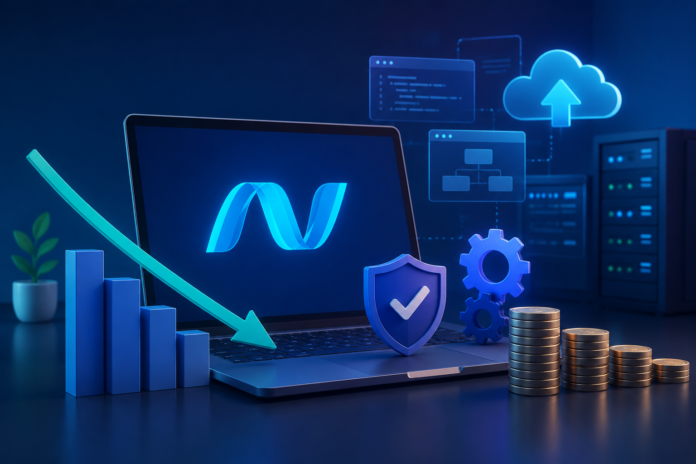

Software development is a major investment for businesses, but the initial development budget is only one part of the total cost. Maintenance, security updates, performance improvements, infrastructure, bug fixes, and future feature development can create significant expenses over the years. Choosing the right development approach from the beginning can make a major difference to these long-term costs. Professional .net development service solutions help businesses create stable, scalable, and maintainable applications that can continue supporting changing requirements without requiring constant redevelopment.
Many businesses focus heavily on the initial cost of building software and overlook the expenses associated with maintaining it over several years. A low-cost development project may appear attractive at first, but poor architecture, outdated technologies, weak security practices, and limited scalability can create expensive problems later. Professional development focuses on building a strong technical foundation that reduces these risks and provides better long-term value.
Understanding the True Cost of Software
The cost of software goes beyond development. Once an application is launched, businesses need to invest in monitoring, maintenance, security, hosting, technical support, integrations, and regular improvements. These expenses continue throughout the application’s lifecycle.
Poorly developed software can increase these costs significantly. For example, an application with inefficient code may require frequent performance optimization. A system built without scalability in mind may need major architectural changes when the number of users increases. Similarly, outdated dependencies can create security vulnerabilities that require urgent technical work.
Professional development takes these future requirements into consideration during the initial planning stage. Developers can design the application around expected business growth, making future improvements easier and less expensive.
Building a Strong Technical Foundation
A well-designed application architecture provides the foundation for long-term software stability. Professional developers consider how different components will communicate, how information will be stored, and how new features can be added without affecting existing functionality.
The .NET ecosystem supports several development approaches that allow applications to be structured in a modular and maintainable way. Developers can separate business logic, data access, APIs, authentication, and user-facing functionality into appropriate components.
This structure makes troubleshooting easier because problems can be isolated to specific parts of the application. It also allows development teams to modify individual features without unnecessarily changing the entire system.
A strong architecture therefore reduces the amount of time and money required for future maintenance.
Reducing Maintenance Expenses
Every software application requires maintenance, but well-built applications generally require less corrective work. Clean code, proper documentation, automated testing, and structured architecture all contribute to easier maintenance.
Professional developers can identify potential issues during development instead of waiting for users to encounter them after launch. Automated tests can also help detect problems when new features are introduced.
This approach reduces the possibility of unexpected failures and minimizes the amount of emergency development required later.
Maintenance also becomes easier when developers follow consistent coding standards. Future development teams can understand the existing application more quickly, reducing the time required to make updates or fix problems.
Improving Application Scalability
Business growth often creates new software requirements. An application that supports a few hundred users may eventually need to support thousands or even millions. If scalability was not considered during development, increasing demand can lead to performance problems and expensive redevelopment.
Professional .NET development allows businesses to plan for future growth by selecting appropriate architecture, database structures, APIs, and infrastructure.
Scalability does not necessarily mean building an oversized system from the beginning. Instead, developers can create an architecture that allows resources and functionality to expand when necessary.
This approach helps businesses avoid paying for unnecessary infrastructure today while maintaining the ability to accommodate future demand.
Better Security Can Prevent Expensive Problems
Security issues can become extremely expensive for businesses. Data breaches, unauthorized access, system downtime, and regulatory problems can result in financial losses as well as damage to customer trust.
Professional developers incorporate security throughout the development lifecycle rather than treating it as an afterthought. Authentication, authorization, data protection, secure APIs, input validation, and dependency management are all important considerations.
The .NET ecosystem also receives ongoing updates and security improvements, helping businesses maintain applications that can adapt to emerging security requirements.
A proactive approach to security reduces the likelihood of costly incidents and minimizes the technical work required to correct vulnerabilities later.
Reducing Integration Costs
Modern businesses rarely operate using a single software platform. Applications often need to communicate with accounting systems, CRM platforms, payment gateways, ERP solutions, analytics tools, communication platforms, and third-party services.
Poor integration planning can result in duplicated data, manual processes, unreliable connections, and expensive redevelopment.
Professional developers design APIs and integration layers that allow different systems to communicate efficiently. A well-planned integration architecture also makes it easier to connect new services as business requirements change.
This flexibility can significantly reduce future development costs because businesses do not need to rebuild the entire application whenever a new platform is introduced.
Key Ways Professional .NET Development Controls Long-Term Costs
- Creates a scalable architecture that can support future business growth.
- Reduces recurring maintenance and troubleshooting requirements.
- Improves application security and reduces vulnerability-related risks.
- Makes third-party integrations easier to manage.
- Supports reusable components and structured development.
- Simplifies future upgrades and feature additions.
These benefits demonstrate why development quality should be evaluated according to long-term value rather than only the initial project price.
Increasing Development Efficiency
Professional development teams use established frameworks, reusable components, automated testing tools, version control systems, and structured workflows to improve development efficiency.
This reduces unnecessary development work and allows teams to deliver new functionality more consistently. Reusable components can also shorten development timelines when similar functionality is required across different areas of an application.
Faster development does not mean sacrificing quality. When supported by proper testing and code review, efficient development practices can reduce costs while maintaining application reliability.
Making Future Updates Easier
Business requirements rarely remain unchanged. New competitors enter markets, customer expectations evolve, regulations change, and organizations introduce new products and services.
Software must therefore be flexible enough to accommodate change.
Applications built with maintainability in mind allow developers to add features without disrupting existing functionality. Modular architecture, well-documented code, reusable components, and properly designed APIs all contribute to this flexibility.
For example, a business may initially require a basic customer portal but later decide to introduce mobile access, automated notifications, advanced reporting, or AI-powered functionality. A flexible application can incorporate these features more efficiently than a rigid system.
Reducing Technical Debt
Technical debt occurs when development shortcuts create additional work in the future. Developers may sometimes choose a quick solution to meet a deadline, but repeated shortcuts can make an application increasingly difficult and expensive to maintain.
Professional development practices help control technical debt through code reviews, testing, documentation, architecture planning, and consistent coding standards.
Reducing technical debt provides significant long-term financial benefits because developers spend less time working around poorly designed systems.
Businesses should therefore consider software quality as an investment rather than an unnecessary expense.
What Businesses Should Evaluate Before Choosing a Development Partner
- Experience with enterprise and business applications.
- Understanding of scalable .NET architecture.
- Security and quality assurance practices.
- Ability to provide ongoing maintenance and support.
- Experience with third-party integrations.
- Communication and project management processes.
Selecting an experienced development partner can have a direct impact on the total cost of ownership. A capable team can identify potential problems early and recommend solutions that support both current and future requirements.
The Importance of Ongoing Support
Software development does not end when an application goes live. Regular monitoring, updates, security improvements, performance optimization, and technical support are necessary to keep applications reliable.
An experienced development partner can provide ongoing support and identify potential problems before they become serious. This proactive approach can reduce downtime and prevent expensive emergency fixes.
Long-term support also ensures that applications remain compatible with updated operating systems, databases, frameworks, cloud platforms, and third-party services.
For businesses that rely heavily on software for daily operations, consistent technical support can provide significant financial and operational value.
Choosing Long-Term Value Over Short-Term Savings
Businesses should avoid choosing a development solution based solely on the lowest initial quotation. Two development projects may have very different long-term costs even if their initial prices appear similar.
An inexpensive application may require frequent maintenance, major redevelopment, or security improvements. A professionally developed application may require a greater initial investment but deliver better performance, scalability, security, and maintainability over time.
The right decision should therefore consider total cost of ownership rather than initial development expenses alone.
Frequently Asked Questions
1. How can professional .NET development reduce software costs?
Professional development creates maintainable and scalable applications that require fewer corrective changes, simplify future upgrades, and reduce long-term maintenance expenses.
2. Is .NET suitable for long-term business applications?
Yes. .NET provides a mature development ecosystem suitable for enterprise applications, APIs, cloud solutions, internal business systems, and customer-facing platforms.
3. Why is scalability important for reducing software costs?
Scalable architecture allows applications to accommodate growing users and workloads without requiring complete redevelopment, helping businesses control future infrastructure and development expenses.
4. Can professional development improve software security?
Yes. Professional developers can implement secure authentication, authorization, data protection, dependency management, and testing practices throughout the development lifecycle.
5. Should businesses invest in ongoing .NET maintenance?
Yes. Regular maintenance helps applications remain secure, compatible, stable, and efficient while reducing the likelihood of expensive technical problems in the future.
Conclusion
The real cost of software is determined over its entire lifecycle, not simply by the initial development budget. Applications that are designed with scalability, security, maintainability, and future expansion in mind can provide considerably better long-term value. Professional development practices help businesses reduce technical debt, simplify maintenance, improve performance, and avoid expensive redevelopment as requirements change.
For organizations planning a new business application or improving an existing platform, investing in professional development can therefore be a strategic financial decision. A strong technical foundation allows companies to adapt more efficiently while keeping ongoing software expenses under control. By choosing an experienced development partner and focusing on long-term quality, businesses can build software that continues delivering value as they grow.