

Key Takeaways
- A strong 3PL plan matches order volume, product needs, delivery expectations, and growth goals.
- Total logistics cost matters more than a low storage or shipping quote alone.
- Service-level standards, inventory visibility, and return procedures should be defined before launch.
- Seasonal capacity and backup plans protect the customer experience when demand changes quickly.
As order volume grows, fulfillment can become one of the biggest operational constraints for a product business. A third-party logistics provider, or 3PL, can take on warehousing, order processing, transportation coordination, and returns so internal teams can focus on sales, products, and customer relationships. Businesses considering support from providers such as Freeport Logistics should start with a documented plan rather than a general request for warehouse space.
The right arrangement is not necessarily the largest facility or the lowest quote. It is the setup that can consistently receive inventory, maintain accurate counts, ship orders on time, and adapt when promotions, new sales channels, or customer demand change.
Why Fulfillment Planning Matters
Customers expect reliable delivery estimates, tracking updates, careful packaging, and easy returns. Those expectations can be difficult to meet when a small team manages purchasing, storage, packing, carrier pickups, and customer service from a single location. A fulfillment plan creates a clear operating model before those pressures become daily fire drills.
Freight movement also involves far more than a single warehouse and a shipping label. Carrier capacity, highway access, labor availability, inbound delivery schedules, and regional demand all affect cost and speed. When comparing warehouse, transportation, and fulfillment options, businesses can also review https://www.freeport-logistics.com/ to understand the kinds of distribution, logistics, and transportation services that may be available through an established 3PL operation.
What a 3PL Partner Usually Handles
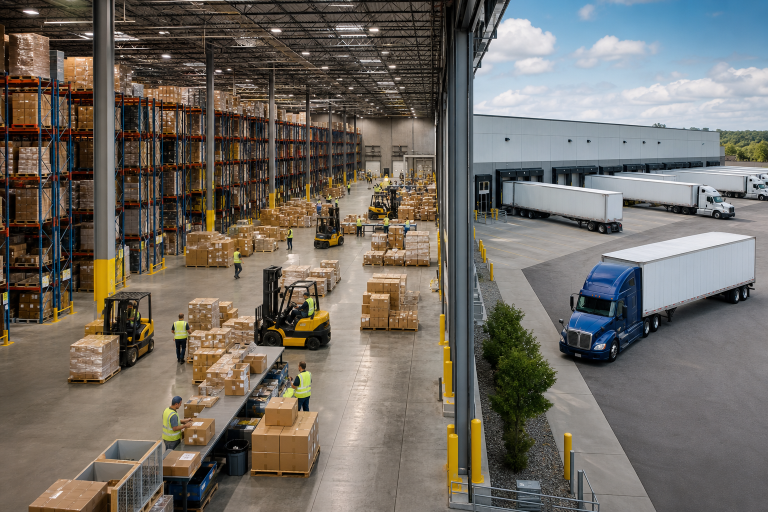
A 3PL is an outside company that manages some or all of the physical work involved in moving products from suppliers to customers. Its scope may include receiving inbound shipments, storing products, maintaining inventory records, picking and packing ecommerce orders, preparing retail or wholesale shipments, arranging parcel or freight transportation, and processing returns.
Some providers also offer kitting, labeling, light assembly, inspection, rework, promotional display preparation, and special handling. The key is to identify which services are essential today and which may become necessary as the business grows.
Step 1: Map the Current Fulfillment Process
Before requesting proposals, map every step from a purchase order or inbound delivery appointment through final delivery and return processing. List who performs each task, which systems or spreadsheets are used, and where information is entered more than once.
- Document receiving, put-away, inventory updates, picking, packing, shipping, and returns.
- Mark delays, manual handoffs, missing information, and recurring errors.
- Separate everyday work from promotional, wholesale, or seasonal work.
A growing online seller may assume packing is the main issue, only to learn that slow receiving records are causing inventory to appear unavailable for sale. Finding the real bottleneck prevents a company from outsourcing the wrong part of the process.
Step 2: Define Business Requirements
Create a concise requirements sheet before contacting providers. Include average weekly and monthly orders, peak daily order volume, number of SKUs, average inventory levels, product dimensions and weights, storage requirements, and handling restrictions. Note every sales channel, including direct-to-consumer, marketplaces, retail, and wholesale.
Also specify delivery regions, desired shipping times, return rates, inspection requirements, packaging rules, and required integrations with ecommerce platforms, ERPs, or order management systems. Accurate inputs lead to more useful quotes and a smoother implementation.
Step 3: Set a Realistic Budget
Do not compare providers based only on a monthly storage rate. Total cost can include receiving and unloading, pallet or bin storage, pick-and-pack labor, packaging, account management, order minimums, special projects, returns, system integrations, parcel charges, freight, and carrier accessorial fees.
Request pricing for three conditions: a normal month, a high-volume peak month, and a slower month. This makes minimum charges, volume discounts, and peak-period costs easier to spot. It also shows whether the plan remains workable throughout the year.
Step 4: Choose the Right Facility Location
Warehouse location affects both delivery speed and transportation cost. Evaluate distance from suppliers, ports, rail terminals, airports, major highways, and the customer regions that generate the most orders. Consider local labor availability, real estate costs, carrier coverage, and the ability to add capacity later.
The closest building is not always the best option. A facility slightly farther away may offer stronger carrier access, lower operating costs, better inbound freight options, or more flexibility during busy periods.
Step 5: Build a Service-Level Scorecard
Turn broad promises into measurable standards. A scorecard should track receiving accuracy, inventory accuracy, on-time shipment rate, order accuracy, damage rate, return processing time, support response time, and reporting frequency.
Review Performance Early and Often
Review these measures monthly during the first six months. If inventory discrepancies or late shipments appear, both parties can investigate the cause before customer complaints and added costs become routine.
Step 6: Check Technology and Data Access
Technology should strengthen a well-designed process, not disguise weak operating habits. Confirm whether the 3PL can connect with your store, marketplace, ERP, or order system. Ask how often inventory updates are sent, whether barcode scanning is used during receiving and picking, how outages are handled, and how data can be exported if the relationship ends.
A polished dashboard is valuable, but it cannot correct inaccurate product dimensions, unclear SKU records, or poor receiving discipline. Clean data remains the foundation of reliable fulfillment.
Step 7: Plan for Seasonal Spikes and Returns
Start peak planning well before a holiday, promotion, or launch. Review prior sales, list planned campaigns, estimate the highest daily order volume, and reserve labor, storage, packaging, and carrier capacity. Set order cutoff times and prepare customer communications in case service conditions change.
Returns need equal attention. Establish return authorization rules, inspection steps, and clear categories for resalable, repairable, damaged, and unsellable items. Track return reasons by product and sales channel to identify packaging issues, inaccurate descriptions, or quality problems.
Questions to Ask Before Signing a 3PL Agreement
- How are storage, receiving, peak-period, and return charges calculated?
- Are there monthly minimums, long-term commitments, or volume penalties?
- How quickly are discrepancies and damaged inventory reported?
- Can the operation support both wholesale and direct-to-consumer orders?
- How are carrier claims, data ownership, and transition plans handled?
- What happens if volume rises or falls sharply?
Resources and a 90-Day Review Plan
Eligible organizations that support small-business supply chain development may also want to review the SBA’s Supply Chain Acceleration and Logistics Enablement program update. Local economic development groups and transportation data can also help businesses compare regions and expansion options.
After launch, review order accuracy, receiving, inventory records, and communication at 30 days. At 60 days, compare actual costs with the original budget. At 90 days, evaluate delivery performance, returns, customer feedback, and upcoming capacity needs. A flexible 3PL fulfillment plan is not a one-time document. It is an operating system that should improve as the business and its customers change.