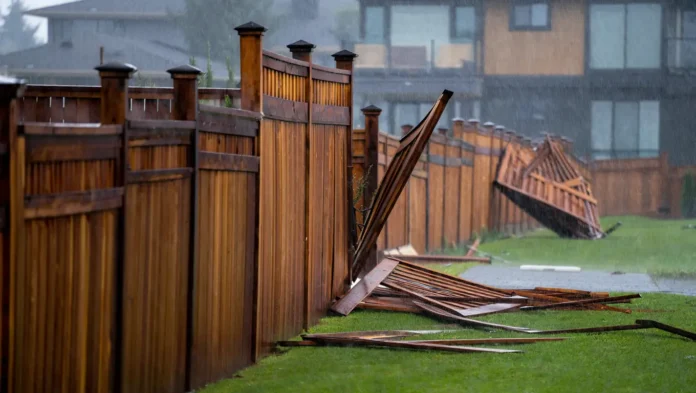

Prolonged wet weather can gradually weaken the ground supporting a fence, especially when soil remains saturated for days or weeks. Posts that once stood firmly may begin to shift as water softens the surrounding soil, washes away support, or exposes existing deterioration below ground level. Leaning sections can affect appearance, gate alignment, privacy, and overall stability if movement continues. Fence repair helps identify whether the problem stems from loose posts, damaged materials, drainage issues, or weakened footing. By correcting the source of movement rather than simply pushing panels upright, repair work can restore alignment and help the fence remain more stable during future rain.
Restoring Stability After Saturated Ground Conditions
- Finding Why Fence Sections Started Leaning
A leaning fence may look like a straightforward alignment problem, but prolonged wet weather can create several different causes that need to be identified before repairs begin. Saturated soil can lose some of its ability to hold posts firmly, allowing them to tilt when wind, panel weight, or gate movement applies additional pressure. Water may also erode soil around the base of posts, leaving gaps that reduce support. Wooden posts can deteriorate near ground level when moisture remains trapped for extended periods, while older concrete footings may loosen if the surrounding soil shifts repeatedly. Salem fence repair by F&W Fence Co. Inc. can help address leaning sections by evaluating the posts, rails, panels, and ground conditions that may be contributing to movement. Looking at the entire affected section is important because one tilted post can place stress on neighbouring rails and fasteners. Repair work can then focus on the actual source of instability, whether that means resetting a post, replacing damaged components, strengthening connections, or correcting support around the fence line.
- Resetting Posts That Have Shifted in Soft Soil
Fence posts provide the primary support for most fence sections, so movement at the post level often leads to visible leaning across several panels. After prolonged rainfall, soil surrounding a footing may soften enough for the post to rotate or shift under pressure. Fence repair can involve carefully separating affected sections, repositioning the post, and rebuilding stable support around its base. Depending on the condition of the material, an existing post may be reset or replaced if deterioration has weakened it beyond dependable use. Proper alignment matters because posts must support rails and panels while also resisting wind loads and repeated ground movement. Simply forcing a leaning section upright without improving the post support may only produce a temporary visual correction. Repair work instead aims to create a stable foundation for the fence section before reconnecting surrounding components. When posts are returned to their proper positions and securely supported, rails can sit more evenly, panels can remain straighter, and nearby attached elements can operate with less strain. This structural approach helps the fence recover from soil movement caused by extended wet conditions.
- Repairing Rails, Panels, and Fasteners Under Stress
When fence posts begin leaning, the movement rarely affects only the posts themselves. Rails connecting one post to another may twist or pull away, screws can loosen, nails can work outward, and panels may develop uneven gaps as the fence shifts out of line. Wet conditions can intensify these problems because moisture may cause some materials to swell while existing connections remain under added tension. Fence repair provides an opportunity to inspect the components surrounding the leaning section instead of treating alignment as an isolated issue. Damaged rails can be replaced or reattached, panels can be repositioned, and weakened fasteners can be corrected so each part works together again. This is important because a straight post cannot provide full stability if the rail connections beside it remain loose or distorted. Gates may also require adjustment when nearby posts have moved, since even small changes in alignment can cause dragging, sticking, or uneven closing. Restoring these connections helps distribute structural loads more evenly and reduces the chance that one repaired area will continue pulling against another weakened section.
- Reducing the Effect of Future Water Accumulation
Repairing a leaning fence is more effective when attention is also given to how water behaves along the fence line. If runoff repeatedly collects near posts, the same ground conditions that caused movement may return during future storms. Fence repair may therefore include observing low areas, eroded soil, downspout discharge, nearby slopes, or other conditions that direct water toward post locations. Improving how water drains away from the fence can help reduce prolonged saturation and support more stable soil around repaired areas. In some cases, adding or restoring soil around a post may be necessary after erosion has created voids. At the same time, nearby landscaping may need to be adjusted to prevent water from becoming trapped against the fence. Keeping vegetation and debris from building up around post bases can also allow the area to dry more effectively after rainfall. These steps do not eliminate normal seasonal soil changes, but they can reduce repeated exposure to standing water. Combining structural repairs with greater drainage awareness gives the repaired fence a better chance of staying aligned during future wet periods.
Fence repair helps correct leaning sections after prolonged wet weather by addressing the conditions that caused posts, rails, and panels to become misaligned. Saturated soil, erosion, weakened footings, deteriorated posts, and stressed connections can all contribute to instability, making careful evaluation important before corrective work begins. Resetting or replacing posts, repairing rails, strengthening fasteners, and improving nearby drainage can restore both appearance and structural support. These measures also help the gates operate more smoothly and reduce strain on neighbouring sections of the fence. By addressing both visible leaning and the underlying causes, fence repair can help maintain a straighter, more dependable boundary after extended rainfall.