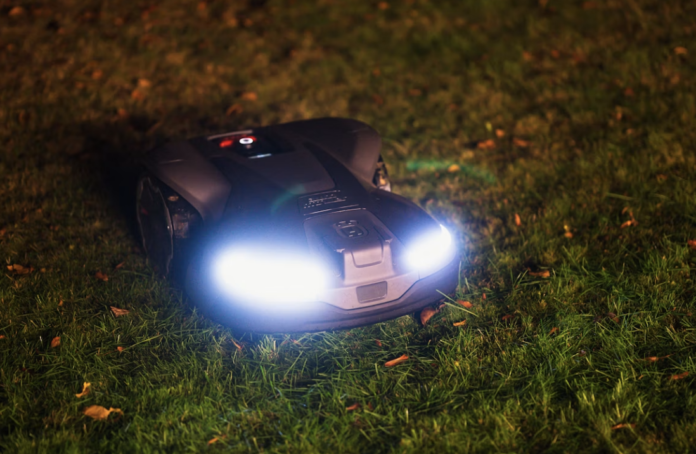

The smart home revolution didn’t stop at the front door. For years, we’ve been automating our lives inside the house with smart speakers, connected thermostats, and intelligent lighting. Now, that same convenience is spilling out into the yard, transforming one of the most time-consuming household chores: lawn maintenance. The era of autonomous yard care is here, and it’s about more than just saving you a Saturday afternoon.
From Smart Thermostats to Smart Lawns
Smart homes used to be just for tech enthusiasts, but now they’re something most of us expect. We’re used to changing the temperature from our phones, asking virtual assistants about the weather, and getting alerts when a package arrives. This widespread adoption has set the stage for the next logical step: bringing automation outdoors. Recent smart home statistics show that most U.S. households own at least one smart device, which tells us people are really comfortable with connected technology.
This comfort is opening the door for smart yards. Homeowners are starting to see their outdoor space as an integrated part of their home, not just a patch of grass they have to maintain by hand. Just like a smart thermostat optimizes your indoor climate, autonomous yard tools are designed to keep your lawn looking great and healthy with very little effort from you. This change means the smart home is expanding its reach, turning your whole property into a connected, automated environment.
The Tech Behind the Turf
So, how does a machine manage to navigate all the bumps, borders, and obstacles in your yard by itself? It’s all thanks to a clever mix of hardware and software working together. Most models use a low-voltage boundary wire that you install around the edge of your lawn. This wire creates an invisible fence, showing the mower exactly where it should and shouldn’t go. It’s a one-time setup that permanently defines the mowing area.
Once you’ve set the boundaries, the real smarts kick in. A modern robot lawn mower uses a bunch of sensors to find its way around. Bump sensors help it detect obstacles like trees, garden beds, or toys left out, so it can turn and find a new path. If the mower gets picked up or tips over, lift and tilt sensors immediately shut off the blades, making it safe for a family yard.
Many advanced models also use GPS and AI to map your lawn, which helps them mow more efficiently. This means they cover everything without endlessly going over the same spots. It quietly does its job on your schedule, and when its battery gets low, it automatically heads back to its charging dock.
More Than Just a Mower: The Growing Market
Autonomous yard care isn’t just great for homeowners; it’s also a booming industry. What used to be a quirky gadget is now a rapidly growing market. Projections indicate that the Robotic Lawn Mower Market is expected to grow significantly over the next ten years. This is because people want convenience, an aging population is looking for ways to save effort, and technology keeps getting better.
This trend is even getting attention from the real estate world. A well-kept yard is super important for curb appeal, and automated systems offer an easy, consistent way to keep a property looking its best. Because of this, robot mowers are taking the spotlight and are being highlighted as a feature that can make a home more appealing to buyers. In a competitive market, having a “set it and forget it” lawn care system can be a strong selling point, showing that the home is modern and low-maintenance. It’s a small but powerful sign that the property is ready for a convenient, 21st-century lifestyle.
The Environmental Edge of Automation
Beyond just making things easier, autonomous mowers are much better for the environment than traditional gas mowers. The biggest benefit is that they don’t produce any direct emissions. Gas mowers are known polluters; running a typical gas mower for an hour can create as much air pollution as driving a car for hundreds of miles. These small off-road engines are a major source of smog-forming pollutants. Robotic mowers, since they’re fully electric, produce zero emissions where they operate.
They also cut down on noise. A gas mower can reach 90 decibels or more, which can really disturb a whole neighborhood. Robotic mowers, though, just hum quietly, often below 60 decibels, which is about as loud as a normal conversation. They can even run at night or early in the morning without bothering anyone. Plus, their mowing style is healthier for your lawn. Instead of cutting grass once a week, they trim a tiny bit every day or two. These small clippings, called mulch, fall back into the soil, acting as a natural fertilizer that returns nutrients and moisture to your lawn.
What’s Next for Autonomous Yard Care?
The robotic mower is just the beginning. The future of yard care looks like a fully connected and autonomous system where different devices work together to manage your whole outdoor space. Imagine a system where soil sensors detect dry spots and tell an automated sprinkler system to water exactly where it’s needed, so no water goes to waste.
Companies are already making robotic weeders that use computer vision to find and remove unwanted plants without chemicals. Drones could even be used for automated pest detection and targeted, eco-friendly treatments. The ultimate goal is one app that controls your entire yard. From this dashboard, you could check your lawn’s health, send out the mower, schedule fertilizing, and manage water use. As AI and sensor technology become more powerful and affordable, having a perfectly manicured yard without lifting a finger is quickly becoming a reality.
Ultimately, the rise of autonomous yard technology is all about giving us back our most valuable resource: time. It changes yard work from a constant chore into something that just gets done in the background, letting you actually enjoy your outdoor space instead of always working on it.