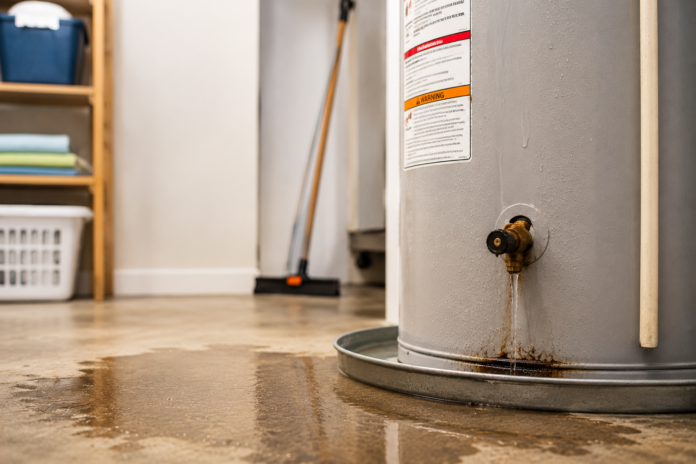

Discovering water around your water heater can be alarming, but it doesn’t always mean the unit has reached the end of its life. Some leaks are caused by relatively minor issues, while others may indicate a more serious problem that requires immediate attention.
The key is identifying where the leak is coming from. A small drip from one component has a very different solution than water leaking from the bottom of the tank. Understanding the most common causes can help you determine your next steps and know when it’s time to contact a licensed plumber.
Start by Identifying the Source of the Leak
Before assuming the water heater itself has failed, take a close look at where the water is coming from. Water can sometimes travel down pipes or along the outside of the tank, making it appear that the leak originated somewhere else.
Check the fittings above the unit, the cold-water supply line, the hot-water outlet, the drain valve, and the area around the temperature and pressure relief valve. Identifying the source of the leak can make diagnosing the problem much easier.
Common Causes of a Leaking Water Heater
Many water heater leaks can be traced to one of the following issues:
- Loose plumbing connections
- A faulty temperature and pressure (T&P) relief valve
- A leaking drain valve
- Internal tank corrosion
- Excessive water pressure
- Sediment buildup inside the tank
- Condensation mistaken for a leak
- Cracks caused by age or freezing temperatures
Some of these issues can be repaired, while others may require replacing the water heater.
Loose Water Supply Connections
Water enters and leaves your water heater through threaded plumbing connections. Over time, vibration, normal expansion and contraction, or aging fittings may allow these connections to loosen slightly.
Fortunately, leaks at these locations are often among the simplest to diagnose because moisture typically appears near the top of the water heater. A plumber can determine whether tightening or replacing a fitting is appropriate.
Faulty Temperature and Pressure Relief Valve
The temperature and pressure relief (T&P) valve is one of the most important safety devices on your water heater. It automatically releases water if pressure or temperature inside the tank exceeds safe operating limits.
If you notice water dripping from the discharge pipe attached to this valve, it may indicate a faulty valve, excessive water pressure, overheating, or another issue affecting the system.
One possible cause of a leaking water heater is a faulty temperature and pressure relief valve. If that’s the issue, here’s a step-by-step guide on how to replace a water heater pressure relief valve.
A Leaking Drain Valve
Near the bottom of every tank-style water heater is a drain valve used during maintenance and flushing. If this valve becomes damaged, develops mineral buildup, or fails to close completely after maintenance, it may begin leaking.
In many cases, replacing the valve resolves the issue, although a professional inspection may be recommended if the leak persists.
Internal Tank Corrosion
Unfortunately, one of the more serious causes of a leaking water heater is corrosion inside the storage tank itself. As water heaters age, the protective lining inside the tank gradually deteriorates, allowing rust to develop.
Once the steel tank begins leaking, repairs generally are not possible, and replacement is usually the safest long-term solution.
Excessive Water Pressure
High water pressure places additional stress on your plumbing system and water heater. In some cases, excessive pressure may cause the temperature and pressure relief valve to discharge water more frequently.
If high pressure is identified, a plumber may recommend installing or servicing a pressure-reducing valve or thermal expansion tank to help protect your plumbing system.
Sediment Buildup
Minerals naturally found in water settle at the bottom of tank-style water heaters over time. As sediment accumulates, it reduces efficiency and may contribute to overheating, unusual noises, and additional stress on internal components.
Routine flushing helps minimize sediment buildup and may extend the life of the water heater.
Condensation Isn’t Always a Leak
Sometimes what appears to be a leaking water heater is simply condensation forming on the outside of the tank. This commonly occurs when cold water enters a warm tank in humid conditions.
Condensation usually disappears after the water heater completes a heating cycle. If moisture continues to appear, additional inspection may be necessary to rule out an actual leak.
Is It Time to Replace Your Water Heater?
If your water heater is more than 10 to 12 years old and the tank itself is leaking, replacement is often the most practical solution. Continuing to repair an aging water heater may become increasingly expensive and unreliable over time.
A licensed plumber can inspect the unit and help determine whether repair or replacement offers the best long-term value.
Common Leak Locations
| Leak Location | Possible Cause | Professional Inspection Recommended? |
| Top of water heater | Loose plumbing connection | Sometimes |
| T&P discharge pipe | Faulty relief valve or excessive pressure | Yes |
| Drain valve | Loose or damaged drain valve | Often |
| Bottom of tank | Internal corrosion | Yes |
| Around fittings | Worn seals or loose connections | Sometimes |
| Outside of tank | Condensation | If persistent |
When Should You Call a Plumber?
Although some leaks are relatively minor, others indicate safety concerns or significant equipment failure. Contact a licensed plumber if you notice:
- Water leaking from the bottom of the tank
- Rust-colored water or visible corrosion
- Water continuously dripping from the relief valve
- Rapidly increasing leaks
- Water heater age exceeding 10 years
- Unusual noises combined with leaking
- Uncertainty about the source of the leak
Prompt diagnosis can often prevent water damage and help avoid more expensive plumbing repairs.
Frequently Asked Questions
Why is my water heater leaking from the bottom?
A leak at the bottom may be caused by a faulty drain valve, condensation, or internal tank corrosion. If the storage tank itself is leaking, replacement is often necessary.
Is a leaking water heater dangerous?
It can be. While some leaks are minor, others may indicate excessive pressure, overheating, or structural tank failure. Any persistent leak should be inspected promptly.
Can I still use my water heater if it’s leaking?
That depends on the source of the leak. Minor condensation may not require immediate action, but active plumbing leaks or tank leaks should be evaluated before continued use.
Why is water coming out of the overflow pipe?
Water discharging from the temperature and pressure relief valve may indicate excessive pressure, overheating, or a faulty valve that requires inspection.
Does homeowners insurance cover a leaking water heater?
Coverage depends on your individual policy and the cause of the leak. Sudden accidental water damage may be covered, while damage resulting from lack of maintenance often is not.
How long should a water heater last?
Most traditional tank-style water heaters last approximately 8 to 12 years with proper maintenance, although lifespan varies depending on water quality, maintenance, and usage.
Can sediment cause a water heater to leak?
Sediment itself doesn’t usually create leaks, but excessive buildup can contribute to overheating, reduce efficiency, and place additional stress on internal components over time.
Should I repair or replace my leaking water heater?
If the leak comes from a replaceable component such as a valve or plumbing connection, repair may be appropriate. If the storage tank itself has developed a leak due to corrosion, replacement is generally recommended.
Final Thoughts
A leaking water heater isn’t something homeowners should ignore. While some leaks originate from relatively simple components like fittings or valves, others may indicate internal corrosion or excessive system pressure that requires professional attention.
Identifying the source of the leak early can help prevent water damage, improve safety, and extend the life of your plumbing system. If you’re unsure where the leak is coming from, scheduling a professional inspection is the safest way to protect both your home and your water heater.