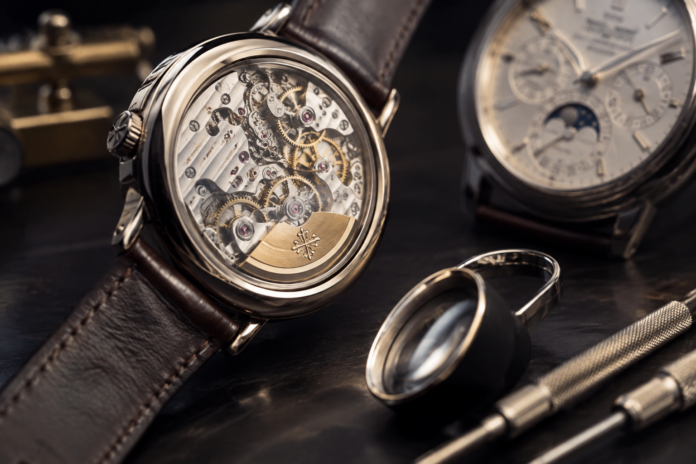

Complexity has always been a symbol of achievement in the fine watchmaking industry. The more intricate the mechanism, the greater the admiration it commands. A calendar that understands the irregular rhythm of the calendar year, a split-seconds chronograph capable of measuring two simultaneous events, or a minute repeater that transforms time into sound represent some of humanity’s most refined mechanical inventions.
Complexity has another definition: responsibility.
For collectors preparing to sell Patek Phillipe watch nyc specialists evaluate, the question is not simply whether a timepiece is rare, prestigious, or beautifully finished. The more attentive concern is whether its mechanical sophistication creates confidence, or uncertainty, for the next owner.
A complicated movement may represent the pinnacle of craftsmanship, but it also introduces another layer of calculation. Every additional wheel, spring, lever, and component increases not only technical achievement but also the possibility of future maintenance, repair, and ownership costs.
This is the paradox of high horology. The very features that make a watch extraordinary can also make its resale journey more complicated.
The Hidden Economics Inside a Complicated Movement
Grand complications attract remarkable prices at retail or auction level. But professional buyers approach pre-owned watches through a different lens.
They do not evaluate only what a watch represents. They assess what it may require.
A simple automatic movement may contain around 150 to 200 components. A highly complicated calibre, by contrast, can contain several hundred finely finished parts, each operating within extremely precise tolerances. The addition of a calendar mechanism, chronograph function, or acoustic complication creates another set of variables that must be examined before a buyer can confidently place a value on the piece.
For a professional purchaser, an unverified complication is not merely a technical question. It is a financial risk.
A watch that requires specialized servicing can involve significant costs and lengthy turnaround periods. Those expenses become part of the calculation when determining a purchase offer. The buyer must consider not only the price paid today but also the investment required to prepare the watch for its next collector.
When Complexity Becomes a Cost Factor
Different complications create different challenges in the secondary market.
Perpetual Calendars: Precision With Fragility
Perpetual calendars are among the most admired achievements in mechanical watchmaking. Designed to recognise varying month lengths and leap years, they allow a watch to display calendar information with extraordinary accuracy.
But their intelligence comes from delicate engineering.
The calendar mechanism depends on a network of carefully synchronised components. If the date system has been incorrectly adjusted during sensitive hours when the mechanism is engaged, internal parts may suffer damage.
Buyers take this calendar complication as a requirement of careful testing. Any hesitation in date changes, malfunctioning correctors, or irregular transitions can immediately affect valuation because restoration costs may need to be absorbed before resale.
Chronographs: The Challenge of Mechanical Performance
Chronographs introduce another level of mechanical stress. Unlike a simple time-only movement, a chronograph must start, stop, and reset additional mechanisms while maintaining accuracy.
Split-seconds chronographs are even more demanding. Their ability to measure overlapping events depends on an intricate arrangement of clutches, levers, and wheels.
A chronograph that does not reset precisely, shows inconsistent operation, or displays signs of wear raises questions about future reliability. For buyers, those uncertainties translate into reduced offers.
Minute Repeaters: The Ultimate Test
Among mechanical complications, minute repeaters occupy a special place. They do not merely display time; they interpret it through sound.
The mechanism requires tiny hammers striking precisely tuned gongs to reproduce hours, quarters, and minutes. Achieving the correct acoustic character depends on exceptional adjustment and the condition of the case and movement.
Because of their complexity, minute repeaters demand extensive inspection. Their limited market also affects valuation. Finding the right collector may take longer, meaning buyers must consider the cost of holding such an exceptional but specialised asset.
The Buyer’s Calculation: Beyond Beauty
When luxury watch buyers assess complicated timepieces, they look beyond aesthetics. They consider authenticity, service history, mechanical condition, and future marketability.
A complete set of documentation can significantly strengthen a seller’s position. Original certificates, archival records, service documentation, and accompanying accessories reduce uncertainty and provide confidence to prospective buyers.
A recently serviced watch, supported by official maintenance records, removes one of the biggest concerns in the secondary market: the unknown.
This principle extends beyond complicated watches. Whether someone is looking for jewellery buyers, gold buyers, or specialists dealing with collectible assets, transparency remains one of the strongest influences on value.
Preserving the Value of Mechanical Excellence
The finest watches are not simply objects of luxury; they are examples of human patience, engineering, and artistic discipline. But preserving their value requires recognising that craftsmanship alone does not determine market perception.
In high horology, complexity is both a treasure and a responsibility.
The same mechanism that demonstrates extraordinary ingenuity also demands expertise, maintenance, and careful evaluation. For owners entering the secondary market, understanding this relationship can make the difference between a simple transaction and a properly recognised valuation.