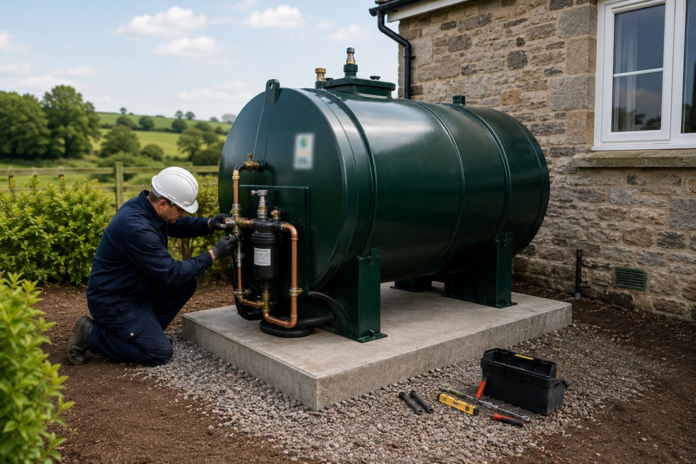

An oil tank provides a practical way to store heating fuel for homes, farms and commercial premises that are not connected to the mains gas network. However, choosing a tank and placing it somewhere convenient is only part of the job. The installation must also consider safety, accessibility, environmental protection and the long-term condition of the storage system.
A professionally planned Oil Tank Installation can provide dependable fuel storage while reducing the risk of leaks, difficult deliveries and costly future alterations. Careful preparation is particularly important because the tank may remain in place for many years.
This guide explains the main decisions involved, from selecting the right tank size to preparing the base and arranging regular inspections.
Why Proper Tank Installation Matters
Heating oil can cause serious environmental damage if it escapes into soil, drains or nearby water. A tank that is positioned incorrectly or placed on an unsuitable base may become unstable, damaged or difficult to inspect.
A suitable installation can help:
- Keep stored fuel secure
- Reduce the likelihood of leaks
- Make tanker deliveries easier
- Support safe boiler operation
- Protect nearby land and drainage
- Improve access for inspections
- Extend the working life of the tank
- Prevent avoidable replacement costs
The installation should be treated as a complete storage system rather than a simple container placed beside the property.
Choosing the Right Tank Capacity
Tank size should reflect the amount of oil normally used, available space and typical delivery quantities. A tank that is too small may require frequent refilling, while an oversized model may take up unnecessary space and increase the initial cost.
Before selecting a capacity, consider:
- The size of the property
- The efficiency of the heating system
- Average annual fuel consumption
- The number of occupants
- Seasonal heating demand
- Available installation space
- Preferred ordering frequency
- The amount normally delivered
It is also important to leave enough unused capacity for a safe delivery. Customers should never order more fuel than the tank can hold.
Monitoring previous fuel usage can provide a realistic guide. New homeowners may be able to check delivery records or ask the former occupants about typical consumption.
Single-Skin and Bunded Tanks
Oil tanks are commonly available in single-skin and bunded designs. Understanding the difference can help customers select a system suited to the property and level of environmental risk.
Single-Skin Tanks
A single-skin tank has one outer layer containing the fuel. These tanks may be suitable in certain situations, but their use can be restricted by location, capacity and nearby environmental features.
They may not be appropriate close to:
- Watercourses
- Drains
- Wells and boreholes
- Areas where a spill could spread
- Property boundaries
- Sensitive ground
- High-risk commercial activity
Bunded Tanks
A bunded tank includes an inner fuel container surrounded by a second protective outer layer. If the inner tank leaks, the outer section is designed to contain the escaped oil.
Bunded designs provide additional protection and are often preferred for larger tanks, commercial sites and locations where a spill could cause serious damage.
The correct choice should be based on a proper site assessment rather than cost alone.
Selecting a Suitable Location
The tank must be positioned where it can be filled, maintained and inspected safely. A location that looks convenient for the homeowner may be unsuitable for the delivery driver or heating engineer.
The chosen area should provide:
- Safe tanker access
- A practical route for the delivery hose
- Clear access to the fill point
- Space for visual inspections
- Protection from accidental impact
- Suitable distance from ignition sources
- Adequate separation from buildings and boundaries
- Stable ground beneath the base
The tank should not block pathways; emergency exits or frequently used garden areas. It should also be kept away from places were vehicles, machinery or falling objects could damage it.
Prepare a Strong and Level Base
Oil tanks become extremely heavy when filled. The supporting base must be level, stable and capable of carrying the full weight without shifting or cracking.
Depending on the site and tank specification, suitable bases may include:
- Reinforced concrete
- Paving slabs laid correctly
- A purpose-built structural platform
- A manufacturer-approved support system
The base should extend beyond the tank edges and support the entire footprint evenly. Soft soil, loose gravel, timber pallets and uneven paving are not appropriate long-term foundations.
A poorly constructed base can cause the tank to lean. This places pressure on the tank body, valves and pipe connections, increasing the risk of damage over time.
Plan Delivery Access Before Installation
Fuel must be delivered by tanker, so access should be considered before the tank is positioned. A difficult installation location may create problems every time a delivery is needed.
Customers should check:
- Whether the tanker can enter the road
- If there are vehicle weight restrictions
- Whether bridges or entrances are wide enough
- The distance between the tanker and fill point
- Whether gates will remain accessible
- If parked vehicles could block the route
- Whether the hose must cross a public pathway
- If the driver can see or reach the tank safely
A remote fill point may sometimes be installed where direct access to the tank is limited. However, this should be designed carefully so fuel can be delivered without confusion or spillage.
Consider Fire and Environmental Safety
Oil tanks should be separated from buildings, openings, combustible structures and other potential hazards. The exact requirements can depend on the size, design and location of the tank.
Fire-resistant barriers may be required where suitable separation cannot be achieved. These barriers must be correctly designed rather than improvised using garden fencing or decorative panels.
Environmental considerations include:
- Nearby drains and manholes
- Rivers, streams and ponds
- Groundwater sources
- Sloping land
- Areas prone to flooding
- Permeable surfaces
- Neighbouring properties
- Protected habitats
Oil naturally flows downhill, so the direction of a possible leak should be considered during the site assessment.
Install Pipework Carefully
The tank must be connected to the heating appliance through suitable fuel pipework. Poorly fitted pipes can leak, become damaged or allow air and contamination into the system.
Good pipework planning should include:
- A safe route from the tank to the boiler
- Protection against physical damage
- Correctly fitted valves and filters
- Suitable materials for oil use
- Accessible isolation controls
- Support for exposed pipe sections
- Protection against corrosion
- Clear identification of connections
Underground pipes may require additional protection and should not be placed where future digging or landscaping work could damage them.
Add Useful Monitoring and Security Features
Modern tank accessories can make fuel management easier and improve security.
Useful options include:
- Electronic level monitors
- Visual tank gauges
- Lockable fill points
- Secure tank lids
- Isolation valves
- Oil filters
- Leak warning devices
- Protective barriers
- Anti-siphon equipment
A tank gauge allows users to place orders before the fuel reaches a critical level. This reduces the risk of emergency deliveries and helps prevent air from entering the fuel line.
Properties in remote or exposed locations may also benefit from additional security measures against fuel theft.
What Happens During Installation?
The process will vary according to the property, but a typical installation may involve:
- Inspecting the proposed location.
- Confirming tank capacity and design.
- Checking delivery and maintenance access.
- Preparing or inspecting the supporting base.
- Removing the existing tank where necessary.
- Positioning the new storage tank.
- Connecting valves, filters and pipework.
- Testing the system for leaks.
- Checking the boiler’s fuel supply.
- Explaining operation and maintenance to the customer.
If an old tank is being replaced, any remaining oil may need to be transferred safely. Sludge or contaminated fuel should not automatically be placed into the new tank.
Homeowners comparing fuel storage, supply and installation support may consider 123 Oil when planning a reliable system that suits their property and expected oil usage.
Common Installation Mistakes to Avoid
A cheaper or rushed installation can create expensive problems later.
Avoid:
- Placing the tank directly on soil
- Using an uneven or undersized base
- Blocking delivery access
- Installing too close to potential hazards
- Ignoring nearby drains or water
- Hiding the tank behind inaccessible screening
- Reusing damaged pipework
- Choosing capacity without checking usage
- Failing to protect the tank from vehicles
- Skipping regular inspections
Decorative screening can improve appearance, but it must not prevent airflow, maintenance or emergency access.
Maintaining the Tank After Installation
A new tank still requires regular attention. Customers should inspect it throughout the year and arrange professional checks when problems appear.
Look for:
- Cracks or bulging
- Rust and corrosion
- Damp patches
- Strong oil smells
- Leaking valves
- Damaged pipework
- Unstable supports
- Faulty gauges
- Water inside the tank
- Vegetation blocking access
Spills and suspected leaks should be handled immediately. Continuing to use a damaged tank may increase environmental harm and clean-up costs.
Final Thoughts
A safe oil storage system begins with careful planning. Tank capacity, location, base construction, delivery access and environmental risks should all be considered before installation begins.
Using suitable equipment and experienced installers can help protect the property, surrounding land and stored fuel. Once installed, regular inspections and sensible monitoring will help keep the system dependable.
A properly fitted tank is not merely a place to hold heating oil. It is an important part of the property’s heating system and should be designed to remain safe, accessible and practical for years to come.