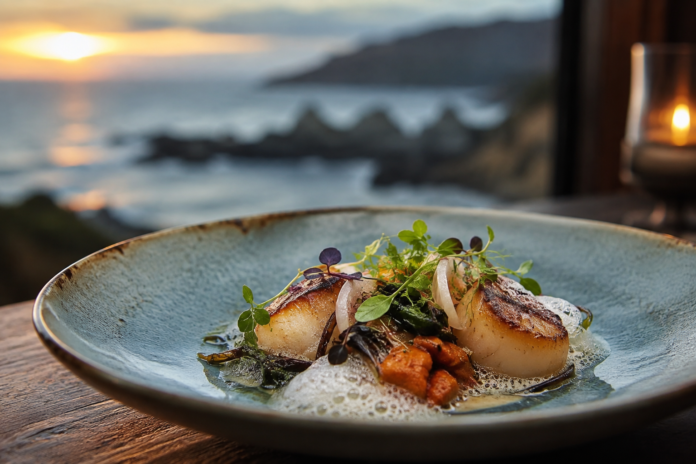

Okay, so here’s the thing about coastal cuisine. Most people hear that phrase and think seafood tower. Oysters, shrimp, maybe a lobster tail. Done. But if you’ve ever eaten at one of those Michelin-starred restaurants, you know it’s way weirder and more specific than that. The food doesn’t just feature fish. It tastes like a particular stretch of water. That fog bank that sits offshore every morning. The salt that crusts on the wild fennel growing near the bluff. The butter from cows that grazed on grass misted with ocean spray. It’s all in there. Coastal cuisine in Michelin-starred restaurants is defined by hyper-local cuisine, seasonal seafood, responsible sourcing, regional identity, and a strong connection between the kitchen and the surrounding coastline. But honestly, that’s a mouthful. Simpler version: you eat the place. The coastline shows up on the plate. And if you picked up that same kitchen and dropped it inland, the food would make no sense anymore. That’s the test. If it could be anywhere, it’s not coastal cuisine. It’s just a menu with some fish on it.
So what even is it then
Coastal cuisine gets tossed around as a label. Some restaurant in a city center puts a raw bar in, and suddenly they’re coastal. No. Actual coastal cuisine in a Michelin restaurant is a kitchen talking to its surroundings constantly. Geography calls the shots. Not just the ocean. The forests, the farms, the scrubby shoreline plants, the wild mushrooms that pop up after rain through wild foraging. A chef working this way doesn’t dream up a menu and then go shopping. It’s the reverse. The ingredients show up. Some days the diver has urchin, some days he doesn’t. The wild fennel was tender last week and woody this week. The tomatoes just came in, and they’re perfect, but they’ll be gone in three weeks. The menu forms around whatever the land and water decide to offer. That’s the opposite of a seafood restaurant. A seafood place orders fish. A coastal kitchen waits to see what the coast gives up.
The calendar is brutal, and that’s the point
Seasonal ingredients in a coastal context are unforgiving. You get something for a flash, and then it’s over. Sea lettuce when the water’s cold. Dungeness crab in winter. Tomatoes in August that taste like actual sunshine. A chef building a seasonal tasting menu around this reality has to surrender control. You can’t lock a dish on the menu for six months. It won’t work. The menu moves because nature moves. Hyper-local cuisine on the coast means constant adaptation. What was abundant last Tuesday is gone this Thursday. Something else slides into its spot. That pace keeps a kitchen awake, and a guest experience varied. You visit in January, and the meal is broths, roots, citrus. You come back in July, and it’s all bright acidity, raw things, stone fruit. Same room. Completely different fine dining experience. That’s not inconsistency. That’s the calendar doing its job.
A quick word on stars
Top-rated Michelin-starred restaurants get their reputation from exceptional craftsmanship, consistency, ingredient quality, and a clear point of view. The Michelin Guide hands out one, two, or three stars based only on the food. The top tier goes to places that create remarkable experiences rooted in technique, creativity, and a strong sense of place. These days, a lot of the most respected ones also lean hard into seasonality, sustainability, and real relationships with producers.
Harbor House Inn up on the Mendocino Coast is a solid example. Chef Matthew Kammerer holds Two Michelin Stars and a Michelin Green Star. The kitchen runs on hyper-local logic. The food doesn’t taste like a chef flexing. It tastes as if the coast itself landed on the plate.
Sourcing that actually means something
Sustainable seafood is about way more than avoiding the endangered species list. It’s knowing the fisherman. Knowing the boat. Knowing whether the harvest trashed the seafloor or left it intact. A kitchen serious about responsible sourcing builds relationships over years. The diver texts at dawn. The chef shifts the menu based on what came in. No urchin today? Dish changes. No drama. Just reality. Sustainable gastronomy here also means paying attention to what’s overabundant and what’s stressed. Purple sea urchin populations have exploded along the Mendocino Coast and destroyed kelp forests. A responsible kitchen puts urchin on the menu not because it’s trendy but because eating it helps the coastal ecosystem. That’s sourcing as stewardship. The Michelin Green Star flags kitchens that think this way.
There’s way more than fish on the plate
Coastal cuisine in a Michelin-starred restaurant reaches past the ocean. The shoreline gives up things that never swam. Wild herbs growing in salty soil. Succulents. Edible flowers. Mushrooms from the forest. Dairy from cows grazing on pasture that gets ocean mist. Hyper-local cuisine pulls from every nearby ecosystem. Ocean-to-table ingredients get the headlines, but the ranch down the road matters just as much. Vegetables grown in fog-cooled soil develop slower, concentrate more flavor. Marine ingredients like seaweeds and sea lettuce bring a briny, vegetal note you can’t replicate. The whole plate becomes a map of the surrounding landscape. You eat, and you understand exactly where you are without anyone explaining it.
The room is part of the dish
A Michelin dining experience rooted in coastal dining doesn’t work in a windowless basement. The setting is half the meal. The view pulls your eyes outward. The light shifts as the sun drops. The pace slows because the ocean does that. You stop checking your phone. You forget about the drive. Luxury dining here means nothing yells. The architecture doesn’t fight the view. Service is warm but not hovering. Personalized hospitality means someone noticed you were chilly and adjusted things without asking. Luxury hospitality on the coast is about removal. Removing noise. Removing hurry. Removing anything that distracts from the water and the food.
Harbor House Inn as the real deal
The building went up in 1916 in Elk, California. Perched on a bluff. Pacific fills the windows. Chef Matthew Kammerer holds two Michelin Stars and a Michelin Green Star. A 320-acre ranch supplies produce, herbs, eggs. The ocean does the rest. The daily chef tasting menu changes because the ingredients change. Hyper-local philosophy isn’t a phrase here. It’s logistics. Renewable energy runs the place. Water gets conserved. Waste feeds the ranch. The whole operation is a loop. Guests get quiet luxury and personalized hospitality. The food tastes like the Mendocino Coast because the whole system is built to let the Mendocino Coast talk. That’s coastal cuisine at its most honest. Not a seafood menu. A portrait.
Why any of this still matters
People are bored of restaurants that could be anywhere. They want to eat somewhere and leave understanding the region. Coastal cuisine keeps shaping the modern fine dining restaurant because it delivers something a generic luxury experience can’t. Authenticity. Seasonality. A story rooted in actual dirt and water. Chefs who commit to this build loyalty that outlasts fads. Guests come back not for a dish but for the feeling of being somewhere specific. That’s where Michelin-starred restaurants are headed. Not less technique. More sense of place.
What you actually remember later
Coastal cuisine in a Michelin-starred restaurant isn’t about eating seafood near water. It’s about eating a place. The ingredients, the pacing, the view, the service. All of it works together to express a specific coastline at a specific moment. Harbor House Inn demonstrates this every day. The Mendocino Coast shapes the menu, the room, the whole atmosphere. Guests leave with more than a full stomach. They leave with the sense they’ve been somewhere real. Somewhere that couldn’t exist anywhere else. That’s the whole definition of coastal cuisine. Not a category. A commitment. The ocean is just the loudest voice in the room.