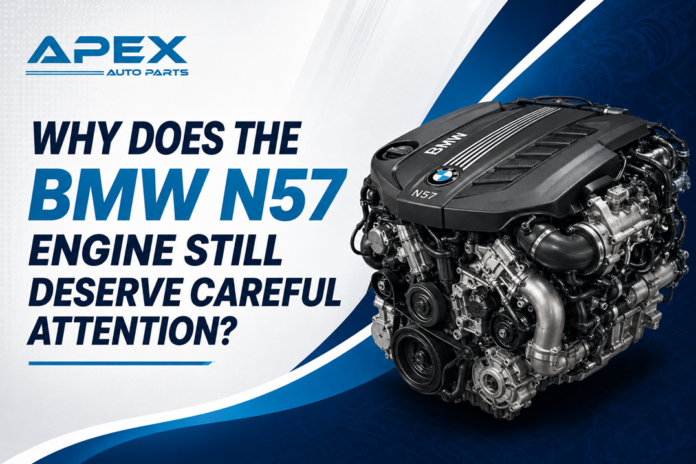

The BMW N57 engine is one of the most respected diesel engines BMW has produced. It is a 3.0-litre straight-six diesel engine known for strong torque, smooth power delivery, and good fuel economy on long journeys. Many drivers like it because it feels powerful without being harsh, and it can make larger BMW models feel relaxed and easy to drive.
The N57 was fitted to many popular BMW models, including versions of the 330d, 335d, 530d, 535d, 730d, 740d, X3, X5, X6, and other diesel models depending on the year and market. This wide use is one reason the engine is still searched by buyers, garages, and BMW owners today.
But the N57 engine should not be judged only by its power or reputation. It is a strong engine when properly maintained, but it can become expensive if warning signs are ignored. Like most modern diesel engines, it depends on clean oil, proper cooling, correct fuel pressure, functioning emissions components, and proper diagnosis before repairs are carried out.
For drivers thinking about buying a used BMW with an N57 diesel engine, the real question is not only whether the engine is good. The better question is whether that exact car has been well looked after.
Why Does the N57 Engine Have a Strong Reputation?
The N57 engine became popular because it gives a strong mix of performance and economy. It has the smooth feel BMW six-cylinder engines are known for, but it also gives the low-down pulling power that diesel drivers want. In daily use, this means the engine does not need to be pushed hard to feel strong.
On the motorway, the N57 can feel calm and efficient. In larger BMW models such as the X5 or 7 Series, it gives enough torque to move the car without feeling strained. In smaller models such as the 330d, it can feel quick and responsive.
Higher-output versions, including the BMW N57 twin-turbo engine, deliver even more performance. These versions can feel very strong for a diesel, but they also require more careful maintenance because extra turbo hardware means more heat, more load, and more parts that can wear out.
This is why the N57 can be an excellent engine for the right owner. It suits drivers who do proper mileage, keep servicing on time, and fix small faults early.
The Main Weak Point Is Often Poor Maintenance
Many BMW N57 engine problems are not caused by a weak engine design alone. They often stem from poor service, long oil change intervals, cheap parts, ignored warning lights, or repeated short journeys.
Diesel engines create soot. That soot can build up in the intake, EGR system, and DPF. If the car is only used for short town trips, the engine may not reach the right temperature often enough. This can stop the DPF from regenerating properly and can increase carbon-related issues.
Clean oil is also vital. The N57 relies on good oil for the timing chain, turbochargers, bearings, and internal parts. Old oil can speed up wear and may increase the risk of timing chain noise or turbo problems. On an engine where repair labor can be high, stretching service intervals too far is a poor saving.
Good N57 engine reliability usually comes from simple habits done consistently:
- Change oil on time
- Use the correct oil grade
- Keep filters fresh
- Fix leaks early
- Do not ignore warning lights
- Let the engine warm before hard driving
These are basic steps, but they make a major difference.
Timing Chain Noise Should Be Checked Early
Timing chain wear is one of the more serious issues linked with the N57 engine. A timing chain keeps the crankshaft and camshaft working together. If it wears out badly, stretches, or jumps out of time, the damage can be serious.
Some drivers hear a slight rattle and keep driving because the car still feels normal. That is risky. A small timing chain noise can become a much bigger problem if left too long.
The warning signs can include rattling on cold start, noise at idle, timing fault codes, hard starting, poor running, or reduced power. Because timing chain work can be labor-heavy, early diagnosis is important. It is far better to inspect a noise early than wait for the engine to suffer major damage.
EGR and DPF Faults Need Root Cause Checks
EGR and DPF problems are common in many modern diesel engines, not only the N57. The EGR system helps reduce emissions by sending some exhaust gas back into the intake. Over time, soot can build up, the valve can stick, and the cooler can cause problems.
The DPF traps soot from the exhaust and burns it off during regeneration. If the car does not reach the required operating temperature, or if another fault prevents regeneration, the DPF can block.
The mistake many owners make is treating EGR or DPF faults as isolated problems. A blocked DPF may result from a faulty thermostat, faulty glow plugs, injector issues, boost leaks, or repeated short journeys. Clearing a code without addressing the underlying cause will not solve the issue.
A good mechanic should look for the cause, not just the symptom.
Turbo Health Matters on Every N57
The N57 engine uses turbocharging, and some versions use more than one turbo. Turbochargers work under heat and speed, so oil quality is very important. Dirty oil, restricted oil feed, boost leaks, or poor tuning can shorten turbo life.
Warning signs of turbo trouble can include smoke, whining noises, low power, limp mode, boost fault codes, or oil around boost pipes. On a BMW N57 twin-turbo engine, diagnosis can be more involved because there are more components in the system.
If the engine has been tuned, extra care is needed. A good remap may feel strong, but more power creates more heat and stress. Cooling, fuel supply, oil condition, turbo condition, and gearbox health should all be checked before chasing more performance.
What to Check Before Buying a Used N57 BMW
A used BMW with an N57 engine can be a very good buy, but only if the condition is right. Do not buy based only on badge, power, or mileage. Service history matters more.
Start the car from the cold if possible. Listen for the timing chain rattle. Watch for smoke. Check if the engine idles smoothly. During the test drive, power should come in cleanly without hesitation or limp mode. The engine should reach a proper temperature and should not lose coolant or oil.
A buyer should check the following:
- Full service history
- Oil change intervals
- Timing chain noise
- EGR and DPF history
- Turbo condition
- Injector noise or smoke
- Oil leaks
- Coolant loss
- Signs of poor tuning
A cheap N57 BMW with missing service history can become far more expensive than a cleaner car at a higher price.
Why Do Correct Parts Matter?
The N57 engine has different versions, and parts are not always the same across every model. A 530d, 535d, X5 30d, and X6 40d may all be linked to the N57 family, but part fitment can vary by engine code, year, power output, and turbo setup.
This matters when buying timing parts, gaskets, sensors, injectors, oil pumps, water pumps, bearings, seals, hoses, and rebuild parts. A part that looks similar may not be correct.
Apex Auto Parts supports UK drivers, garages, mechanics, and trade buyers with engine parts for repair and rebuild work. For N57 engine repairs, checking the engine code, registration, VIN, and part number before ordering helps avoid delays and repeat labor.
Final Thoughts
The BMW N57 engine is a strong, smooth, and capable diesel engine. It offers excellent torque, good long-distance fuel economy, and a refined driving feel. When maintained properly, it can be a very rewarding engine to own.
But it is not an engine to ignore. Timing chain wear, EGR faults, DPF problems, injector issues, turbo wear, leaks, and carbon buildup can all become expensive if left too long. The best way to protect the N57 engine’s reliability is simple: service it properly, diagnose faults early, and use high-quality parts.
For drivers buying a used BMW with an N57 diesel engine, condition matters more than reputation. A well-cared-for N57 can be a smart choice. A neglected one can become a costly lesson.