
Gardening takes times. It’s not an easy one-hour job. In fact, a lot of the time, you’ll need a full day or weekend to make a difference. And this is why so many people are chasing low-maintenance yards.
Now, a low-maintenance yard doesn’t mean zero work. It just means less work. For people who would rather be out doing other things with their time, this can be a game-changer. Maybe you work full-time. Maybe you’ve got a family to care for. Whatever the reason, there is an easy way.
But what can you do to achieve this dream? There’s a lot of information out there, so much that it could be overwhelming. Fortunately, this post outlines three key steps to start with.
Keep reading on to learn more.
1. Streamline the Layout with Hardscaping
It’s the greenery that causes the most work, right? Just get rid of it.
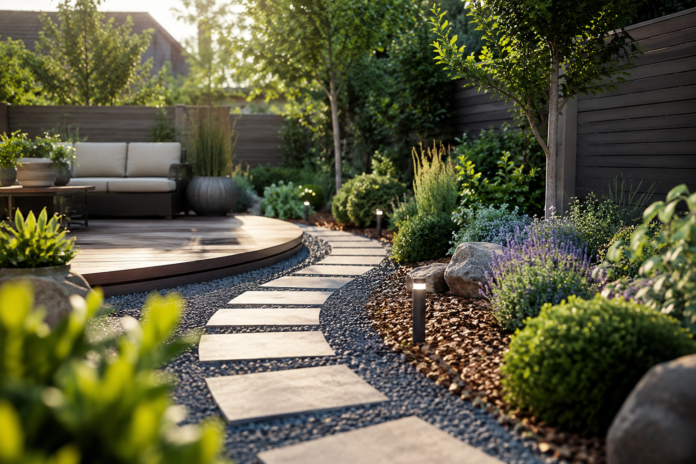
Hardscaping, which replaces lawns and plants with pavers and other solid materials, is a popular choice. Some people prefer patios and decking. Others want stone paths and retaining walls. Either way, your garden will stay neat all year long with almost no effort.
Ensure you have a plan before starting, though. This simplifies the project. You might choose to divide your yard into key areas – for relaxing, sitting, and walking, for example. Keeping the shapes simple is key here. Use gentle, sweeping curves to make tidying up fast.
However, if you don’t want to give up some greenery, you don’t have to. Synthetic turf could provide a lush lawn without the mowing, constant watering, and weeding of natural grass. As the Magnolia Turf company says, this change could cut your yardwork time to as little as five hours.
2. Choose Self-Sufficient Perennials
Hardscaping poses a risk – you might be creating a concrete jungle. To avoid this, some people continue including plants and shrubs. You do need to consider the type of plants you use, though.
Self-sufficient perennials are good contenders. These plants establish deeps root systems. They emerge fresh each season. As a result, the spring chore of buying and setting out new annuals is eliminated. Not only that, but you’ll save money, too. And who doesn’t want that?
The important thing is to match your climate and soil. You want the plants to thrive – even without water – once they’re established. You can only do this if you pick native plants or those adapted to your local environment, including rainfall and temperature rangers.
3. Use Deep Organic Mulches
Mulch is necessary a lot of the time. A good, organic mulch should be applied three to six inches deep. This will act as a heavy-duty blanket that locks in moisture and blocks weed seeds. It’ll also feed the early automatically.
There are numerous options to consider, including:
- Wood chips and bark,
- Straw,
- And shredded leaves.
You must keep a two-inch gap when laying mulch. This gap should be around plant stems and tree trunks. If mulch is piled too high against bark, for example, you’ll likely have to deal with pests and rot.
To conclude, a low-maintenance yard is entirely possible. If you follow the advice outlined above, you’ll have a higher chance of success. And then you can enjoy your free time!