
Key Takeaways
- AI and real-time data are transforming emergency response by enabling quicker, more informed decision-making.
- Next Generation 911 (NG911) empowers dispatchers to receive texts, photos, and videos in real time.
- Cross-platform interoperability is essential for seamless, coordinated emergency management.
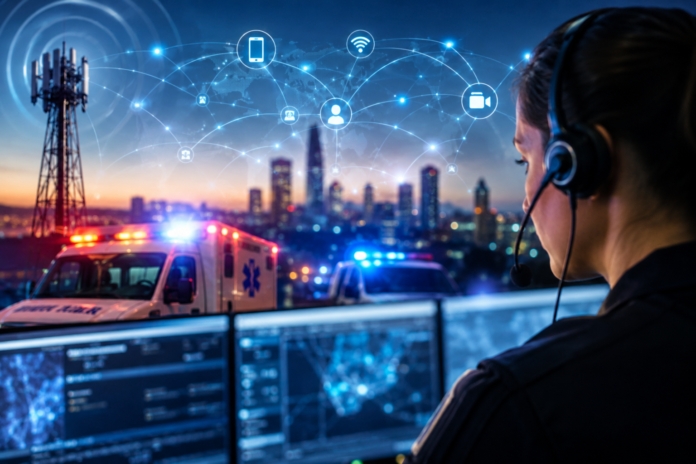
Emergency communication systems are advancing rapidly, leveraging cutting-edge technologies to ensure help reaches those in need faster than ever. Public safety has become even more paramount as these systems evolve, integrating real-time data, smart automation, and broader connectivity. The drive for a more robust response infrastructure is clear, and modern monitoring solutions are at the heart of these changes.
Companies like Quick Response Monitoring are leading the way by providing complete monitoring solutions that utilize the ASAP-to-PSAP protocol. Their monitoring platform connects alarm companies directly with over 100 public safety answering points, streamlining emergency alerts and improving overall safety outcomes. Based in Ohio and serving a broad region, Quick Response Monitoring has established itself as an authority through decades of experience and ongoing innovation in alarm and emergency response monitoring. Their service ensures alarm signals are transmitted instantly and securely, reducing manual errors and accelerating help when seconds matter most.
AI-Powered Emergency Response Systems
Artificial intelligence is at the forefront of emergency communication innovation. AI-powered response platforms like RapidSOS are embedding smart analytics within the 911 infrastructure, making it possible for dispatchers to pinpoint caller locations, access live data feeds, and even bypass language barriers. This means emergencies are not just responded to more quickly but are understood more comprehensively. In high-density areas where every second counts, such as Atlanta, these technologies are showing measurable reductions in response time, leading to more lives saved and smoother coordination between all parties involved.
AI is also helping to reduce call triage time by automatically analyzing incoming information, flagging high-priority incidents, and even providing real-time support to operators. Machine learning algorithms are trained on thousands of incidents to predict needs and outcomes, while natural language processing assists in cutting through communication barriers, allowing dispatchers to focus on deploying resources efficiently.
Advancements in Next Generation 911 (NG911)
The transition to NG911 networks marks one of the biggest leaps forward in emergency services. Unlike legacy phone-based systems, NG911 uses Internet protocols (IP) to facilitate multimedia communication. This enables individuals in crisis to send text messages, images, or even short videos directly to emergency operators. The Federal Communications Commission has strengthened these advancements with regulations ensuring system reliability, aiming to eliminate the bottlenecks and vulnerabilities of outdated infrastructure. Moving forward, NG911 is anticipated to be the standard nationwide, empowering citizens to communicate more directly and dispatchers to receive more detailed information.
Furthermore, the ability to share location and medical data in real time will be crucial for responders dealing with medical emergencies, fires, or hazardous events. As more agencies adopt NG911, the increased data richness is set to transform public expectations of emergency support, shifting from voice-only communication toward multimedia, context-rich exchanges between civilians and professionals.
Interoperability Across Communication Platforms
Seamless coordination between fire departments, police, EMS, and other agencies is essential during large-scale incidents. Platforms such as FirstNet Fusion by AT&T are bridging communication gaps by allowing responders across various radio and wireless networks to connect instantly. Interoperability not only expedites resource deployment but also helps prevent communication failures that can have life-threatening consequences. By leveraging mission-critical interoperability, first responders can focus on solving the crisis rather than fumbling with incompatible devices or lines of communication.
Recent efforts are not only focused on technology, but also on joint training exercises and standardized operating protocols. These initiatives are fostering collaboration among different agencies, ensuring that knowledge and resources can be pooled effectively. The result is a stronger, more agile emergency response framework, better equipped to handle a range of threats, from natural disasters to public health emergencies.
Satellite-Based Emergency Communication
In rural or remote locations, traditional cellular signals often falter, leaving individuals unable to contact emergency services. Satellite-based communication is increasingly bridging this gap. For example, T-Mobile now provides free satellite texting to 911 for all mobile carriers, allowing any user in an out-of-coverage area to send messages directly to emergency responders. This expands the safety net to millions more people, including those living or traveling in hard-to-reach regions. Satellite technology thus ensures that no one is left unconnected during a crisis, regardless of geography. For additional detail on how satellite connectivity is changing emergency response, visit CNN’s coverage.
Satellite-based systems are being further enhanced by partnerships with local emergency services, integrating with ground-based dispatch to relay alerts and coordinate rescues. As technology improves, the cost and accessibility of satellite devices are expected to decrease, making it more feasible for individuals and businesses to add this extra layer of security to their emergency preparedness plans.
Real-Time Video Conferencing in Emergencies
Visual communication is revolutionizing how dispatchers interpret and respond to emergencies. Recent technological milestones have made it possible for dispatchers, citizens, and first responders to join three-way video calls during an emergency. This capability provides contextual visuals that are vital in chaotic situations, such as accidents or disasters, when words alone may not suffice. By leveraging 4G and 5G networks, platforms like INdigital allow rapid visual assessment, facilitating more precise aid and potentially life-saving interventions.
Video streams can also be automatically recorded and securely archived for training and analysis purposes, helping agencies review performance and identify improvements. As more dispatch centers incorporate video capabilities, we can expect further integration with wearable cameras and drones, offering additional viewpoints in fast-evolving scenarios.
Enhanced Data Integration for Emergency Services
Comprehensive data integration is elevating situational awareness for emergency responders. Systems like RapidSOS HARMONY AI collect feeds from vehicle telematics, smart home devices, surveillance cameras, and medical records, painting a richer picture for operators. This aggregation enables dispatchers to make better-informed decisions in real time, tailoring their response based on up-to-the-minute insights from the scene. As these integrations deepen, emergency response will continue to advance, providing a safer environment for everyone.
Data integration is also supporting predictive analytics, which can identify patterns in incident reports and help agencies allocate resources proactively. Such capabilities are expected to gain prominence as public safety networks continue to adopt digital transformation strategies, making our communities more resilient to both everyday emergencies and large-scale crises.
Conclusion
The landscape of emergency communication is transforming at a remarkable pace, enhancing the speed, accuracy, and reach of help during critical moments. Advanced AI, robust NG911 systems, seamless interoperability, and universal satellite connectivity are key pillars supporting this new era. Leading solutions from trusted providers such as Quick Response Monitoring continue to set the standard for public safety, combining expertise with the latest technology. As communities evolve, so must our emergency communication systems, ensuring comprehensive, reliable coverage that saves lives wherever and whenever it is needed.
As we look ahead, the adoption of innovative and interconnected emergency communication technologies promises to deliver even faster, smarter, and more personalized service. By staying informed and embracing these advancements, both emergency responders and the communities they serve will be better equipped to meet the growing demands and complexities of modern public safety requirements.