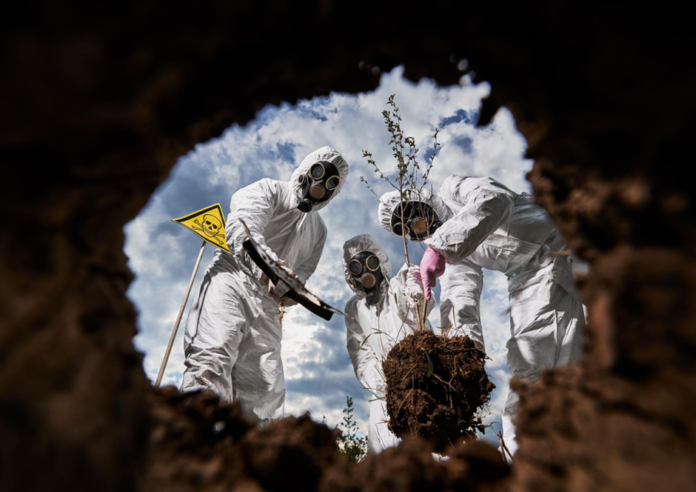

Mitigating friable asbestos in pre-World War II buildings requires specialized containment, wetting agents, and negative air pressure systems. Because friable asbestos crumbles under minimal pressure, it poses severe inhalation risks. Professional environmental remediation ensures safe stabilization, rigorous air monitoring, and legal disposal to eliminate airborne contamination.
Key Takeaways:
- Pre-WWII buildings frequently contain fragile, easily crumbled friable asbestos.
- Negative air pressure zones prevent toxic fibres from escaping.
- Disturbed materials easily lead to dangerous asbestos in soil.
Pre-World War II structures have high historical and architectural value. However, these aging buildings frequently become a reason behind environmental hazards. Among these hazards, friable asbestos poses the most notable threat.
Friable asbestos is brittle and can crumble easily under light pressure. Due to this, friable asbestos is highly dangerous during renovations and demolitions. When disturbed, it can break into microscopic fibres that release into the breathing zone. Therefore, understanding proper mitigation protocols is important for both workers and the public.
In this blog post, we will discuss the essential steps to identify, contain, and eliminate friable asbestos safely from important World War II structures.
The Historical Context of Pre-WWII Asbestos
Before WWII, builders favoured asbestos because of its exceptional heat resistance and tensile strength. It was cost-effective, durable, and widely available across global markets.
Consequently, it was integrated into hundreds of standard building supplies. Legacy structures often contain high concentrations of these toxic materials. Over the decades, these materials have naturally degraded, increasing their friability.
Common Locations of Friable Asbestos
In legacy buildings, friable material is typically found in thermal insulation. It is used as a coating in steam pipes, boilers, and water ducts. It also exists in old fireproofing and textured ceiling plaster.
Initial Site Assessment and Asbestos Analysis
Without knowing the actual boundaries when the asbestos is present. The primary step in any legacy building project is a 360-degree site inspection. So, by doing just the visual identification, you will not get the full picture, especially in the case of older materials.
Therefore, property owners need to consult with a licensed environmental hygienist for asbestos analysis in older buildings. This process involves collecting small amounts of material under controlled conditions. Then, these samples are used for laboratory evaluation to confirm the presence of hazardous fibres.
The Role of Lab Testing
A professional asbestos analysis identifies the specific fibre type and concentration. Labs utilize polarized light microscopy to detect hidden asbestos structures. This data forms the foundation of your entire remediation strategy.
Setting Up High-Level Containment Zones
Once the type of fibre and concentration is confirmed, the remediation zone needs to be totally isolated from the area. Friable asbestos fibres can easily spread on standard air currents.
Technicians construct heavy-duty plastic barriers around the active work area. All ventilation systems, doorways, and windows must be sealed completely. This creates a secure envelope that keeps dangerous dust trapped inside.
Negative Pressure Systems
Remediation teams use specialized negative air machines equipped with HEPA filters. These units constantly pull air out of the enclosure while filtering out microscopic fibres. This air movement ensures that clean air pulls inward, preventing toxic leakage.
Safe Remediation and Wetting Techniques
It is globally illegal and hazardous to do dry remediation of the friable asbestos. Dry fibres instantly become airborne even with minor physical disruption. So, suppression techniques are mandatory throughout the extraction process.
Technicians use amended water to thoroughly soak the materials before touching them. Amended water contains specific surfactants that penetrate deep into the fibres. This moisture locks the dust down, keeping it heavy and stable.
Extraction and Packaging
Workers carefully remove the saturated insulation in small, manageable sections. The waste is immediately placed into heavy-gauge, labelled asbestos disposal bags. These bags are sealed airtight before leaving the negative pressure enclosure.
Preventing Soil and Site Cross-Contamination
Friable materials from aging buildings can escape during poor handling phases. If bags tear or waste is staged incorrectly, fibres settle outdoors. This creates a secondary environmental issue on the surrounding grounds.
Washed-away fibres frequently accumulate as asbestos in soil around legacy foundations. This soil contamination requires extensive excavation and specialized topsoil remediation. Keeping waste secure prevents costly outdoor environmental cleanup projects.
Comparing Remediation Material Risks
Different asbestos applications present varying levels of risk and mitigation difficulty. In the table below, we can outline how friable materials compare to non-friable variants during legacy building projects.
| Material Type | Friability Level | Primary Mitigation Focus |
| Pipe Insulation | High | Wetting agents, full containment |
| Sprayed Fireproofing | High | Negative pressure, HEPA vacuuming |
| Asbestos Cement | Low (Unless damaged) | Careful unbolting, minimal breakage |
| Vinyl Floor Tiles | Low (Encapsulated) | Chemical shifting, low-speed scraping |
Table: Asbestos Material Risk Matrix
Final Thoughts
Mitigating friable asbestos from pre-WWII buildings requires strict containment and professional execution. Through accurate laboratory analysis, rigorous wet remediation methods, and careful waste management, property owners can safely preserve historic structures without compromising public health.
Consult a Licensed Hazardous Material Remediation Professional for Safe Remediation of Legacy Properties!
Do you own a property from World War II times? If you suspect your building contains unsafe asbestos, protect yourself first. Partner with an asbestos remediation consultant to schedule a comprehensive site inspection.