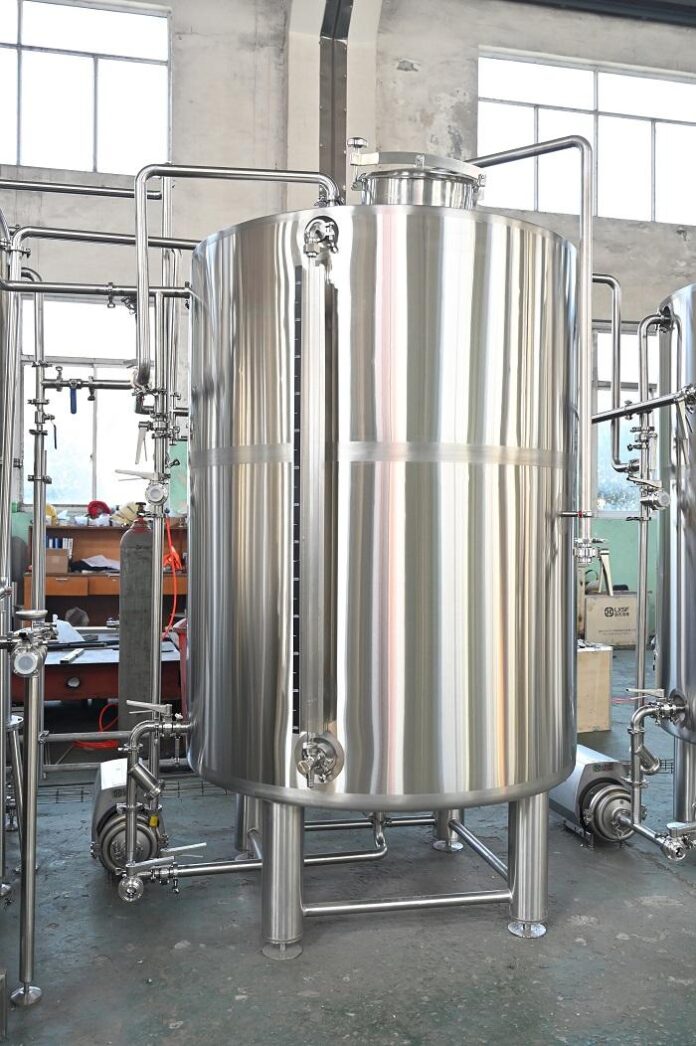

Size hot and cold liquor tanks from batch volume, mash and sparge demand, brew turns, water temperature, heating and cooling recovery, cleaning requirements, and simultaneous use. The tank should support the brew schedule without storing unnecessary water or waiting between batches.
Calculate usable volume rather than total shell volume. Include pump suction, freeboard, temperature expansion, and any volume that cannot drain. Model the most demanding brew day, including multiple turns and CIP, before selecting vessel capacity.
What Is a Hot Liquor Tank Used For?
A hot liquor tank stores heated brewing water for mash-in, infusions, sparging, and other approved uses. It can shift heating work outside the critical brew cycle and provide water at a stable temperature.
The design may include steam jackets, electric elements, external heating, recirculation, level control, and insulation. It is not a substitute for water-treatment or sanitation procedures. Water age, temperature, and tank cleaning must be managed.
What Is a Cold Liquor Tank Used For?
A cold liquor tank stores chilled brewing water, commonly for wort cooling or process-water demand. It can reduce load on the chiller during peak knockout and capture cold water for the next brewing step.
The tank needs appropriate insulation, cooling, circulation, level control, and hygienic design. In some systems, cold water leaving the wort heat exchanger becomes hot water for the hot liquor tank, improving water and energy use.
How Is Hot Liquor Volume Calculated?
Add mash water, sparge water, line and vessel losses, and any hot cleaning water required before the tank can recover. For multiple turns, calculate whether heating continues while the first batch uses water.
A tank large enough for one full brew may support several turns when recovery is fast. A larger tank may be needed when heating is slow or utility demand is restricted. Use recipe-specific water-to-grain ratios and the largest regular grain bill.
How Is Cold Liquor Volume Calculated?
Calculate the cold-water flow and temperature needed to cool the largest wort batch from knockout temperature to fermentation temperature. Include seasonal incoming-water temperature and heat-exchanger performance.
Subtract water that can be chilled during the cooling cycle and add reserve for simultaneous use. For lager or warm-climate production, cold-liquor demand can be higher. Confirm how much warmed outlet water can be captured without overflowing hot storage.
Should the Tanks Hold One or Two Batches?
One-batch capacity may be sufficient when heating and chilling recover quickly between turns. Two-batch or larger storage can support consecutive brews, reduce utility peaks, and provide scheduling flexibility.
Larger vessels increase floor space, insulation, structural load, cleaning volume, and stored-water management. Compare recovery time and production schedule. Do not select two-batch storage only because it is common in another brewery with different utilities.
How Fast Should Water Heat?
Heating capacity should raise the required water volume from incoming temperature to the target within the available schedule. Include heat loss, tank insulation, recirculation, and simultaneous steam or electrical loads.
Request a calculated and tested heat-up time. When comparing brewery systems, confirm the energy delivered to the water, not only boiler or element nameplate output. Scale, weak steam supply, and poor circulation can extend recovery.
How Fast Should Cold Liquor Recover?
Recovery must restore the required volume and temperature before the next knockout. Chiller capacity, glycol temperature, coil or jacket area, circulation, ambient heat gain, and incoming-water temperature control the rate.
Model the hottest expected source water and peak cellar cooling load. A chiller that handles the cold liquor tank alone may fall behind when fermenters crash-cool. Confirm total simultaneous cooling demand.
What Controls Are Needed?
Useful controls include temperature measurement, level indication, high and low alarms, heating or cooling control, recirculation, pump protection, and automated water transfer. The level method should work with hot water, condensation, and the vessel geometry.
Prevent heaters from operating without safe liquid coverage. Interlock pumps and valves where incorrect routing can overflow tanks or send water at the wrong temperature. Provide manual procedures for control failure.
How Should the Tanks Be Positioned?
Position tanks to minimize pipe distance, heat loss, pump head, and hose crossings. Elevated tanks may provide gravity assistance but require structural support and safe access. Ground-level tanks need suitable pumps.
Provide room for insulation, instruments, manways, spray devices, and maintenance. Coordinate overflow and drainage. Hot surfaces and steam lines need protection from operator contact.
How Are Liquor Tanks Cleaned?
Use cleanable vessel geometry, full drainage, suitable spray coverage, and written cleaning procedures. Water tanks can still develop scale, sediment, biofilm, or contamination when neglected.
Inspect manways, level devices, temperature pockets, recirculation loops, vents, and low points. Water treatment can change cleaning needs. Avoid leaving stagnant branches. Verify cleaning after installation and after piping changes.
What Information Should Be Provided for Sizing?
Provide batch size, maximum grain bill, mash and sparge volumes, turns per day, source-water temperature, target temperatures, time between batches, heating source, chiller data, CIP demand, floor plan, and expansion plan.
Ask the brewing equipment provider for working volume, recovery calculations, utility loads, heat-exchange area, insulation, controls, overflow, drainage, and a timed water-balance schedule. Check that the two tanks work together rather than sizing them independently.
What Is the Most Common Selection Mistake?
The most common mistake is selecting the hot and cold liquor system from nominal capacity or purchase price without testing the complete operating cycle. Interfaces with upstream equipment, downstream capacity, utilities, cleaning, and labor often determine real performance.
Base the decision on highest-demand multi-turn brew day. Record the assumptions used in every proposal so apparently similar quotations can be compared on the same operating conditions.
How Should Factory and Site Acceptance Be Planned?
Create written acceptance criteria before fabrication. Factory checks should confirm dimensions, components, controls, fabrication, documentation, and safe functional operation where testing is possible. Site testing should use installed utilities and representative process conditions.
Measure usable volume, heating and cooling recovery, temperature stability, pump flow, and water balance. Record results, deviations, responsible parties, and completion dates. Do not release final acceptance because the equipment powers on; confirm the functions that create usable brewery capacity.