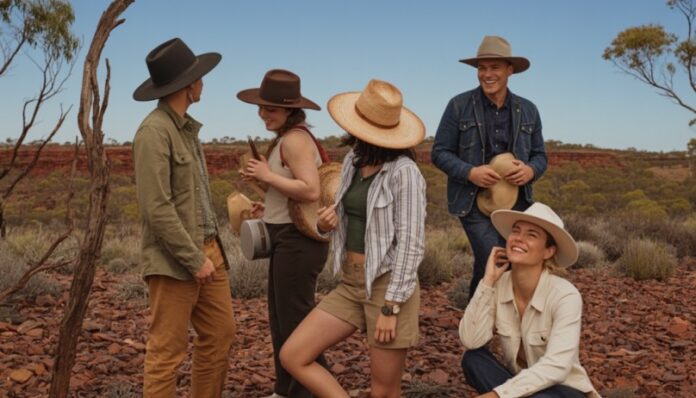

Few pieces of headwear carry the cultural weight of the Australian outback hat. With its distinctive wide brim and weather-beaten silhouette, this hat has transcended its utilitarian origins to become a global symbol of adventure, resilience, and the untamed Australian spirit. From the dusty trails of 19th-century explorers to the silver screen’s most memorable characters, the outback hat tells a story that spans continents and generations.
This enduring appeal isn’t accidental. The outback hat emerged from genuine necessity—protection against one of the world’s harshest climates—and evolved into something far more significant: a cultural artifact that continues to shape how the world perceives Australia and its frontier heritage.
Origins in the Australian Frontier
The outback hat’s development mirrors Australia’s colonial expansion. Early settlers and explorers quickly discovered that European headwear offered little protection against the continent’s relentless sun and unpredictable weather patterns. The solution came through adaptation: wide brims for maximum shade, durable materials like felt and leather that could withstand extreme conditions, and designs that allowed air circulation in scorching temperatures.
By the mid-1800s, hatmakers in Melbourne and Sydney were producing styles specifically engineered for the Australian environment. These weren’t fashion statements—they were survival equipment. The wide brim protected not just the face but the neck and shoulders, critical in a landscape where shade was often scarce. Materials were chosen for their ability to shed rain while remaining breathable, and the iconic chin strap ensured the hat stayed secure during sudden windstorms that could sweep across the plains without warning.
What began as practical gear gradually acquired deeper meaning. The outback hat became associated with the qualities Australians valued: toughness, self-reliance, and an ability to thrive in challenging conditions. These hats became so intertwined with national identity that they appeared in political cartoons, literature, and early photography as shorthand for the Australian character itself.
The Explorer’s Essential Companion
Australia’s most celebrated explorers understood that the right equipment could mean the difference between success and disaster. Ludwig Leichhardt, who led multiple expeditions into uncharted territory during the 1840s, relied on his wide-brimmed hat during grueling journeys that lasted months. John McDouall Stuart, who completed the first south-to-north crossing of the continent in 1862, similarly depended on his headwear to endure temperatures that regularly exceeded 40 degrees Celsius.
These expeditions weren’t leisurely adventures—they were dangerous undertakings that pushed human endurance to its limits. The Australian Museum’s documentation of these pioneering journeys reveals how essential proper equipment was to survival. Explorers faced:
- Extreme temperature fluctuations: Desert regions could swing from scorching days to near-freezing nights.
- Intense UV exposure: Australia’s proximity to the ozone hole meant dangerous radiation levels.
- Limited water sources: Reducing sun exposure helped conserve precious fluids.
- Unpredictable weather: Sudden storms required versatile protection.
The outback hat addressed all these challenges. Its design became so effective that variations of the original patterns remain largely unchanged more than a century later—a testament to the ingenuity of those early craftsmen who understood the Australian environment intimately.
Hollywood’s Australian Archetype
Cinema transformed the outback hat from regional necessity to global icon. When Crocodile Dundee premiered in 1986, Paul Hogan’s character—complete with his battered, cork-dangling hat—introduced international audiences to a romanticized vision of Australian ruggedness. The film became a cultural phenomenon, and the hat became inseparable from the image it projected.
The Indiana Jones franchise, while not explicitly Australian, drew heavily on outback hat aesthetics for its protagonist’s signature look. Harrison Ford’s fedora shared the wide brim and durable construction that defined Australian designs, cementing the association between this style of headwear and adventure itself. Costume designers specifically referenced Australian bush hats when creating Indiana Jones’s iconic appearance.
These cinematic appearances did more than boost hat sales—they shaped global perceptions of Australian culture. The outback hat became visual shorthand for qualities that resonated with audiences worldwide: independence, resourcefulness, and a willingness to venture into unknown territory. Film reinforced what the hat had always represented, but on an unprecedented scale.
Choosing and Maintaining Your Outback Hat
Modern outback hats come in various materials and styles, each suited to different needs and preferences. Understanding these options helps ensure you select a hat that will serve you well for years:
- Felt hats: Excellent water resistance and durability, ideal for wet climates and cooler temperatures.
- Leather hats: Develop character over time, offer superior longevity with proper care, best for dry to moderate conditions.
- Straw hats: Maximum breathability for hot weather, lightweight and comfortable for extended wear.
For those seeking authentic Australian craftsmanship, retailers like Conner Hats, much like Jacaru and Kakadu Traders, offer traditional styles that honor the hat’s heritage while incorporating modern materials and construction techniques.
Proper maintenance extends a hat’s lifespan considerably. Leather hats, in particular, require regular attention to prevent cracking and maintain their shape.
Essential maintenance practices include:
- Brushing away dust and debris with a soft-bristled brush after each use.
- Conditioning leather hats every few months to preserve suppleness.
- Storing hats on proper forms or supports to maintain crown and brim shape.
- Keeping hats away from direct heat sources and prolonged sunlight when not in use.
- Allowing wet hats to air dry naturally rather than using artificial heat.
- Addressing stains and marks promptly before they set permanently.
These simple steps ensure your outback hat remains functional and attractive through years of use, developing the kind of authentic patina that only comes with time and proper care.
The Enduring Appeal
The outback hat’s continued relevance speaks to something deeper than fashion trends or nostalgia. In an increasingly urbanized world, this piece of headwear represents a connection to landscapes and experiences that feel increasingly distant. It embodies qualities that resonate across cultures: self-sufficiency, adventure, and respect for the natural world’s power.
Whether worn for practical protection during outdoor pursuits or as a style statement that nods to frontier heritage, the outback hat carries meaning that transcends its physical form. It connects wearers to the explorers who mapped a continent, the settlers who built lives in unforgiving conditions, and the cultural identity that emerged from those experiences.
For modern adventurers, the outback hat offers the same practical benefits it provided a century ago—superior sun protection, weather resistance, and durability that withstands harsh conditions. For those drawn to its cultural significance, it represents a tangible link to stories of exploration and resilience that continue to inspire.
The Australian outback hat remains what it has always been: functional equipment elevated to cultural symbol, a piece of practical gear that tells a larger story about human adaptation, national identity, and the enduring appeal of the frontier spirit.