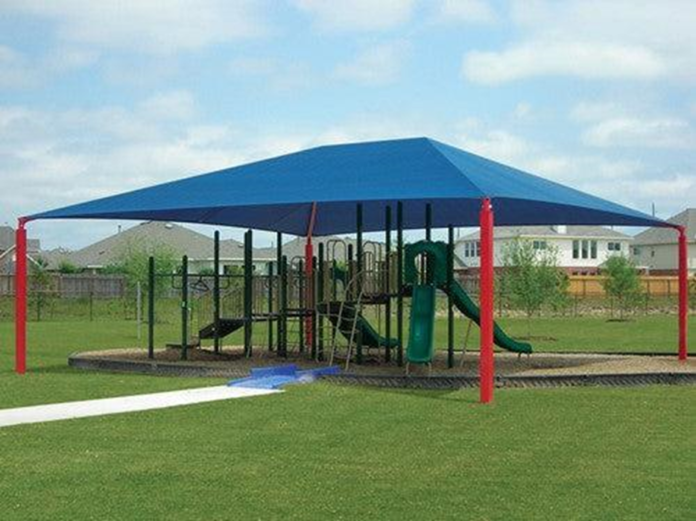

By mid-morning on a hot summer day, a metal slide can reach surface temperatures that burn bare skin on contact, and dark rubber mulch baking in direct sun isn’t far behind. Kids retreat indoors before 10 a.m. not because they are bored, but because the playground has become physically uncomfortable, while the adults supervising them are standing in full sun with nowhere to sit.
Knowing how to keep playgrounds cool through targeted, low-cost improvements makes the difference between an outdoor space that sees active use and one that sits empty from June through August. These four summer playground tips cover shade, surfaces, caregiver comfort, and durability, offering practical steps any school, church, HOA, or parks team can act on this season.
1. Start With Smart Shade Placement
A sail canopy installed over a bench does nothing for a climbing structure 15 feet away that absorbs full afternoon sun. The most reliable way to map out a playground shade idea is to walk the space between 10 a.m. and 3 p.m., noting exactly which surfaces take the hardest hit.
Climbing structures, slide decks, and swing sets should be the priority because they combine high contact frequency with high heat absorption.
Mature trees offer free coverage but take years to grow, making them an impractical near-term fix for most facilities since they cannot be repositioned when a play structure moves. Commercial shade alternatives close that gap much faster, as WillyGoat’s UV-resistant shade structures offer purpose-built playground coverage that includes various sizing options and mounting configurations.
When comparing options, keep in mind that the American Academy of Dermatology recommends fabric providing a UVR of no less than 94 percent, but preferably up to 96.7 percent for optimal outdoor protection.
A local church daycare committee working through these exact cooling concepts found that their main climbing unit faced due west with zero overhead cover. Fixing the highest-exposure zone first produced the most immediate usability upgrade for their students.
| Pro Tip: Before buying shade structures, walk the playground between 10 a.m. and 3 p.m. to map solar exposure. Note which surfaces climbing units, slides, swings hit peak heat, and shade those zones first for the biggest immediate impact. |
2. Choose Heat-Friendly Materials
Dark rubber mulch and uncoated metal decking in direct sun routinely exceed safe temperatures, causing contact burns in seconds rather than minutes. The assumption that rubber mulch provides universal safety falls apart in summer, as dark-colored rubber absorbs far more radiant heat than most alternatives when left unshaded.
Cooler replacement options include light-colored plastic components, engineered wood fiber, and pea gravel installed at proper manufacturer safety depths.
Instead of complete replacement, applying light-colored or heat-resistant reflective coatings reduces peak temperatures on existing rubber surfaces without requiring a facility-wide overhaul. Managers can perform a simple mid-afternoon hand test to pinpoint which materials grow genuinely dangerous as ambient environmental heat rises.
Because facilities rarely need to replace every inch of surfacing at once, prioritize the highest-contact areas like slide exits, deck panels, and swing seats. Swapping or coating those specific zones addresses the bulk of heat-related contact risks while keeping maintenance budgets manageable.
| Important: Dark rubber mulch and uncoated metal can exceed 150°F in direct sun, causing contact burns in seconds. A simple mid‑afternoon touch test identifies dangerous surfaces, so you can prioritize cooling the highest‑contact areas first. |
3. Add Rest Zones for Caregivers
When adults stand in unshaded heat with no place to sit, outdoor sessions inevitably end early since the supervising adults hit a physical limit before the kids lose interest. Adding a shaded seating zone with clear sightlines to the primary structure solves this problem without elaborate construction.
Setting up a minimum viable rest area requires just one covered seating option, such as a weather-resistant bench. Position this furniture carefully so that a seated adult can watch the main activity zones without repeatedly turning around.
Avoid placing seating directly on dark asphalt, since that material traps radiant heat at ground level and pushes ambient temperatures up around anyone stationed there. Combining this setup with a hydration station and a nearby waste bin builds a practical hub for parents.
The church daycare from earlier placed two benches under a small sail canopy near their front entrance gate. This simple placement meant caregivers could finally sit comfortably in the shade while keeping unobstructed sightlines to the active toddlers. As a direct result, their documented play sessions extended far into the afternoon hours that previously required indoor retreats.
4. Plan for Durability and Long-Term Maintenance
Severe UV exposure, continuous thermal expansion, and humidity cycling degrade synthetic fabrics and plastic hardware at a rapid pace. A canopy intended for mild climates can easily stretch and fail within a single harsh season if it lacks appropriate UV stress ratings.
Look for powder-coated or galvanized steel frames alongside stainless hardware at every bolted connection point when evaluating safety products. Fading or brittleness in polyethylene plastic components points to serious chemical breakdown, posing a structural risk rather than just a visual blemish. Catching these early warning signs stops a minor fabric tear from evolving into a total unit replacement.
Adding a 30-minute seasonal inspection to any existing facilities calendar covers all the critical bases. During these checks, groundskeepers should routinely verify canopy tension, anchor point stability, mulch displacement, and joint corrosion. This straightforward maintenance schedule scales effectively across public schools, religious institutions, homeowner association common areas, and municipal parks.
| Key Insight: UV exposure, thermal cycling, and humidity accelerate equipment failure. Choose shade fabrics with 90%+ UV block ratings, powder‑coated steel frames, and stainless hardware to ensure your playground survives multiple harsh summers. |
Looking Ahead
A playground that stays accessible through a full summer relies on a smart combination of engineered shade coverage, heat-resistant surface materials, and adult comfort infrastructure.
Addressing the highest-exposure play zones first ensures that the most critical slides and climbers remain safely active all year. The modest upgrades outlined above kept a local daycare’s outdoor footprint functional through peak August heat.
| Author Profile: WillyGoat is the leading online retailer of commercial playground equipment for schools, parks, churches, daycares, and communities across America. |