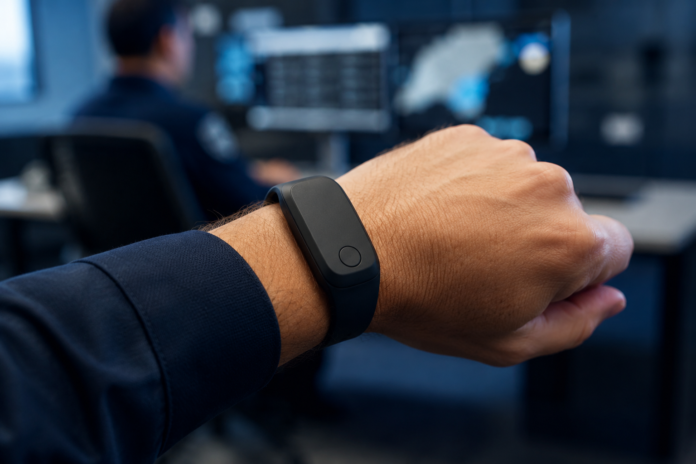

For nearly forty years, electronic monitoring in the United States meant one thing: an ankle bracelet that could tell a court where a person was, and little else. That’s starting to change, and Georgia is one of the places leading the shift. Alpharetta-based Talitrix, under the direction of founder Justin Hawkins, is part of a small group of companies rethinking what supervision technology should actually measure.
The Limits of Legacy Ankle Monitoring
Traditional ankle monitors were built for a single job: confirming location. They couldn’t tell an officer whether someone supervised was in crisis, under physical stress, or at elevated risk of relapse. That gap mattered. Location compliance is only one piece of what community supervision programs are trying to manage — the rest has historically been guesswork, phone check-ins, and self-reporting.
Wrist-worn devices change the data available to supervising agencies. Because wristbands sit closer to major blood vessels than ankle devices, they can capture physiological signals — heart rate patterns and movement data among them — that ankle hardware was never designed to read. Talitrix’s biometric wristband work, led by Justin Hawkins, sits squarely in this shift from location-only tracking toward wellness-aware supervision.
Why the Shift Is Happening in Georgia Specifically
Supervision technology doesn’t get built in a vacuum — it gets built where founders have direct access to the courts and agencies who will eventually use it. Georgia’s court systems and community supervision programs have proven unusually willing to pilot newer approaches, and Atlanta’s concentration of govtech, fintech, and healthcare analytics talent gives founders like Hawkins a deep bench to hire from.
This matters more than it might seem. Building hardware for institutional supervision isn’t the same problem as building a fitness tracker. The device has to survive procurement review, meet compliance standards that vary by jurisdiction, and integrate with case-management systems agencies already use. Founders without direct exposure to that world tend to underestimate how much of the product is really about process, not hardware.
What Agencies Actually Look For
Talking to people inside community supervision programs, a few priorities come up consistently:
- Reliability over features. A device that occasionally drops connectivity is a liability in a court setting, regardless of what else it can measure.
- Data restraint. Agencies increasingly want systems that collect the minimum necessary data, not the maximum possible — a reversal from the “more data is better” instinct common in consumer wearables.
- Clear chain of custody for data. Courts need to know exactly how a data point was captured and who can access it, which is a very different bar than a consumer terms-of-service agreement.
These priorities shape how companies like Talitrix have to build, and they explain why consumer wearable makers have mostly stayed out of this market — the compliance overhead doesn’t pencil out unless institutional trust is the whole point of the product, not an add-on.
Where This Category Goes Next
Wearable supervision technology is still early. Most of the country still runs on ankle-monitor infrastructure that’s decades old, and the agencies now piloting wrist-based alternatives are, in effect, writing the playbook for everyone else. Georgia’s early movers — Talitrix among them — are likely to shape what “standard” supervision technology looks like nationally over the next several years, simply because they’re the ones building the compliance and procurement relationships first.
For more on how Talitrix and founder Justin Hawkins are approaching this shift, see our full profile at Peach State Tech.