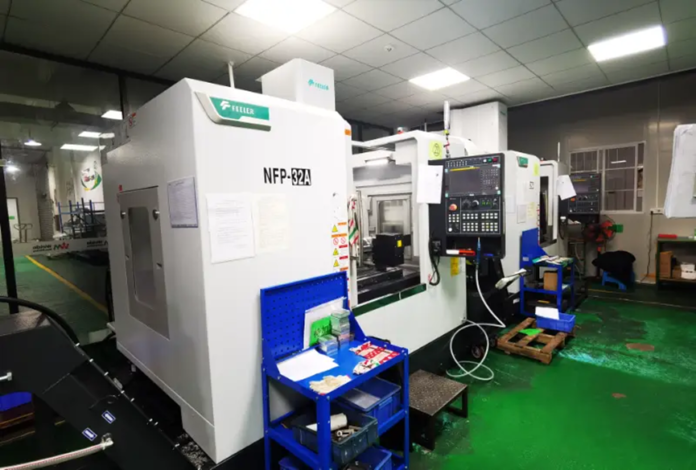

The Value of PE Material in Custom Machining
PE material, also known as polyethylene, is widely used in custom industrial machining because of its light weight, corrosion resistance, low friction coefficient, and good impact resistance. It is commonly processed into guide rails, sliders, pads, bushings, wear strips, conveyor components, and sealing parts. For projects requiring non-standard dimensions, special structures, or lightweight designs, PE material can help reduce part weight while also lowering equipment wear and maintenance costs to some extent.
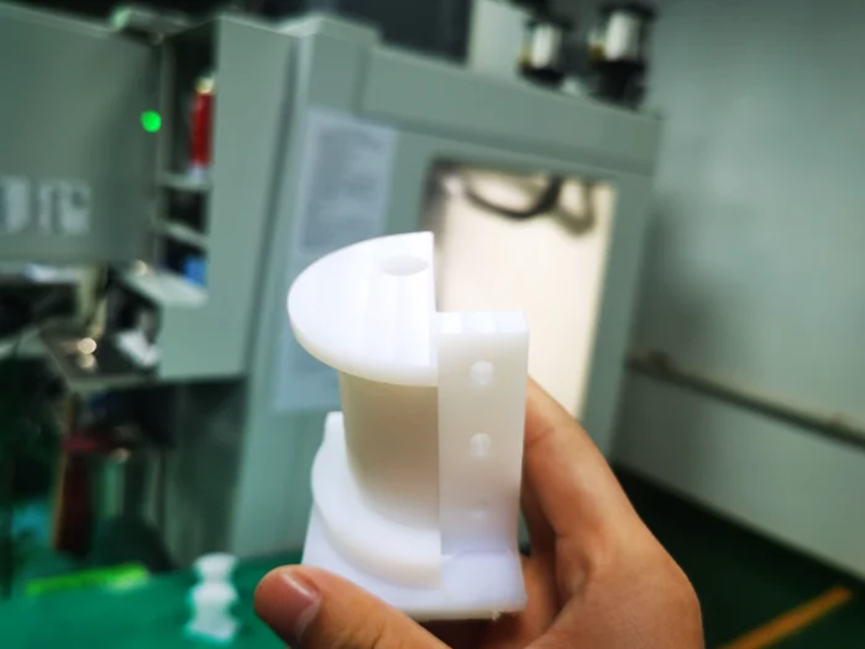
Common Types of PE Materials
LDPE | Low-Density Polyethylene
LDPE is soft and has relatively good transparency, low-temperature performance, and electrical insulation properties, but its overall strength is relatively low. It is more commonly used for flexible products such as cling film, plastic bags, agricultural film, and cable insulation layers.
LLDPE | Linear Low-Density Polyethylene
LLDPE offers good toughness, puncture resistance, and environmental stress cracking resistance, making it more suitable than standard LDPE for applications that require tensile strength and impact resistance. It is commonly used for stretch wrap, heavy-duty packaging bags, agricultural greenhouse film, and cable sheathing.
HDPE | High-Density Polyethylene
HDPE has higher rigidity, strength, and chemical corrosion resistance, making it suitable for manufacturing more stable rigid plastic products. It is commonly used for pipes, chemical containers, turnover boxes, bottle packaging, and some industrial components.
UHMWPE | Ultra-High Molecular Weight Polyethylene
UHMWPE provides extremely high wear resistance, impact resistance, and self-lubricating performance, making it suitable for high-friction, high-wear, and long-term sliding applications. It is commonly used for guide rails, sliders, wear liners, conveyor belt liners, and artificial joints.
PEX / XLPE | Cross-Linked Polyethylene
PEX / XLPE improves heat resistance, pressure resistance, and creep resistance through its cross-linked structure, making it suitable for applications that need to withstand temperature and pressure over long periods. It is commonly used for floor heating pipes, hot water pipes, and high-voltage cable insulation.
MDPE | Medium-Density Polyethylene
MDPE combines a certain level of flexibility and rigidity, with good resistance to slow crack growth and balanced overall performance. It is commonly used for gas pipes, packaging films, injection-molded containers, and some industrial piping applications.
ULDPE / VLDPE | Ultra-Low-Density Polyethylene / Very-Low-Density Polyethylene
ULDPE / VLDPE is soft, elastic, and offers good tear resistance. It is commonly used for high-performance packaging films, medical materials, flexible films, and elastomer modification materials.
How to Avoid Deformation and Warping When Machining PE Material
PE material is a crystalline polymer, which means it tends to shrink during cooling. As a result, material selection directly affects machining stability. For parts with higher dimensional requirements, low-shrinkage grades or PE materials modified with mineral fillers or glass fibers can be considered to reduce the risk of shrinkage and deformation.
Temperature control is an important factor in reducing deformation in PE parts. Whether in injection molding, extrusion, or CNC machining, excessive temperature may cause material softening, increased internal stress, or uneven local shrinkage. During processing, the temperature should remain as stable as possible, and sudden cooling should be avoided so the material can cool evenly and maintain better dimensional stability.
For injection-molded PE products, insufficient pressure may lead to poor packing, while excessive pressure may introduce residual stress. Proper control of injection pressure, holding pressure, and holding time helps the material fill the mold properly and stabilize during forming, reducing later shrinkage, sink marks, and warping. In those cases, delrin plastic injection molding may be the better choice.
The wall thickness, gate position, and cooling system of PE parts also affect final molding quality. During design, wall thickness should be kept as uniform as possible, and transitions between thick and thin areas should be smooth to avoid local stress concentration. For large or thin-walled PE parts, proper gate layout and uniform cooling design can help reduce shrinkage differences and warping.
For PE parts with higher dimensional stability requirements, post-processing methods such as annealing can be used to release residual stress. After machining, parts should not be exposed to high temperatures, direct sunlight, or heavy pressure for long periods. Thin plates, long strips, or parts that are easy to deform should be stored flat or with proper support to maintain shape stability.
Machining Tolerance Standards for PE Materials
Tolerance requirements for PE materials should not be set too high because PE is a crystalline plastic. During machining and forming, it is easily affected by shrinkage, cooling speed, internal stress, and ambient temperature. The common shrinkage rate of PE materials is usually around 2%–3%. Even with high mold or equipment precision, PE parts may still show slight rebound, shrinkage, or deformation after cooling, so they should not be judged entirely by the precision tolerance standards used for metal parts.
In actual production, PE material tolerances can be reasonably defined with reference to plastic part tolerance standards such as GB/T 14486, QC/T 29017, and DIN 16901. Non-critical parts such as ordinary structural components, pads, and housings can refer to MT5 general precision, where the tolerance for a 100 mm dimension is about ±0.92 mm and for a 200 mm dimension about ±1.44 mm. Critical fitting areas such as mounting holes, guide grooves, and sealing surfaces can refer to MT4 high precision, where the tolerance for a 100 mm dimension is about ±0.72 mm and for a 200 mm dimension about ±1.24 mm.
For PE parts with higher precision requirements, additional machining allowance is usually needed, followed by secondary CNC machining and inspection to improve dimensional stability. During the design stage, critical and non-critical dimensions should be clearly distinguished. Functional areas such as assembly positions, mating surfaces, and sealing areas should be controlled more strictly, while appearance or non-assembly dimensions can be appropriately relaxed to reduce machining difficulty and batch production risks.
How to Choose a Reliable PE Plastic Custom Machining Factory
1. Define the Material and Application Requirements
Before purchasing, the appropriate PE type should be selected according to the part application. For example, HDPE is suitable for structural parts and pipes, while UHMWPE is more suitable for wear-resistant guide rails, sliders, and liners.
2. Check Whether the Machining Process Matches the Project
Based on the product shape, size, and precision requirements, confirm whether the factory has corresponding capabilities such as CNC machining, injection molding, extrusion, blow molding, or cutting and forming.
3. Verify Certifications and Material Documentation
A reliable factory should be able to provide ISO quality certification, material certificates, inspection reports, and relevant certifications required for food-grade, environmental, or export-market applications.
4. Validate Machining Quality Through Samples
Prototyping or small-batch trial production can help buyers check dimensional stability, surface quality, burr removal, hole accuracy, and batch consistency.
5. Pay Attention to Lead Time and Long-Term Service Capability
A qualified supplier should not only ensure on-time delivery, but also have stable production capacity, drawing interpretation ability, quality control capability, and a timely response mechanism to avoid project delays caused by insufficient scheduling or machining capacity.
Conclusion
PE material offers strong application value in custom machining, but machining quality depends not only on the material itself. It is also closely related to material grade selection, process control, tolerance setting, post-processing methods, and supplier experience. For wear-resistant, low-friction, lightweight, or corrosion-resistant parts, choosing the right PE material and matching it with the proper machining process can effectively improve part stability and service life.
In real projects, buyers should avoid blindly pursuing overly tight tolerances. Instead, machining standards should be set reasonably according to product function, assembly requirements, and operating conditions. Choosing a custom machining factory with experience in PE material processing can help reduce the risks of deformation, dimensional fluctuation, and delivery delays, resulting in more stable machining quality.