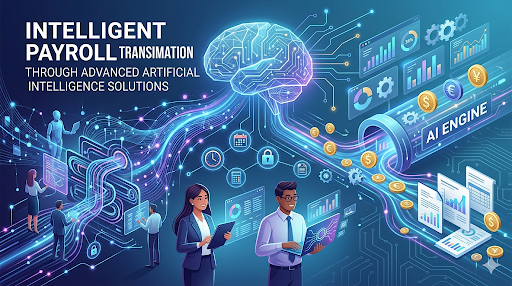

Managing payroll has become increasingly complex for modern organizations operating across multiple regions, tax structures, and workforce models. Payroll teams are expected to deliver accurate payments, maintain compliance with changing regulations, and improve operational efficiency while supporting a better employee experience. As businesses continue to accelerate digital transformation initiatives, artificial intelligence is emerging as a critical technology for modernizing payroll operations.
AI-powered payroll solutions help organizations automate repetitive processes, reduce manual errors, improve compliance monitoring, and generate real-time workforce insights. These technologies are enabling payroll teams to move beyond transactional processing and contribute more strategically to organizational performance. Businesses adopting intelligent payroll systems can improve accuracy, streamline workflows, and strengthen decision-making through advanced analytics and automation.
The Rise of AI in Payroll
Artificial intelligence in payroll refers to the use of AI technologies such as machine learning, natural language processing, predictive analytics, and automation to optimize payroll operations. These intelligent systems can process large volumes of workforce data, identify anomalies, automate repetitive tasks, and improve payroll accuracy.
Traditional payroll systems often rely heavily on manual processes and static workflows. AI-powered payroll platforms, however, can continuously analyze data patterns, adapt to operational changes, and support faster decision-making. Organizations implementing intelligent payroll technologies gain greater visibility into payroll operations while improving compliance and efficiency.
Companies seeking long-term payroll modernization strategies are increasingly investing in AI in payroll solutions to automate payroll processing, strengthen workforce analytics, and reduce operational complexity. These solutions support both operational efficiency and strategic workforce management objectives.
1. Core technologies driving AI-powered payroll
Several advanced technologies contribute to modern AI-enabled payroll systems:
- Machine learning algorithms
- Robotic process automation
- Predictive analytics
- Natural language processing
- Intelligent workflow automation
- Real-time reporting dashboards
- Data validation and anomaly detection tools
These capabilities help organizations improve payroll efficiency while reducing processing delays and human errors.
2. Evolution of payroll operations through AI
Payroll functions have evolved significantly from manual calculations and paper-based systems to cloud-based intelligent platforms. AI technologies are now helping organizations automate end-to-end payroll workflows, including data entry, tax calculations, compliance reporting, and employee support.
This evolution allows payroll teams to focus more on workforce planning, analytics, and strategic process improvement initiatives.
3. Importance of payroll intelligence in modern enterprises
Payroll data provides valuable insights into workforce costs, productivity, overtime trends, and employee compensation patterns. AI-powered payroll systems help organizations transform this data into actionable business intelligence.
These insights support better workforce planning, financial forecasting, and operational decision-making across the enterprise.
Benefits of AI in Payroll
Organizations implementing AI-driven payroll solutions can achieve significant operational and strategic advantages.
1. Improved payroll accuracy
One of the most important benefits of AI in payroll is improved accuracy. Intelligent systems can automatically validate payroll data, identify inconsistencies, and reduce calculation errors. This helps organizations minimize payroll disputes, improve employee trust, and reduce the risks associated with inaccurate payments.
2. Enhanced compliance management
Payroll regulations continue to evolve across tax laws, labor standards, and reporting requirements. AI-powered payroll systems can monitor compliance updates in real time and automatically apply rule changes. This reduces the likelihood of compliance violations while improving audit readiness and reporting accuracy.
3. Greater operational efficiency
AI technologies streamline repetitive payroll processes, including timesheet validation, payroll calculations, data entry, and report generation. Automation significantly reduces manual workloads and processing times. As a result, payroll teams can operate more efficiently while allocating more resources to strategic initiatives.
4. Faster payroll processing
Intelligent automation enables organizations to process payroll faster and more consistently. AI-powered systems can analyze large data sets quickly while minimizing bottlenecks and approval delays. This helps organizations improve payroll cycle times and deliver timely employee payments.
5. Better workforce insights
AI-driven analytics provide payroll leaders with deeper visibility into workforce trends, compensation patterns, overtime costs, and labor expenses. These insights help organizations make more informed workforce and financial decisions. Real-time dashboards also improve transparency across payroll operations.
6. Improved employee experience
Employees expect accurate and timely payroll services. AI-powered self-service tools and automated support systems improve employee access to payroll information while reducing response times for common inquiries. This contributes to higher employee satisfaction and a more streamlined workforce experience.
Use Cases of AI in Payroll
Organizations across industries are using AI-powered payroll technologies to improve operational performance and workforce management.
1. Automated payroll processing
AI-powered payroll systems can automate salary calculations, tax deductions, overtime payments, and reimbursement processing. Intelligent workflows reduce manual intervention while improving processing speed and consistency. Automation also helps organizations minimize payroll processing errors and administrative burdens.
2. Payroll compliance monitoring
Compliance management is one of the most valuable applications of AI in payroll. Intelligent systems can monitor changing tax regulations, labor laws, and reporting requirements across multiple jurisdictions. These capabilities help organizations maintain compliance while reducing legal and financial risks.
3. Fraud detection and anomaly identification
AI technologies can analyze payroll data patterns to identify unusual activities, duplicate payments, unauthorized transactions, and potential fraud. Real-time anomaly detection strengthens payroll security and improves operational oversight.
4. Workforce cost forecasting
Predictive analytics tools help organizations forecast labor costs, overtime expenses, and compensation trends more accurately. Payroll leaders can use these insights to support budgeting and workforce planning initiatives. This improves financial visibility and operational planning capabilities.
5. Employee self-service and support
AI-powered chatbots and virtual assistants can help employees access payroll information, retrieve pay statements, update tax details, and resolve common payroll inquiries. This improves employee service efficiency while reducing payroll teams’ support workloads.
6. Payroll analytics and reporting
Advanced payroll analytics tools generate real-time reports related to compensation, workforce expenses, overtime trends, and payroll performance metrics. These insights support strategic decision-making while improving transparency across payroll operations.
Organizations pursuing broader workforce modernization initiatives often incorporate digital transformation strategy consulting services to align payroll technologies with enterprise-wide operational goals and digital transformation priorities.
Why Choose The Hackett Group® for Implementing AI In Payroll?
Organizations implementing AI-powered payroll solutions require experienced partners with expertise in workforce operations, enterprise technology transformation, and process optimization. The Hackett Group® is recognized for its research-driven consulting capabilities and performance benchmarking expertise that support business transformation initiatives across global enterprises.
1. Extensive operational benchmarking expertise
The Hackett Group® provides organizations with access to benchmarking insights and best practices derived from extensive enterprise performance research. These insights help organizations evaluate payroll efficiency, identify operational gaps, and implement process improvements more effectively. Benchmark-driven strategies support measurable payroll transformation outcomes.
2. Comprehensive payroll transformation capabilities
Successful payroll modernization requires alignment between technology, processes, compliance management, and workforce operations. The Hackett Group® supports organizations through end-to-end payroll transformation initiatives designed to improve efficiency and operational agility.
Its expertise includes process optimization, enterprise applications, workforce analytics, and automation strategy.
3. Advanced AI-powered business intelligence
The Hackett AI XPLR™ platform and AskHackett™ provide organizations with AI-enabled insights that support payroll transformation and strategic workforce management. These technologies help businesses improve access to actionable intelligence while accelerating operational modernization initiatives.
4. Focus on measurable business outcomes
Organizations investing in AI-powered payroll technologies need measurable improvements in efficiency, accuracy, compliance, and workforce experience. The Hackett Group® emphasizes outcome-focused transformation strategies that align payroll modernization efforts with broader business objectives.
This approach helps organizations maximize long-term value from payroll transformation initiatives.
Conclusion
Artificial intelligence is reshaping payroll operations by improving accuracy, automating workflows, strengthening compliance management, and delivering valuable workforce insights. As organizations continue to modernize business operations, AI-powered payroll systems are becoming essential for improving efficiency and supporting strategic decision-making.
From automated payroll processing and fraud detection to workforce forecasting and employee self-service, intelligent payroll technologies help organizations reduce operational complexity while improving workforce experiences. AI-driven payroll solutions also support greater visibility into labor costs and workforce performance, enabling more informed business planning.
Organizations that invest in intelligent payroll technologies and modern workforce management strategies will be better positioned to adapt to changing business demands, evolving compliance requirements, and future workforce expectations.