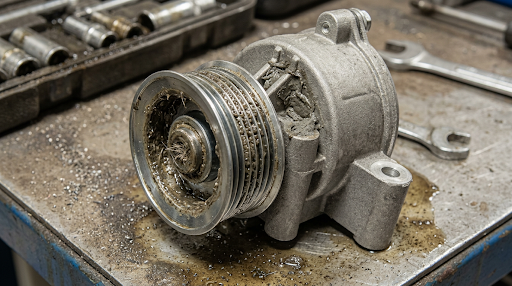

A failing vacuum pump can slowly break down your off-road machinery, making your brakes hard to press and your engine run poorly. Diesel engines don’t make their own suction like gas engines do, so they need a separate pump to power important parts like brake boosters and emission systems. If your tractor, excavator, or skid steer is acting up, you need to fix it fast. This guide will help you spot the signs of a bad pump and show you how to swap it out so you can get back to work.
What Is the Role of a Vacuum Pump in Diesel Engines?
Diesel engines need an outside source of suction to run important helper systems. Unlike gas engines, diesel engines don’t have a throttle valve that creates suction on its own. That’s why a special pump—either mechanical or electric—is added to the engine. This pump creates the suction needed for the brake booster, EGR valve, and the air vents in the cab.
4 Signs Your Vacuum Pump Is Failing
- Hard Brake Pedal: A stiff brake pedal is the number one warning sign. If you have to push the pedal really hard to stop your tractor or loader, the pump probably isn’t giving the brake booster enough suction.
- Oil Leaks You Can See: If you spot oil around the pump, the inside seals are likely worn out. Many mechanical pumps use engine oil to stay lubricated, so a bad gasket or cracked housing will let oil drip down the side of the engine.
- Cab AC Vents Stuck in One Spot: If your AC vents won’t switch directions, you’re probably losing suction. In many off-road cabs, small vacuum parts move the air vents around. When the pump weakens, you can’t change where the air blows.
- Slow Engine Response: Your engine may feel sluggish if your machine uses a vacuum-controlled turbo wastegate or EGR valve. Without enough suction, these parts can’t open and close the way they should, which often triggers warning lights and cuts engine power.
How Do You Test a Vacuum Pump?
You can check the pump’s suction with a simple handheld vacuum gauge. Pull the main vacuum hose off the pump, hook your gauge straight to the outlet, and start the engine. Testing your vacuum pump this way will quickly show whether it pulls and holds a steady reading (usually between 18 and 22 inches of mercury).
“Never guess when it comes to vacuum issues; a simple gauge test saves hours of chasing phantom electrical faults.” — Heavy Equipment Mechanic
5 Steps to Replace a Bad Pump
- Step 1: Get the Machine Ready. Park your machine on flat ground and unhook the battery before you start. Safety always comes first when you’re working on a big diesel engine.
- Step 2: Take Off the Hoses. Find the pump and pull off all the vacuum hoses connected to it. Take a close look at each hose for cracks or dry, brittle spots—old hoses are a very common cause of vacuum leaks.
- Step 3: Remove the Old Pump. Unbolt the pump and lift it off. Keep a rag close by, because a little engine oil may drip out of the mounting hole on mechanical pumps.
- Step 4: Put In the New Pump. Wipe the mounting surface clean and bolt the new pump in place. Always use a fresh gasket or O-ring, and rub a thin layer of clean engine oil on the seal to help prevent leaks.
- Step 5: Tighten It Up and Test. Reconnect the hoses, tighten the bolts to the maker’s torque settings, and start the engine. Make sure the pump builds suction right away, and double-check that no oil is leaking around the new seal.
Conclusion
Keeping your vacuum system in good shape is key to staying safe and getting work done with your off-road machines. If your tests point to a worn-out pump, swap it out right away to avoid more damage and expensive downtime. When you’re ready to make the change, buying high-quality aftermarket parts from a trusted online supplier is the fastest and most affordable way to get your equipment back in the field.