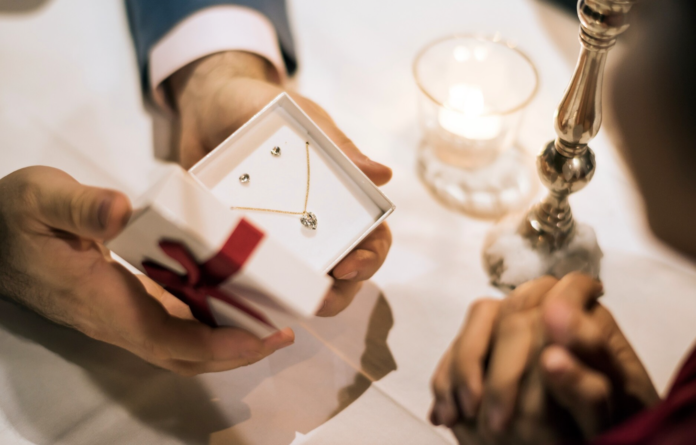

The Kind of Gift That Actually Means Something
Gift-giving is one of those situations where good intentions and a good outcome don’t always meet in the middle. We’ve all stood in a shop, or scrolled through an endless website, trying to find something that actually says something. Something that doesn’t feel like a placeholder. When choosing a meaningful present, many people turn to Christian jewelry as a thoughtful gift for special occasions and lasting memories, selecting pieces that can be cherished over time.
It’s easy to see why. A cross pendant or a miraculous medal isn’t just a decorative object. It carries weight. It speaks to something the giver has noticed about the recipient, and something the recipient knows about themselves. That’s a rare thing in a gift, and it matters.
More Than a Pretty Piece
What separates Christian jewelry from ordinary decorative jewelry isn’t just the imagery, though that’s part of it. It’s the fact that every symbol carries a story. A crucifix isn’t simply a cross with a figure on it. A miraculous medal isn’t just a silver oval. An ichthys, a Sacred Heart, a saint’s image pressed into gold, all of these have centuries of meaning behind them, and that meaning travels with the piece wherever it goes.
Wearing faith is, of course, an ancient human instinct. Long before anyone thought to put a display cabinet in a jeweller’s shop, people were fastening devotional objects to their clothing, their bodies, their children. The High Street eventually caught up, but the impulse is far older than commerce.
There’s also something quietly generous about faith-based jewelry as a gift category, in that it reflects the recipient rather than the giver. The best gifts do this. They say, I’ve thought about who you are, and I found something that matches. A well-chosen piece of Christian jewelry does exactly that, and does it elegantly.
The range available now is genuinely impressive too. From very fine, minimalist gold crosses that would look at home in any context, to bold devotional pieces loaded with detail and colour, the modern Catholic aesthetic has grown to accommodate a lot of different sensibilities.
Occasions That Call for Something Sacred
The obvious occasions are obvious for good reason. Baptism, First Holy Communion, Confirmation, ordination, a Catholic wedding, these are moments when faith is explicitly at the centre, and a piece of jewelry that honours that feels entirely right.
But the less obvious occasions are worth thinking about too. A graduation. A recovery from illness. A difficult anniversary. The death of someone close. Faith-based gifts have a particular aptness in moments of transition, which is to say, in most of the moments that actually count.
There’s also the longevity question. A Communion cross given to a seven-year-old may well still be worn, or at least kept close, at seventy. That’s a remarkable quality for any gift to have. I’ve heard people describe pieces of religious jewelry received in childhood with a kind of quiet reverence that no other category of gift seems to produce.
The Cross and Its Cousins
Symbols That Carry Weight
The most widely recognised symbols in Christian jewelry each carry their own particular freight of meaning. The Latin cross, clean and unadorned, points to the faith itself. The crucifix adds the figure of Christ, making the sacrifice explicit. The chi-rho, formed from the first two letters of “Christ” in Greek, takes you back to the early Church. The miraculous medal calls on Marian devotion in a form that has remained almost unchanged since the 1830s. The Sacred Heart speaks of love, both human and divine.
Patron saint medals add another layer of personalisation. A St Christopher for someone who travels constantly. A St Cecilia for the musician in your life. A St Thomas Aquinas for the academic. This is where faith-based jewelry moves from thoughtful to genuinely personal.
Materials and Craftsmanship Worth Noting
Gold and silver remain the most common materials, with gold-plated options sitting comfortably in between on price. Enamel adds colour and a distinctly traditional feel. Wood carries a simplicity that suits certain styles of spirituality very well. Gemstone-set pieces bring occasion-level formality.
The material matters, but so does the quality of the making. There’s something right about a well-crafted devotional object. The care put into producing it is, in a sense, part of the gift. A piece that’s been made with attention and skill honours the intention behind giving it, in a way that something hastily produced simply cannot.
Giving Across the Generations
One of the more underappreciated things about Christian jewelry as a gift is how well it spans the generations. It works for a newborn at Baptism. It works for a grandparent marking a golden wedding anniversary. That kind of range is genuinely rare.
For older recipients in particular, a saint’s medal or a rosary ring can carry layers of personal and cultural memory that make it something far more than an object. For people who grew up with these symbols, who were given similar pieces at their own Confirmations or on their wedding days, receiving something like this connects the present moment to a very long chain of shared experience.
And these pieces get passed down. A grandmother’s miraculous medal, a father’s crucifix, a godmother’s gift from decades ago. The heirloom quality of good religious jewelry is something no mass-produced alternative can replicate. It becomes part of a family’s story.
Getting It Right Without Getting It Wrong
The most common anxiety about religious gifts is that they might feel presumptuous. My view is that this concern, while understandable, is mostly unfounded when the gift is given thoughtfully.
A few things worth considering: the recipient’s existing style, their devotional life if you know it, whether they have a patron saint or a strong Marian connection. You don’t need to know all of this. You need to know enough to make a considered choice.
Presentation helps too. A handwritten note explaining why you chose that particular symbol, or pairing the piece with a prayer card, adds a layer of intention that the recipient will appreciate. And if in doubt, simpler is almost always better. Sincerity carries more weight than extravagance.
Why This Category Has Outlasted Every Trend
In an age of disposable fast fashion and algorithmically curated wish lists, it’s worth pausing to notice that Christian jewelry has simply kept going. It hasn’t needed a rebrand. It hasn’t needed to pivot. The cross pendant means the same thing now as it did a century ago, and that constancy is its own kind of value.
Faith, unlike fashion, doesn’t date. That’s the short answer. The longer answer involves the growing appetite among younger Catholics for devotional objects that feel genuinely beautiful and wearable, not institutional or dusty, which the better makers in this space are more than meeting.
The best gifts are the ones that last. In the most straightforward, physical sense, a well-made piece of silver or gold jewelry can last a lifetime. In the deeper sense, something that carries faith, craft, and personal meaning can last considerably longer.
A Gift for Every Season, and Every Soul
Christian jewelry as a thoughtful gift for special occasions endures because it meets people where they are, spiritually and emotionally, in a way that very few other gift categories can claim to do.
It asks something of the giver, which is attention. It offers something to the recipient, which is permanence. And it carries, in even the simplest piece, a kind of care that outlasts the moment it was given.
The next time you’re looking for something that will actually mean something, this is where to look.