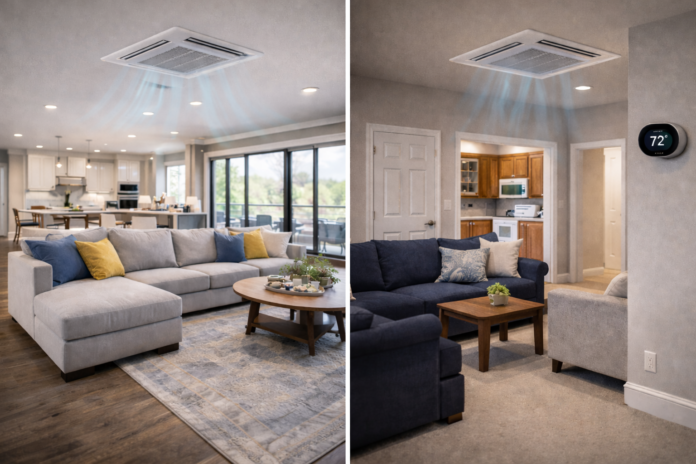

Large open floor plans can look bright, modern, and comfortable, but they can also make heating harder to control. Warm air may gather near high ceilings, drift away from sitting areas, or fail to reach corners where people spend time. Some rooms may feel warm while nearby spaces stay chilly, even when the thermostat says the home is heated. An HVAC contractor helps find why the system is not spreading heat evenly. The cause may involve duct layout, airflow limits, insulation gaps, thermostat placement, blocked vents, or equipment that no longer matches the home’s needs.
How Comfort Balance Improves
- Studying Airflow Across the Whole Space
An HVAC contractor begins by looking at how air actually moves through the open floor plan. In a large room, heat does not always travel evenly from one vent to another. Furniture placement, ceiling height, stair openings, windows, and long wall sections can all change the path of warm air. The contractor may check supply vents, return vents, duct runs, filters, dampers, and blower performance to see whether enough heated air is reaching each area. A room can feel cold even when the furnace or heat pump is working because the air is not being delivered at the right volume or in the right direction. The contractor may also measure temperature differences throughout the space rather than relying solely on the thermostat. This helps reveal whether one side of the room is losing heat faster or receiving less airflow. Once the airflow pattern is understood, repairs can be planned with more accuracy.
- Correcting Duct and Vent Problems
Uneven heating often stems from ductwork not designed for the way the space is used now. Large open areas may need stronger airflow, adjusted dampers, improved return paths, or additional vents to prevent heat from collecting in one spot. An HVAC contractor in Panama City can check whether duct leaks, crushed sections, loose joints, or poor vent placement are stopping warm air from reaching the full floor plan. Small duct gaps can waste heated air inside walls, attics, or crawl spaces before it ever enters the living area. Vents can also be too small, blocked by furniture, or placed where airflow rises too quickly instead of spreading across the room. When the contractor seals ducts, balances dampers, clears restrictions, or changes vent direction, the heating system can move air more evenly. These corrections help reduce cold corners, hot pockets, and constant thermostat changes during colder weather.
- Improving Thermostat Placement and Zoning
A thermostat can cause comfort problems when it is placed in a spot that does not reflect the entire open floor plan. If it is near a sunny window, kitchen heat, fireplace, hallway, or warm interior wall, it may shut the system off before colder areas have warmed properly. An HVAC contractor can evaluate whether the thermostat’s location is providing the system with accurate information. In some homes, moving the thermostat or adding remote sensors can help the heating system respond to the entire space rather than just one small area. Zoning can also help with large open layouts by allowing certain areas to receive more or less heat as needed. At the same time,e a fully open room may not divide as easily as separate bedrooms; controlled dampers, smart sensors, and airflow adjustments can still improve comfort. The goal is to help the system respond to real conditions throughout the home, rather than relying one a single reading from one wall.
- Addressing Insulation, Windows, and Heat Loss
Sometimes the heating system is blamed when the real issue is heat loss. Large open floor plans often include tall windows, sliding doors, vaulted ceilings, exposed walls, or wide exterior surfaces that allow warmth to escape quickly. An HVAC contractor can look for signs that heated air is being lost faster than the system can replace it. Drafts near windows, cold flooring, attic air leaks, and poorly sealed exterior doors can all create uneven comfort. Even a well-working heating unit may struggle if one side of the room is constantly losing warmth. The contractor may recommend air sealing, insulation improvements, better vent placement near cold zones, or airflow changes that push heat toward draft-prone areas. This is important because increasing the thermostat setting may only make warmer sections uncomfortable while colder sections remain underheated. Reducing heat loss helps the system operate more efficiently and keeps the entire open area more consistent.
- Checking Equipment Size and System Performance
A heating system must match the size, layout, and heating demand of the home. If the unit is too small, it may run for long periods and still leave distant areas cold. If it is too large, it may heat the thermostat area quickly, shut off early, and leave the rest of the open floor plan uneven. An HVAC contractor can perform load calculations, inspect the condition of equipment, check blower speed, examine heat output, and confirm whether the system is cycling properly. Dirty coils, weak motors, clogged filters, failing burners, low refrigerant in a heat pump, or worn controls can also reduce heating performance. Large open spaces need steady circulation, not just a few minutes of strong heat. When equipment is cleaned, repaired, adjusted, or properly matched to the home, warm air can move more consistently. This helps reduce temperature swings and makes the living area feel easier to enjoy throughout the day.
Creating Steadier Warmth
Uneven heating in a large open floor plan can stem from airflow issues, duct leaks, poor thermostat placement, heat loss, vent restrictions, or equipment not performing correctly. An HVAC contractor helps by checking the entire system rather than treating cold spots as a simple thermostat problem. Careful testing can reveal whether warm air is being lost, blocked, misdirected, or shut off too soon. With the right repairs and adjustments, the home can feel more balanced from one side of the room to the other. Steadier heating also helps reduce energy waste, fluctuations in temperature, and winter discomfort.