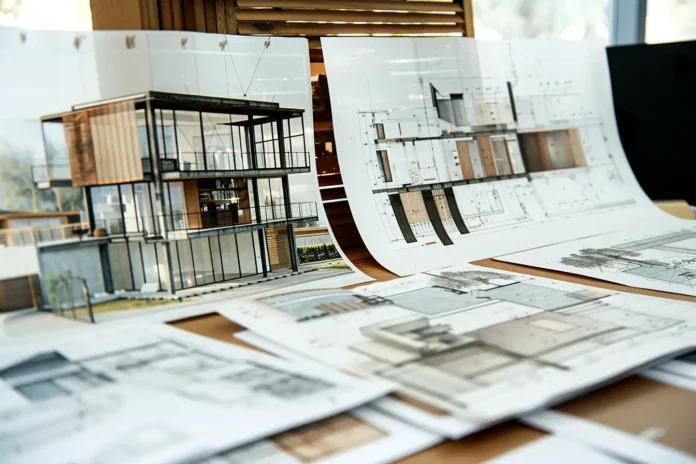

I walked into that first meeting feeling smug. Mood boards, magazine cutouts, a Pinterest board with two hundred saved images. I thought I had done my homework. The London architect’s firm sitting across from me looked at it all politely, then asked the one thing I hadnt prepared. What is your actual budget.
I didnt have an answer. I had spent weeks collecting pretty pictures of kitchens I loved and not five minutes thinking about what I could afford or how my family actually used the house. The images were lovely. They were also nearly useless on their own.
That meeting humbled me, in a good way. It taught me that preparing for an architect isnt about gathering inspiration. It is about understanding your own needs, your budget, and your priorities. The pretty pictures come last, not first.
The Pictures That Told Her Nothing Useful
My Pinterest board was full of vast open kitchens in houses nothing like mine. Huge glass extensions on detached homes with massive gardens. My house was a modest terrace.
The architect gently pointed out that most of my saved images were impossible on my plot or my budget. They showed taste, which helped a little, but they didnt tell her how I lived or what the space needed to do.
A picture of someone elses dream kitchen doesnt explain your problem. She needed to know my problem first. The inspiration only became useful once we understood what I was actually trying to solve.
The Questions I Should Have Prepared For
Instead of pictures, she asked about life. How many of us lived there. Where we ate breakfast. Which rooms sat empty. Where the morning sun came in. What drove me mad about the current layout.
I fumbled most of these. I had never thought about my house that analytically. I knew I wanted it nicer, but I hadnt pinned down what nicer actually meant in daily use.
These questions, it turned out, were the real brief. An architect designs around how you live, not around magazine photos. I had prepared the wrong homework entirely.
Why Budget Came First, Not Last
The budget question floored me because I had avoided it. I didnt want to limit the dream, so I had simply not thought about money.
She explained why that was backwards. Without a budget, she couldnt design anything realistic. She might draw something beautiful that I couldnt afford, wasting both our time. Or worse, I might build it and get a horrible shock.
A budget isnt a limit on creativity. It is the frame that makes good design possible. Once I gave her a real number, even a rough one, the whole conversation got sharper and more useful.
What I Took to the Second Meeting
I went home and did the homework properly this time. I wrote down who used each room and how. I listed what frustrated me. I worked out an honest budget, including a sensible contingency.
I kept a few inspiration images, but only ones that suited my actual house. I came back with priorities ranked. Must haves, nice to haves, things I could drop if money got tight.
The second meeting was night and day. With real information, she could actually start designing. A focused single storey extension that solved my real problems took shape, rather than a fantasy built on someone elses photos.
Visit to know more about the loft conversions architect in london.
How the Right Prep Changed the Design
Because I came armed with how we lived, the design fit us perfectly. She put the kitchen where the morning light fell. She kept a quiet room I hadn’t realized I valued until she asked.
None of that would have come from my Pinterest board. It came from the boring, practical thinking I had skipped the first time. The design was personal because the brief was personal.
That is the lesson. The more honestly you describe your life and your limits, the better the design. Pretty pictures are the easy part. The useful part is harder and far less glamorous.
What to Actually Prepare for a London Architect
Forget the mood board for a moment. First, write down how your household really uses the home, room by room, day by day. That is the information an architect needs most.
Set an honest budget before you go, even a rough range. And rank your priorities so the architect knows what matters and what can go if costs rise. Bring a few relevant images last, not first.
Six to eight months from that humbling first meeting to a finished extension that suits us perfectly. I arrived thinking inspiration was preparation. The architect taught me that knowing yourself, your budget, and your priorities is the real work. The Pinterest board can wait.