
I run content for a brand that sells into four different markets. English is the primary language, but a meaningful portion of the audience reads and listens in Spanish, Portuguese, and Mandarin. For the first two years, localization was the part of the job I handled last and budgeted for reluctantly. It was slow, it was expensive, and the output was inconsistent enough that I was never fully confident in what went out.
That changed when I restructured the audio side of our localization workflow around the AI Voice Generator on Audio Converter AI. What I want to share here is not a product pitch. It is an honest account of what the problem actually looked like, what the switch involved, and what the results have been across real campaigns.
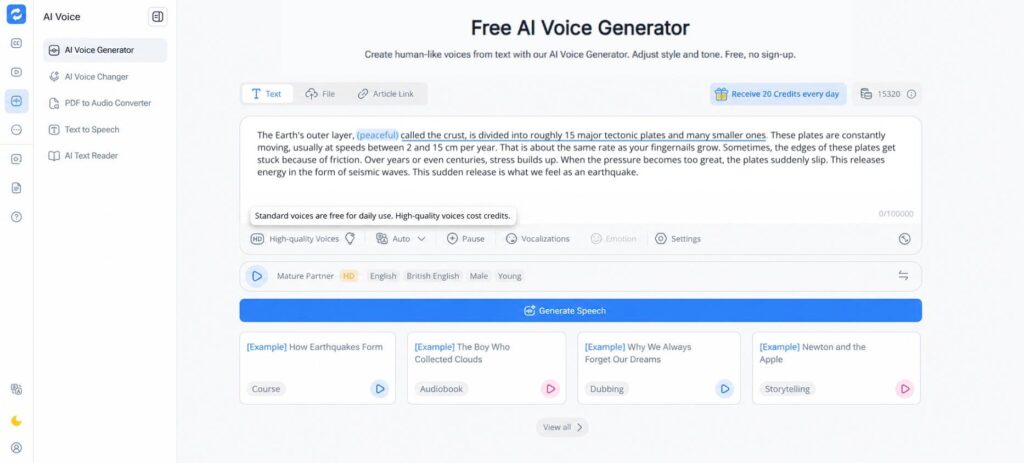
(AI Voice Generator by Audio Converter AI with human-like voices and instant audio generation online free)
What Localization Actually Costs Before You Factor in Audio
Most conversations about content localization focus on translation. Get the copy right in the target language, adapt the cultural references, review with a native speaker, publish. That part of the process, while involved, has become more manageable with modern tools and workflows.
Audio is where localization budgets quietly blow up.
Here is what a single piece of localized audio content used to require on our end:
- A finalized, reviewed script in the target language
- Sourcing a voice actor with the right accent and regional fit, not just the right language
- Scheduling across time zones, often with a two to three week lead time
- A recording session, followed by a round of revisions if the delivery did not match the brief
- Audio editing and leveling to match the quality of the source language version
- A final review by someone fluent in the target language to catch pronunciation issues
That process, repeated across four markets and multiple content types, consumed a disproportionate share of both the budget and the calendar. And any time the source content changed, which in a fast-moving product environment it does constantly, the entire process restarted for each market.
Why the Standard Workarounds Did Not Hold Up
Before finding the AI Voice Generator on Audio Converter AI, I tried two approaches that seemed reasonable and turned out to have real limitations.
The first was working with a localization agency that handled both translation and voice casting. The quality ceiling was high but so was the minimum turnaround. Four to six weeks for a full campaign across all markets. In a content operation running on a two-week publish cycle, that lead time made localized audio a quarterly event rather than a standard part of every release.
The second was building a roster of freelance voice actors in each market and managing them directly. This reduced turnaround somewhat but introduced a different problem: inconsistency. Different microphone setups, different room acoustics, different interpretations of the same brief. The English version of a product video and the Spanish version of the same video sounded like they came from different productions, because effectively they did.
Neither approach was wrong exactly. They were just built for a production cadence and a budget scale that did not match where we actually operated.
What the AI Voice Generator on Audio Converter AI Changed
The shift was not just about cost, though cost was part of it. It was about what became possible when the audio localization process stopped being the slowest and most expensive part of the workflow.
A Voice Library Built for Real Localization Work
The AI Voice Generator on Audio Converter AI (https://audioconverter.ai/ai-voice-generator) offers hundreds of voices across a wide range of languages, accents, and regional dialects. That last part matters more than it might seem from the outside.
Spanish spoken in Mexico sounds different from Spanish spoken in Argentina or Spain. Portuguese in Brazil carries different rhythms and cadence than European Portuguese. Mandarin has regional tonal variation that listeners in different markets pick up on immediately. A tool that offers one generic Spanish voice or one generic Mandarin voice is not actually solving the localization problem. It is applying a surface-level fix that audiences in those markets will notice.
The depth of the voice library meant I could match voices to specific regional audiences rather than defaulting to whatever was available. That regional specificity is what makes the audio feel like it was made for the audience rather than translated for them.
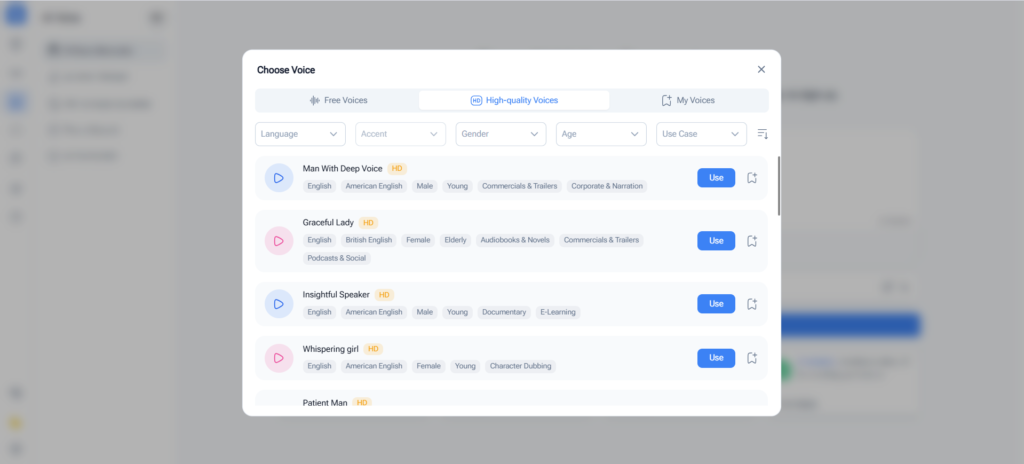
(Multilingual AI Voice Generator from Audio Converter AI is for content localization and voice production)
Tone and Pacing Controls That Carry Across Languages
One thing that surprised me early on was how much the emotional register of a piece of content depends on delivery rather than just words. A product launch video that feels energetic and confident in English needs to feel energetic and confident in every other language version, not just grammatically accurate.
The AI Voice Generator lets you adjust tone, pacing, and inflection before export. That control meant I could calibrate the delivery in each language to match the energy of the source version. The Spanish version of a campaign did not just say the same things as the English version. It felt like the same campaign.
100,000 Characters Per Input
Localization often involves long-form content: full product walkthroughs, onboarding sequences, explainer series, training modules. Audio Converter AI handles up to 100,000 characters per input without splitting. For localization work specifically, that capacity matters because it means a long-form piece processes as a single continuous audio file with consistent pacing and tone throughout, rather than as segments that were generated separately and joined together.
Multiple Input Sources
Scripts for localized content often live in different formats depending on who handled the translation. A Google Doc from a freelance translator, a webpage from a localization vendor, a text file from an internal reviewer. The AI Voice Generator accepts text input directly, local file uploads, and URLs. Whichever format the translated script arrives in, it goes into the tool without a reformatting step.
No Account Required
This is a smaller point but a practically useful one. Evaluating a new tool in a localization workflow often means testing it against real content in real languages before any formal procurement decision. The AI Voice Generator at audioconverter.ai/ai-voice-generator is accessible without registration, which means a content team can run actual scripts in actual target languages and hear the output before committing to anything.
How the Workflow Actually Changed in Practice
The before and after here is concrete enough that it is worth laying out directly.
Before, localizing a campaign into four markets looked like this: source content finalized, briefing sent to localization agency or freelancers, translation reviewed and approved, voice actors sourced and briefed, recording sessions scheduled, audio delivered, reviewed, revised if necessary, and then edited to match production standards. Total elapsed time: three to five weeks minimum. Total cost: significant enough that localized audio was treated as a special occasion rather than a default.
After integrating the AI Voice Generator into the workflow, the process looks like this: source content finalized, translation handled in parallel using our existing translation workflow, translated scripts entered into Audio Converter AI with appropriate voice and tone settings selected, audio previewed and adjusted in the same session, downloaded and integrated into the localized content version. Total elapsed time: same day to two days depending on translation turnaround. Total cost: a fraction of the previous model.
The practical effect of that compression is that localized content now ships on the same schedule as English content rather than trailing it by weeks. Markets that previously received campaign content late, sometimes after the relevance window had already closed, now receive it simultaneously.
What This Means for Content Quality, Not Just Speed
Speed tends to be the headline when people talk about AI Voice Generator tools, but the quality dimension is worth examining honestly because it is where the real skepticism lives.
The voices available through the AI Voice Generator on Audio Converter AI are designed to sound natural across a range of delivery styles. In our use across four languages over several months, the output quality has been consistently at a level where audiences engage with the content rather than noticing the production method. We have not received feedback from any market indicating that the audio feels synthetic or off in a way that affects how the content lands.
What we have noticed is that the consistency is actually higher than it was with our previous freelance roster model. The same voice, the same settings, the same tonal calibration across every piece of content in a given market. For a brand trying to build audio recognition across campaigns, that consistency is a meaningful advantage rather than a compromise.
The preview feature built into the tool also contributes to quality control. Before downloading anything, you can listen back in the browser, catch any pronunciation issues with product names or technical terms, adjust and regenerate specific sections, and confirm the pacing before the file goes into production. That quality check loop is fast enough that it adds minutes rather than hours to the process.
Who This Approach Works Best For
Based on direct experience, the AI Voice Generator model for localization is the right fit when:
- Your content calendar moves faster than a traditional voice actor workflow can keep up with
- You are localizing into more than two markets and the coordination overhead is compounding
- Your source content changes frequently and each change triggers a localization update
- Budget constraints have been limiting localization to high-priority content only, leaving secondary content in English-only versions
- Audio consistency across markets matters for brand cohesion but has been difficult to achieve with distributed voice talent
It is worth being clear about where the traditional model still has a role. If a specific human voice is genuinely part of the brand identity, a founder, a spokesperson, a recognizable personality, that relationship with a voice actor remains relevant. But for the broad base of marketing audio, educational content, product walkthroughs, and campaign material that needs to be professional and regionally appropriate without being tied to a specific person, the AI Voice Generator is the more scalable and more practical path.
Conclusion
Localization has always been described as essential and treated as optional. The gap between those two positions exists almost entirely because of production cost and production time. When localizing into a new market requires weeks of coordination and a budget line that competes with other priorities, it gets deferred, abbreviated, or skipped.
The AI Voice Generator on Audio Converter AI did not just speed up a step in our workflow. It changed the underlying economics of the decision. Localized audio became something we do as a matter of course rather than something we approve case by case.
If your content operation is running a similar gap between what you know you should be doing in global markets and what you are actually producing, the place to start is https://audioconverter.ai/ai-voice-generator. Run a translated script through it in a language your team knows well enough to evaluate, and let the output make the argument.