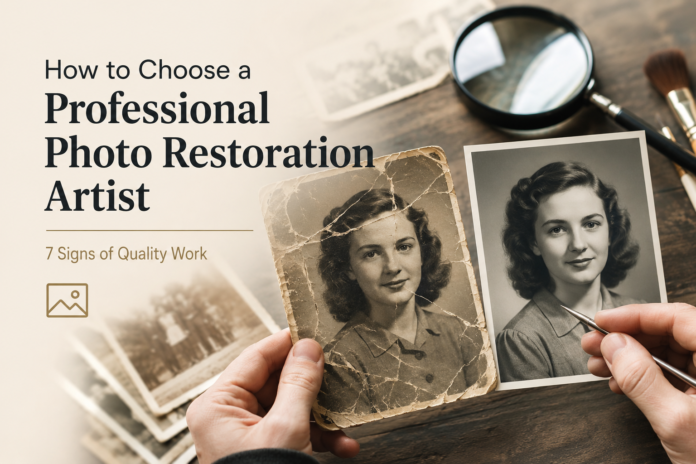

Family photographs are among our most treasured possessions. They preserve memories, document family history, and connect us to previous generations. Unfortunately, time, handling, environmental exposure, and improper storage can leave these priceless images faded, torn, scratched, or stained.
When a cherished photograph becomes damaged, choosing the right professional photo restoration artist can make the difference between preserving a family heirloom and ending up with a disappointing result. While many services claim to offer expert restoration, not all providers deliver the same level of quality, accuracy, or attention to detail.
Whether you’re restoring a century-old family portrait, repairing a damaged wedding photograph, or preserving historical images, understanding what separates skilled restoration artists from average providers is essential.
This guide highlights seven key signs of quality work and explains how to choose a professional photo restoration artist you can trust.
Quick Recap
Before hiring a restoration specialist, look for these signs of quality:
- A strong portfolio with authentic before-and-after examples
- Experience handling different types of photo damage
- Attention to historical accuracy and detail
- Manual restoration skills rather than one-click enhancements
- Positive client reviews and testimonials
- High-resolution, print-ready deliverables
- Clear communication and restoration process transparency
Why Choosing the Right Photo Restoration Artist Matters
Photo restoration is more than removing scratches or improving image quality.
Professional restoration often involves:
- Reconstructing missing details
- Repairing tears and folds
- Correcting fading
- Recovering facial features
- Preserving historical authenticity
- Preparing images for archival preservation
A poorly executed restoration can permanently alter the appearance of a photograph, introducing inaccuracies or creating an unnatural result.
That’s why selecting a qualified restoration artist is one of the most important decisions in the restoration process.
1. A Strong Portfolio of Before-and-After Restorations
One of the clearest indicators of quality work is a detailed portfolio.
Experienced restoration artists proudly showcase examples of completed projects because restoration quality is best demonstrated visually.
What to Look For
A quality portfolio should include:
- Clear before-and-after comparisons
- Various types of damage
- Different photograph ages
- Family portraits
- Historical photographs
- Black-and-white images
- Color photo restorations
Pay close attention to facial details, textures, and overall realism.
The best restorations look natural, not heavily edited.
Red Flag
If a provider cannot show examples of previous work, proceed cautiously.
Professional artists should be able to demonstrate their skills through completed restoration projects.
2. Experience With Different Types of Photo Damage
Every damaged photograph presents unique challenges.
An artist who only repairs minor scratches may struggle with severe restoration projects involving missing sections or extensive fading.
Common Restoration Challenges
A qualified restoration artist should have experience with:
- Torn photographs
- Water damage
- Mold damage
- Fire damage
- Fading
- Creases and folds
- Missing corners
- Stained images
- Silvering in vintage photographs
The broader their experience, the better equipped they are to handle complex restoration work.
3. Attention to Historical Accuracy
Historical photographs often contain important details that should be preserved.
These may include:
- Clothing styles
- Military uniforms
- Family heirlooms
- Architectural features
- Period-specific objects
Professional restoration artists understand that restoration is not about modernizing an image, it is about preserving its authenticity.
Why Historical Accuracy Matters
When restoring family portraits or genealogy photographs, even small alterations can change the historical value of the image.
A skilled artist carefully studies the photograph before making adjustments.
Their goal is to recover lost details, not invent new ones.
4. Manual Restoration Skills Instead of Automated Fixes
Modern software has made basic photo repair easier than ever.
However, quality restoration still depends heavily on manual work.
What Professional Artists Do
Experienced restoration specialists manually:
- Repair damaged areas
- Reconstruct missing sections
- Restore facial features
- Correct tonal imbalances
- Remove stains and scratches
- Rebuild image continuity
This process requires artistic judgment and attention to detail.
Why Manual Restoration Produces Better Results
Automated tools often:
- Over-sharpen images
- Remove natural textures
- Create unrealistic details
- Misinterpret damaged areas
Manual restoration allows the artist to make thoughtful decisions for every section of the image.
The result is typically more natural and historically accurate.
5. Positive Reviews and Client Testimonials
Customer feedback can provide valuable insight into a restoration artist’s quality and professionalism.
Look beyond star ratings and read detailed reviews.
Signs of a Reputable Restoration Artist
Positive reviews often mention:
- Excellent communication
- Realistic restoration results
- Attention to detail
- Fast turnaround times
- Satisfaction with final prints
- Respect for sentimental photographs
If multiple customers highlight similar strengths, it’s a strong sign of consistent quality.
Questions to Ask
- Did clients receive the restoration they expected?
- Were deadlines met?
- Was communication professional?
- Would clients use the service again?
6. High-Resolution and Print-Ready Deliverables
A restoration may look impressive on a phone screen but reveal flaws when enlarged.
Professional photo restoration artists prepare images for multiple uses.
Quality Deliverables Should Include
- High-resolution files
- Print-ready formats
- Archival-quality output
- Multiple file options when needed
A properly restored photograph should retain detail whether viewed digitally or printed as a large family portrait.
Why Resolution Matters
Higher-resolution files:
- Preserve fine details
- Improve print quality
- Support long-term archiving
- Future-proof family collections
This is particularly important for historical photo restoration and family heirloom preservation.
7. Transparent Communication and Process
Professional restoration artists understand that clients are often entrusting them with irreplaceable memories.
Transparency builds trust.
A Quality Restoration Process Usually Includes
Initial Assessment
The artist evaluates the photograph and identifies restoration needs.
Project Estimate
Clients receive pricing and turnaround expectations.
Restoration Plan
The artist explains what can realistically be restored.
Progress Updates
For complex projects, some artists provide previews or updates.
Final Delivery
The completed restoration is reviewed before final submission.
Clear communication helps avoid misunderstandings and ensures realistic expectations.
Questions to Ask Before Hiring a Photo Restoration Artist
Before committing to a service, consider asking:
- How long have you been restoring photographs?
- Can I see before-and-after examples?
- Do you manually restore images?
- What file formats will I receive?
- Can you repair severe damage?
- How long will the project take?
- Do you offer print-ready files?
Their answers can reveal a great deal about their expertise and professionalism.
People Also Ask
How do I know if a photo restoration artist is good?
Look for a strong portfolio, positive client reviews, experience with complex damage, manual restoration skills, and a commitment to historical accuracy.
Is professional photo restoration worth it?
Yes. Professional restoration can preserve valuable family memories, improve image quality, and extend the lifespan of important photographs for future generations.
What should I expect from a professional photo restoration service?
You should receive a detailed assessment, realistic restoration expectations, high-quality digital files, and a final image that preserves the photograph’s original character.
How much does professional photo restoration cost?
Costs vary depending on damage severity, image size, and restoration complexity. Minor repairs may cost relatively little, while heavily damaged photographs requiring reconstruction can require significantly more time and expertise.
Can severely damaged photos be restored?
In many cases, yes. Skilled restoration artists can repair tears, fading, stains, scratches, and even reconstruct missing sections using advanced restoration techniques.
Common Mistakes to Avoid When Choosing a Restoration Artist
Many people focus solely on price.
While affordability matters, choosing the cheapest option can lead to disappointing results.
Avoid providers who:
- Lack a portfolio
- Promise unrealistic results
- Offer only automated enhancements
- Have few or no reviews
- Cannot explain their restoration process
Remember that valuable family photographs are often irreplaceable.
Quality should always be a primary consideration.
Finding a Photo Restoration Artist You Can Trust
Choosing a professional old photo restoration artist requires more than comparing prices. The best restoration specialists combine technical skill, artistic expertise, historical understanding, and a deep respect for the photographs they restore.
By looking for a strong portfolio, diverse restoration experience, manual editing skills, positive client feedback, and transparent communication, you can confidently select a professional capable of preserving your treasured memories.
Whether you’re restoring a faded family portrait, repairing a damaged wedding photograph, or preserving a piece of family history, investing in quality restoration ensures those memories can be enjoyed by future generations for years to come.