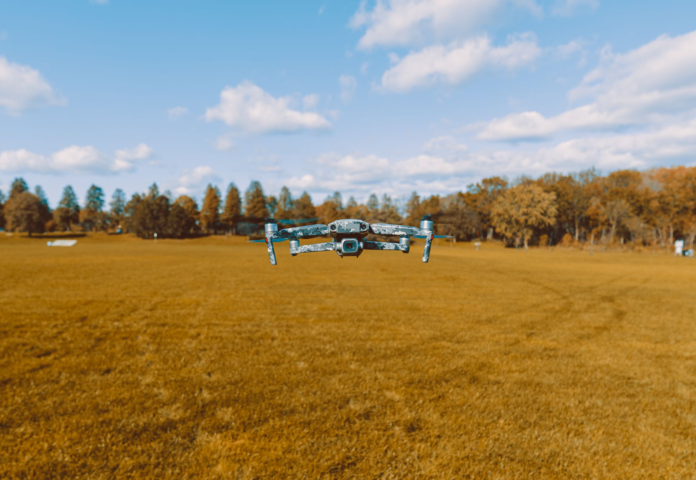

Modern farming requires shifting from broad strokes to surgical precision, a standard easily met when you deploy the DJI Agras T100 to spread seeds and fertilizer across your fields. When fields are wet, topography is uneven, or time is short, traditional ground equipment often fails to reach the necessary efficiency.
Aerial technology now bridges this gap, allowing for rapid deployment of inputs exactly where they are needed most. Selecting the optimal machinery defines whether inputs effectively nourish crops or suffer from environmental runoff. Precision in operational timing for high-capacity systems guarantees that every kilogram of fertilizer and every seed contributes directly to maximizing harvest yields.
Why Aerial Spreading Outperforms Traditional Ground Methods
Ground rigs are limited by physical constraints such as soil compaction and restricted access during rainy seasons. Aerial spreading bypasses these issues by maintaining a constant flight path above the canopy. This prevents the mechanical damage often caused by heavy tires moving through saturated fields during peak growth stages.
As a premier piece of precision hardware, the DJI Agras T100 Sprayer Drone from suppliers like Talos Drones allows for rapid coverage of large areas with minimal labor. When working with such equipment, farmers gain access to specialized systems that optimize application rates based on real-time flight telemetry.
What Conditions Require High-Capacity Aerial Systems?
Selecting the right moment to fly ensures the best return on investment. The technology excels in environments where soil moisture prevents heavy tractor movement. When the ground is too soft, traditional equipment risks sinking or causing ruts that destroy soil structure and hinder root development for the entire season.
Aerial platforms also shine when applying top-dress fertilizer before rainfall. Getting the product down just before a moisture event maximizes nutrient uptake. Precision application minimizes runoff, ensuring that expensive inputs remain in the root zone rather than washing away.
How to Determine the Ideal Timing for Seeding?
Timing is everything in agriculture. Success hinges on matching biological needs with mechanical capabilities.
Optimal Soil Moisture Levels
Seeding via drone is most effective when the top layer of soil has sufficient moisture to facilitate germination, but isn’t waterlogged. Applying seeds just before a light rain or during optimal humidity levels ensures immediate soil contact and promotes the rapid establishment of the crop.
Growth Stage Synchronization
Aerial seeding works best when integrated into the existing crop cycle, such as overseeding cover crops into standing corn. This allows for a second crop to establish before the main harvest, maximizing land productivity without requiring extra passes or waiting for clear ground.
Environmental Window Monitoring
Optimal timing avoids high wind speeds that displace light seeds. Operating during early morning hours often provides the calmest conditions for uniform distribution. Consistent monitoring of local weather patterns remains necessary for achieving the precise coverage required for high-yield, professional-grade agricultural operations.
When to Utilize Drones for Targeted Fertilizer Application?
Precision fertilization involves more than just dumping product from the air. Modern systems use variable rate technology to match application density to the specific needs of different field zones.
This prevents over-fertilization in high-nutrient areas while ensuring that struggling patches receive the nutrients required for consistent maturity. Data-driven approaches show that advanced agricultural technology can improve resource efficiency significantly. In fact, research indicates that precision agriculture tools can increase crop yields by 20–30% while reducing input waste by 40–60%.
Where Does Precision Spreading Create the Most Value?
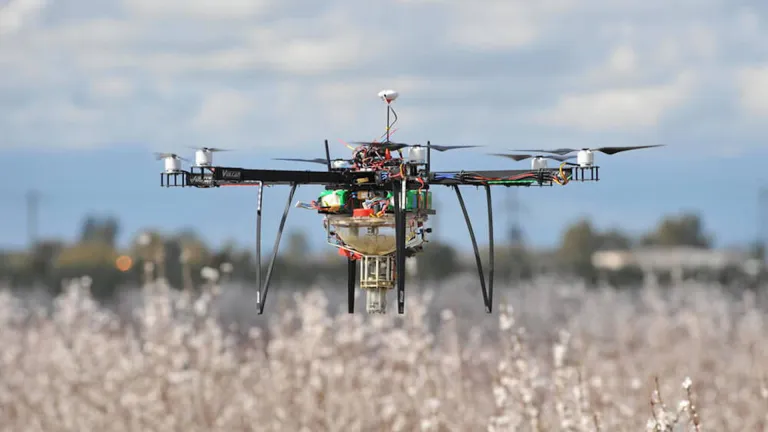
High-value crops often require interventions that ground machinery cannot deliver without causing significant damage to the plant structure. Utilizing drone technology in orchards or high-density vegetable rows allows for precise nutrient delivery directly to the root zones of individual plants. The environmental benefits of these systems are equally quantifiable.
Why Misconceptions About Application Uniformity Persist?
Many believe aerial spreading is inherently less accurate than ground equipment. This is a common myth that overlooks the advancements in modern GPS and RTK navigation. Today’s systems maintain centimeter-level accuracy, ensuring that overlap is minimized and coverage is significantly more uniform than with manual or broadcast methods.
The logic that ground equipment is always superior ignores the human error involved in steering large rigs through irregular field boundaries. Drones follow pre-programmed flight paths, ensuring that every centimeter of the field receives the identical amount of seed or fertilizer, regardless of operator fatigue.
Commonly Asked Questions About Spreading Seeds & Fertilizers
Is aerial spreading more expensive than manual labor?
While initial investment in drone technology is higher, the efficiency gains in speed, reduced input waste, and prevention of crop trampling usually lead to a lower total cost of production. Ultimately, these savings convert improved field accessibility and optimized input placement into a significant advantage for your bottom line.
Can drones handle uneven or hilly terrain effectively?
Yes, modern flight controllers automatically adjust altitude based on terrain following, ensuring an even distribution of materials even when the elevation changes significantly across the field. This capability maintains a constant nozzle height above the canopy, which is essential for consistent coverage and drift mitigation in challenging locations.
How do I ensure my seeds don’t drift away?
By selecting the right flight height and operating during low-wind windows, drones maintain high precision. Using calibrated spreading mechanisms also ensures that particles reach their target rather than drifting off-site.