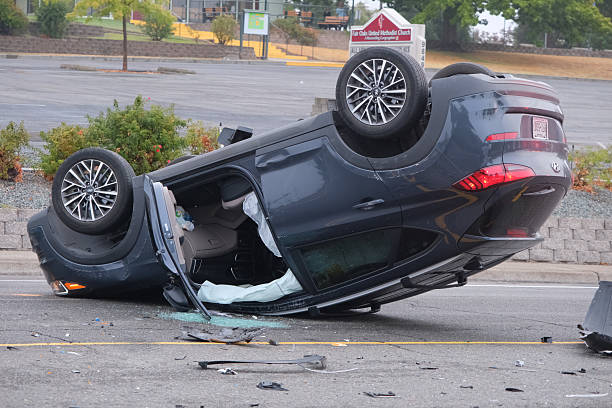

Georgia law contains an absolute mathematical cliff that destroys injury claims every single day. The state operates under a modified comparative negligence system with a 50 percent bar. If an injured driver is found 49 percent responsible for a collision, recovery remains possible.
Hitting the 50 percent mark reduces financial recovery to zero. Insurance adjusters know this rule intimately. They don’t always need to prove total innocence for their policyholder. Pushing a liability share just over that halfway threshold achieves the same financial victory. Recognizing this strict liability cutoff prevents a legitimate claim from evaporating.
How Adjusters Manufacture The 50 Percent Fault Threshold
Insurers deploy specific tactics to inflate the liability percentage of the injured party. Adjusters analyze collision dynamics, looking for minor infractions that suggest shared blame. A crash along Buford Highway provides ample opportunity to claim the victim executed an improper turn. The intent remains clear.
Weaponizing Initial Recorded Statements
“Adjusters use the first phone call to secure a recorded statement before the shock wears off, and those early, confused answers become the exact evidence used to push liability over the 50 percent threshold,” said Duluth car accident lawyer Sarah Moskowitz. A simple apology transforms into an admission of guilt.
Exploiting Ambiguous Medical Records
Delaying medical care hands the defense a perfect argument for shared fault. If a victim waits days to seek evaluation, the insurer will argue the injuries resulted from an intervening event. Clear, immediate diagnostic records remove this weapon. Evidence breaks easily.
Contesting Roadway Conditions
Poor weather or obscured traffic signs frequently become focal points for liability disputes. Defense representatives argue that a prudent driver would have slowed down, attempting to saddle the victim with comparative negligence for failing to adapt.
If you were injured in a wreck near the congested intersection of Buford Highway and Pleasant Hill Road, protect your rights immediately. Reach out to Slam Dunk Attorney at (678) 329-9750 or visit their office at 2250 Satellite Blvd, Ste, with in 10 minutes drive from Publix Super Market at Duluth Station, 2750 Buford Hwy. 120, Duluth, GA 30097. Their attorneys offer a warm, free consultation to evaluate your case and help you push back against insurance adjusters.
The Mathematics Of Modified Comparative Negligence In Georgia
Georgia’s statutory framework requires a strict proportional reduction of damages. When two vehicles collide, investigators and insurance companies assign a percentage of blame to every party involved. A driver found 20 percent responsible for a crash sees their final settlement reduced by exactly 20 percent. This fractional system demands aggressive preservation of favorable evidence to keep that assigned percentage low. This system punishes mistakes.
Engaging a Duluth car accident lawyer, including the practitioners at Slam Dunk Attorney, a legal practice handling personal injury claims in Gwinnett County, changes the equation when adjusters push for a 50 percent liability assignment. Disputing fault percentages often requires formal litigation. Lawsuits move the dispute into a formal arena where discovery rules compel the production of hidden evidence. Across the country, the federal system alone saw exactly 290,896 civil cases filed in 2024, demonstrating the immense volume of lawsuits initiated to force fair resolutions.
The Disappearing Evidence That Proves Liability
Physical proof vanishes within hours of a collision. Skid marks fade, debris gets swept away, and essential video footage gets overwritten. A camera mounted near Pleasant Hill Road might capture the entire sequence of events, but local businesses won’t keep unrequested security footage for more than a week. Relying solely on memories usually results in conflicting narratives that benefit the insurance carrier’s push for shared fault. Speed matters.
Securing official documentation immediately anchors the narrative in objective facts. The responding agency compiles physical measurements, witness identities, and preliminary fault assessments into an initial public record. For example, a basic collision report from the local precinct typically costs $5 each to obtain, yet it forms the foundational documentation for any subsequent liability dispute.
Medical Documentation And The Shift Of Blame
Emergency medical evaluations establish a definitive timeline linking specific bodily harm directly to the impact. Skipping an immediate assessment allows the opposition to argue that the victim exacerbated their own condition. Failing to mitigate medical damages constitutes a form of comparative negligence. An injured party must follow prescribed treatment plans strictly to prevent the insurer from assigning fault for prolonged recovery times. Every missed appointment becomes ammunition.
Financial exposure rises exponentially when injuries lack immediate documentation. Emergency department visits establish a baseline of trauma that insurance companies struggle to dispute. Treating these acute incidents represents a massive financial burden, with the average cost of nonfatal injuries reaching $5,800 per person in emergency department spending. Delaying this necessary care simply shifts that financial burden onto the injured individual.

Calculating Reduced Payouts Under State Law
Proving the other driver holds the majority of the blame requires dismantling their defense piece by piece. When a jury evaluates a collision, they assign a specific percentage of fault to each driver, ensuring the percentages total 100. If the jury determines total damages equal $100,000, but finds the plaintiff 10 percent responsible, the court issues a $90,000 judgment. The math punishes victims.
Occupational hazards mirror the dangers found on public roadways. Professionals who spend their days driving face constant exposure to negligent operators. Nationwide data reveals that transportation incidents accounted for 38.2 percent of all fatal workplace events in 2024, highlighting the severe risks present in everyday travel. This widespread danger makes understanding the reduction formulas essential for financial protection.
Local Jurisdictional Realities For Injury Claims
The venue where a dispute gets resolved heavily influences the procedural rules and evidentiary requirements. A minor citation issued after a crash might be handled at the Duluth Municipal Court, but the overarching civil lawsuit for damages will proceed in a higher venue. Taking a complex injury dispute demands adherence to strict procedural timelines. Missing a filing deadline by a single day results in total dismissal. Venue selection requires strategy.
Fatalities and severe impacts permanently alter lives, generating immense societal and economic losses. Nationwide statistics confirm that 44,000 people died in motor vehicle crashes during a single recent year. Managing the consequences requires recognizing that the legal system prioritizes documented evidence over subjective perceptions of fairness.
Questions About Partially At-Fault Duluth Car Accidents
How does a traffic citation affect the determination of shared liability?
A police citation provides strong evidence of negligence, but it does not automatically dictate the final fault percentages in a civil claim. Juries and adjusters carefully weigh the citation alongside physical evidence, witness statements, and roadway conditions to assign exact proportional blame.
Does failing to wear a seatbelt increase the assigned percentage of fault?
Insurance companies consistently argue that an unbelted occupant contributed directly to the severity of their bodily harm. While insurance adjusters may try to argue this, Georgia law strictly prohibits using the failure to wear a seatbelt as evidence to reduce your financial recovery for medical expenses.