
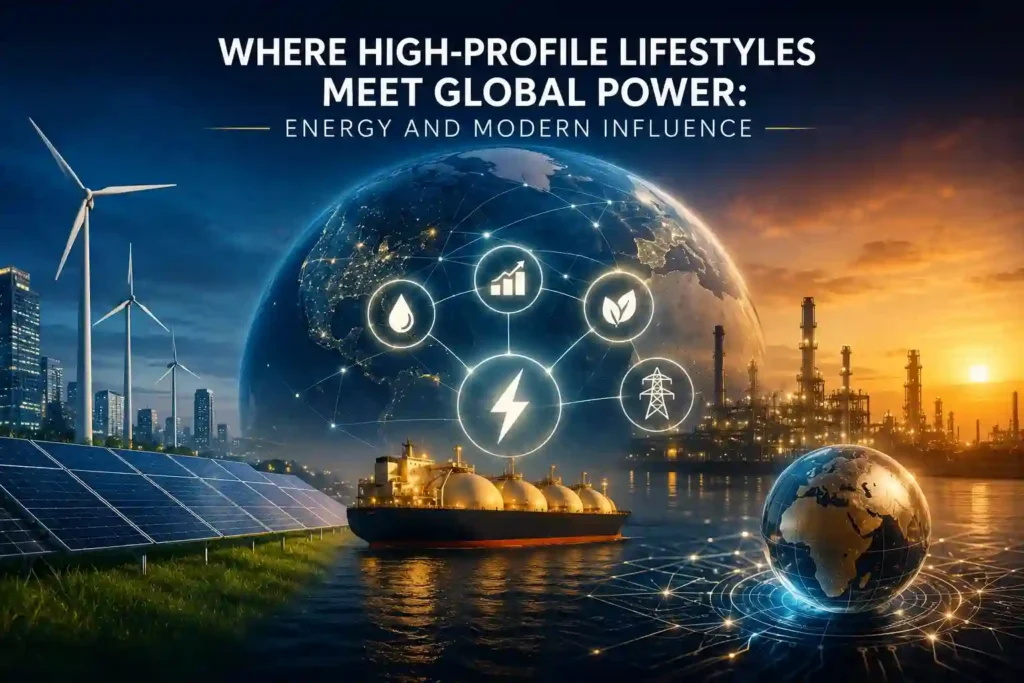
In this interconnected world, influence is no longer limited to traditional boardrooms or political spaces. It now flows through media visibility, investment power, global business networks, and lifestyle branding. High-profile individuals—whether business leaders, public figures, or cultural icons—often sit at the center of this evolving structure, where lifestyle and global power quietly intersect.
One of the most interesting areas where this dynamic becomes visible is the modern energy and infrastructure sector. Once seen as purely technical and industrial, it has now become a space where capital, reputation, and influence play just as important a role as resources and operations.
Evolution of Influence in the Modern Economy
Influence today is multi-dimensional. It is no longer just about authority within a single field, but about how different spheres overlap:
- Business leadership shapes global investment flows
- Media visibility amplifies personal and corporate brands
- Wealth networks connect industries across continents
- Public perception influences long-term market trust
This shift has created a new class of global participants whose impact extends far beyond their official roles. They often operate at the intersection of finance, energy, technology, and public life.
Why Energy Became a Symbol of Global Power
The energy sector has always been central to global development. However, in recent years, it has also become symbolic of strategic influence.
Energy groups are no longer just resource operators. They are key players in geopolitical stability, technological transition, and long-term investment ecosystems. These organizations are typically structured in complex ways that define how global operations are managed across modern energy companies.
Because of this, energy has become closely linked with global power structures. Decisions made in this sector often influence economies, industries, and even public policy.
High Profile Lifestyles and Global Business Alignment
High-profile individuals often find themselves connected—directly or indirectly—to large-scale industries such as energy, infrastructure, and finance. This is not always about direct involvement; it is also about shared ecosystems of influence.
Some key patterns include:
1. Investment Diversification
Many influential individuals expand into energy-related ventures due to its long-term stability and global demand.
2. Strategic Partnerships
Collaborations between corporate leaders and public figures often help build visibility and trust across markets.
3. Brand Power and Visibility
Public recognition can amplify corporate narratives, especially in sectors that require public trust and long-term confidence.
4. Global Networking Circles
Elite professional and social networks often overlap, creating indirect links between lifestyle influence and business decision-making.
Big Role of Modern Media in Shaping Perception
Digital media has accelerated the connection between lifestyle and global influence. Today, narratives about wealth, leadership, and success spread instantly across platforms, shaping public perception in real time.
This has created a situation where:
- Business moves are publicly analyzed almost instantly
- Leadership styles become part of global conversation
- Corporate identity is influenced by storytelling as much as performance
As a result, perception has become a form of power in itself.
Energy, Influence, and the Future Economy
Looking ahead, the relationship between high-profile influence and global industries like energy is expected to grow even more complex.
Key trends include:
- Increased focus on renewable energy investments
- Greater transparency in corporate leadership
- Expansion of cross-industry collaborations
- Rising importance of global brand trust
In this environment, influence is not just about visibility—it is about shaping direction, investment confidence, and long-term global strategies.
Understanding this relationship helps explain how modern power is distributed and how it evolves. It is not only about who holds authority, but also about how visibility, trust, and global networks come together to shape the future of industries and economies.