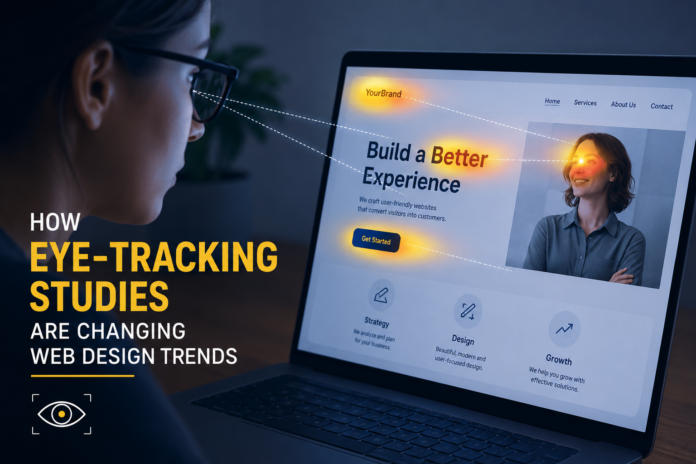

Have you ever visited a website and instantly knew where to click? Everything just felt easy. The menu was clear. The buttons stood out. The information was simple to find. On the other hand, some websites feel like a maze. You click around, get frustrated, then you leave.
That difference is not always about good looks. It often comes down to understanding how people actually use a website.
This is where eye-tracking studies come into the picture. They are changing the way designers build websites by helping businesses create better web design in Melbourne. Let’s see how, but first things first—
What Exactly Is Eye-Tracking?
The name gives away most of it.
Eye-tracking technology follows a person’s eye movements while they browse a webpage. Special cameras record where users look. The system then creates data that designers can study.
Researchers can see which parts of a page attract attention first. They can see where visitors spend the most time and even see what users completely miss. That information is gold for designers.
For example, imagine a business placing a “Contact Us” button on its homepage. The button looks great. The colour matches the brand. Everything seems perfect. Then, eye-tracking data reveals that almost nobody notices it.
That changes everything.
Instead of guessing why conversions are low, designers get real answers.
The Famous F-Pattern Explained
Here is something interesting.
People rarely read websites word for word. Eye-tracking studies have shown this repeatedly. One of the most common scanning behaviours is called the F-pattern.
People start at the top of the page, read across, then they move down slightly and scan another section. After that, they continue down the left side while looking for information that catches their eye.
The movement looks similar to the letter F. So, designers now place important information where people naturally look.
Less Clutter Creates Better Results
Here is a truth many businesses do not like hearing.
More content does not always mean better content. Many websites try to show everything at once. They add banners, animations, pop-ups, and endless blocks of information. The result feels overwhelming.
Eye-tracking studies show that clutter often hurts user experience. People struggle to focus when too many things compete for attention. That is why modern web design in Melbourne often focuses on simplicity rather than excess.
Why Visual Hierarchy Matters
Not everything on a webpage has equal importance—At least it should not. Visual hierarchy helps users understand what matters most. It guides their attention in the right direction.
Eye-tracking research proves this point again and again.
People notice large headlines first. They notice bold text, colourful buttons, and naturally follow visual cues. Good designers use this behaviour wisely. They create a clear path for visitors to follow. They make important actions stand out. They reduce confusion.
The experience feels effortless, and that is exactly what users want.
Faces Have More Power Than You Think
Humans are naturally drawn to faces. It happens almost automatically.
Eye-tracking studies consistently show that people look at faces before many other design elements. This creates interesting opportunities for designers.
For example, imagine a photo of a smiling person on a homepage. Visitors will likely notice that face immediately. If the person is looking toward a button or headline, users often follow that gaze.
Designers use this technique to guide attention without being obvious. It feels natural because it works with human behaviour rather than against it.
Mobile Users Behave Differently
Most people browse websites on their phones now. That changes everything.
Small screens create different browsing habits. People scroll more and scan faster, expecting information immediately. Eye-tracking studies have revealed these differences clearly.
Designers have responded by simplifying mobile layouts. Important information appears sooner. Navigation becomes easier. Buttons become larger and more accessible.
Users appreciate this approach.
Nobody enjoys zooming in just to click a button.
Businesses investing in web design in Melbourne understand this reality. Mobile-friendly design is no longer optional. It is expected.
Smarter Call-to-Action Buttons
Every website wants visitors to take action.
- Maybe it is making a purchase.
- Maybe it is requesting a quote.
- Maybe it is filling out a contact form.
Whatever the goal may be, visibility matters.
Eye-tracking studies help designers identify the best locations for call-to-action buttons. They reveal where users naturally focus their attention. Sometimes, a small change in placement creates a major improvement in performance.
The Future Looks Exciting
Eye-tracking technology continues to evolve. The insights keep getting better.
Artificial intelligence is also entering the picture. Designers now have access to more user behaviour data than ever before.
This means websites will become even more personalised. They will become easier to navigate. They will become more effective at helping users find what they need. The future looks bright.
Businesses that embrace these trends will stay ahead of the competition. Those investing in web design in Melbourne already recognise the value of understanding user behaviour.
Final Thoughts
Eye-tracking studies have completely changed the way websites are designed. They reveal what users notice, uncover what gets ignored, and provide valuable insights that traditional analytics often miss.
The biggest lesson is simple: Design should focus on people.
When websites match natural human behaviour, users enjoy the experience more. They stay longer and engage more often. More importantly, they are also more likely to become customers.
That is why eye-tracking research continues to influence modern design trends. It helps businesses create websites that are not only attractive but also highly effective. As technology continues to improve, the impact of eye-tracking on web design in Melbourne and beyond will only continue to grow.
Call Make My Website for further information.