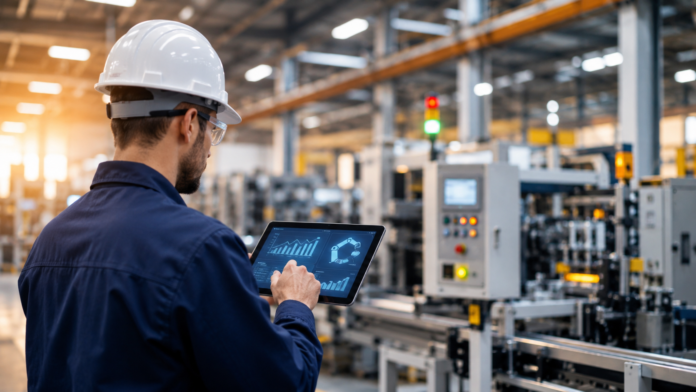

The vision of a fully automated factory, where advanced robotics and intelligent systems manage production with minimal human intervention, has become a major talking point in manufacturing. Yet for many established factories, modernization looks considerably less dramatic.
Replacing functioning production systems can involve substantial investment and disruption. In some cases, smaller, targeted improvements can deliver more immediate operational benefits without the risks associated with a complete overhaul.
Modernization doesn’t have to mean starting over
Many factories operate with machinery installed over several decades, combining older equipment with newer digital technologies. While complete automation might seem like the natural next step, replacing an entire production line isn’t always practical.
Beyond the initial investment, manufacturers must consider production downtime, employee retraining and the challenges of integrating new systems into existing operations.
Instead, modernization can involve extending the capabilities of equipment that still performs reliably. The objective should be to introduce technology where it creates measurable value, rather than replacing machinery simply because newer alternatives exist.
Start where friction is actually costing the business
Before investing in major technological changes, manufacturers need to understand where productivity is being lost.
Recurring equipment failures, inefficient manual processes and limited visibility into machine performance can all affect output. Identifying these problems allows businesses to prioritize improvements with the greatest potential impact.
Solutions might involve installing sensors to monitor equipment performance, connecting isolated machinery to centralized systems or updating aging electrical components, including relays, during routine maintenance.
These interventions may be relatively modest, but addressing persistent operational problems can produce meaningful improvements in efficiency.
Smaller projects can make change easier to manage
Incremental modernization also gives manufacturers greater control over implementation. Rather than committing substantial capital to a single transformation, businesses can introduce improvements gradually and assess their effectiveness before proceeding.
Employees working directly with machinery can provide valuable insight into recurring problems that management might otherwise overlook. Their experience can help identify practical improvements and reduce unnecessary investment.
Smaller projects also create opportunities to understand how new technology interacts with existing workflows, helping businesses make better-informed decisions about future upgrades.
Full automation still has its place
For high-volume manufacturing operations built around repetitive processes, extensive automation can offer significant advantages. Similarly, replacing aging production lines may make financial sense when maintenance costs become increasingly difficult to justify.
However, these decisions require careful evaluation of implementation costs, operational disruption and expected productivity gains.
The question isn’t simply how much automation a factory can introduce, but how effectively that investment addresses its operational needs.
The smartest factory may be the one that upgrades selectively
The future of manufacturing doesn’t necessarily depend on replacing every established production system. Factories combining reliable existing machinery with carefully selected technologies may achieve better returns through continuous improvement.
Ultimately, modernization should be an ongoing process guided by operational evidence. For manufacturers considering their next investment, the most useful question may be simple: which existing constraint would deliver the greatest value if addressed today?