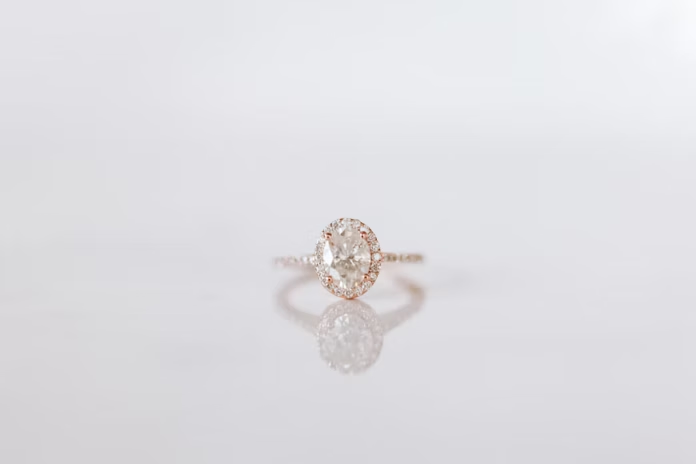

A cushion cut is a square or rectangular diamond with rounded corners and gently curved sides, shaped a little like a pillow, which is where the name comes from. It is a brilliant cut, faceted to throw back light, and it descends from the old mine cut found in Georgian and Victorian jewelry of the 18th and 19th centuries. That history is why a cushion cut can look both vintage and modern.
Couples who choose one usually fall for that softness. Next to a sharp princess cut or a perfectly circular round, a cushion looks gentle on the hand, and its larger facets can show flashes of color in warm light.
How a cushion differs from a radiant and a round
The three shapes are easy to confuse in small photos. A radiant is also square or rectangular, but its corners are clipped straight across instead of rounded, and its outline looks crisper. A round is a circle with a tightly controlled facet pattern built for brightness.
| Cushion | Radiant | Round | |
| Outline | Square or rectangle with rounded corners | Square or rectangle with clipped corners | Circle |
| Light | Softer brightness, strong colored fire | Very bright, crushed ice sparkle | The brightest of the three |
| Face-up size for the carat | Smaller, because it is cut deeper | Close to a round | The reference point |
| Look | Romantic, vintage or modern | Crisp and contemporary | Timeless |
| Price for the same carat | Lower than a round | Lower than a round | Highest of the three |
Square or elongated: what the ratio changes
Jewelers describe the shape with a length-to-width ratio. A square cushion sits at about 1.00 to 1.05, and a rectangular or elongated one at about 1.15 to 1.20. Stones in between can look like a square that is not quite square, so most buyers pick one side of that gap.
The square cushion feels classic and balanced, and it shows off the cut’s soft corners. The elongated cushion looks longer on the finger and sits closer to an oval in spirit, which many people find flattering on shorter or wider fingers.
The best settings for a cushion
A solitaire lets the rounded outline speak for itself, with four prongs guarding the corners. A halo surrounds the stone with small diamonds and makes it look larger from above, which suits the cushion well because the shape is cut deep and can look small for its weight. A hidden halo keeps the top view clean and adds sparkle underneath, and a three-stone setting places side stones beside the cushion for a fuller, more traditional ring.
The easiest way to decide is to see one shape in each setting. Best Brilliance has classic cushion cut engagement rings in square, elongated and elongated old mine shapes, set as solitaires, halos, hidden halos and three-stone designs, so you and your partner can compare the same outline across all four. Best Brilliance makes them in 14K gold, 18K gold and platinum.
Crushed ice or antique-style faceting
Not every cushion sparkles the same way. A “crushed ice” cushion has many small facets under the table, which gives a busy, glittering look, a bit like broken ice. A “chunky” or antique-style cushion has larger facets that show broad flashes of light, closer to the old stones it comes from.
GIA’s guide to antique diamond cuts explains that every old mine cut is an antique cushion, while modern antique cushions borrow the look with today’s precision. If you love vintage jewelry, the chunky look will probably feel right to you. If you love glitter, the crushed ice look is the one to choose.
Color, clarity, size and the stone itself
Cushions are known for holding color, so the metal matters. The International Gem Society’s cushion cut buying guide suggests H color or better in white gold, while I or J can still look white in yellow or rose gold. Clarity follows the facet style: crushed ice faceting hides small inclusions well, and chunky facets show more of the inside of the stone.
The same guide notes that cushions have a smaller face-up size than most shapes for their carat weight, because they are cut deeper. Many buyers go up slightly in carat weight to make up for it, or choose a halo.
As for the stone, a natural diamond is mined, a lab grown diamond is a real diamond with the same chemistry grown above ground, and moissanite is a separate gem with even more fire. All three come in cushion shapes. Lab grown diamonds and moissanite cost less for the same size, which lets many couples choose a larger cushion than they had planned.
Is a cushion cut a good choice for an engagement ring?
For many buyers, yes, and the answer depends on what matters most to you.
If you want maximum brightness, a round will outshine it, and a cushion will give you more colored fire instead. If you want the largest look for the budget, a cushion in a halo setting, or a lab grown or moissanite cushion, does well. If you love vintage style, few shapes suit it better. If durability is your worry, the rounded corners are less likely to chip than the sharp points of a princess cut. On the whole, the shape tends to suit romantic or vintage taste, and anyone who wants a square stone without hard edges.
Final thoughts
A cushion can go vintage or modern depending on the setting alone: in a yellow gold solitaire it looks like an heirloom, and in a platinum halo it looks red carpet ready. That leaves two real decisions, the ratio and the facet style, and photos tend to flatten the difference between crushed ice and chunky facets, so a video or a look in person helps. Which of the two would you rather see on your hand every morning?
FAQ
Does a cushion cut look smaller than a round diamond?
It can, carat for carat, because cushions are cut deeper. A halo setting or a slightly larger carat weight closes the gap.
Is a cushion cut diamond durable?
Yes. Its rounded corners are less exposed than the points of a princess cut, and prongs at the corners add protection.
What color grade should I choose for a cushion cut?
For white gold or platinum, H or better is a common choice. In yellow or rose gold, I or J can still look white.
Are cushion cuts in style?
Yes. The shape goes back to the old mine cuts of the 18th and 19th centuries and is still a favorite today, especially in halo and vintage settings.