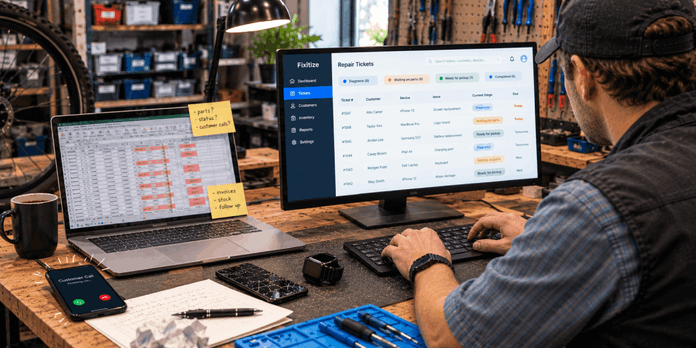

Manual tracking can work surprisingly well when a repair shop is small. A few jobs are easy to remember, notes stay manageable, and a simple spreadsheet or notebook may feel like enough. But as more customers come in, more technicians join the team, and repair volume increases, those same methods start slowing everyone down. Once repair volume picks up, the way of tracking jobs starts to show its limits. A note gets missed here, an update is forgotten there, and finding information takes longer. Repair tracking software helps by putting job details together, so staff can stay on top of repairs as the shop steadily grows.
What Changes When a Repair Shop Starts Growing
Growth changes the way a repair shop operates day-to-day. More business is good, but it also gives the team a lot more to keep up with. Repairs pile up, jobs sit at different stages, and the old spreadsheet starts needing constant attention. Someone may have to stop what they are doing just to find a note or ask a coworker what happened with a repair. When that becomes part of the daily routine, work takes longer. Customers can also end up waiting while staff try to piece together the latest update.
As the workload increases, a few common problems tend to show up first.
- More Repair Jobs Become Harder to Keep Straight
When only a few repairs are open, it is easy to remember which device belongs to which customer and what stage each job has reached. That gets harder as the number of tickets grows. One repair may be waiting for a part, another may need approval, while several others are ready for testing or pickup. When everything is tracked by hand, staff can easily lose sight of what needs attention first. As more jobs come in, keeping each repair on schedule becomes much tougher for the whole team.
- Customer Updates Start Taking More Time
As repair volume grows, customers naturally want to know where their devices stand. With manual tracking, answering a simple question can take longer than expected. Finding an update can sometimes turn into a small task of its own. A staff member may check the spreadsheet, scan through notes, or speak with the technician handling that particular repair job. Meanwhile, the customer is still waiting. If that keeps happening throughout the day, it eats into valuable time. Growing shops need repair information to be easier to find without constantly pulling staff away from other work.
- Important Repair Details Get Scattered
Repair details can end up scattered across a shop before anyone notices. Customer information might be in a spreadsheet, while technician notes are on paper and photos are saved somewhere else. Once more jobs start coming in, pulling all of that together takes longer. Employees can miss a note, overlook a request, or spend time hunting for information. It also makes handoffs less smooth, especially when someone else has to pick up the repair or give the customer an update later in the day.
- Technicians Lose Sight of What Comes Next
Technicians need to know which repairs are urgent, which ones are waiting for parts, and what should be worked on next. Priorities can shift several times during a busy day, and manual tracking does not always keep up. After finishing a repair, a technician might need to check with someone before starting the next one. That wastes time and can throw off the workload. With repair tracking software, technicians can quickly see what is waiting, what matters most, and which job they should move on to next.
- Owners Have Less Visibility Into the Shop
As the shop grows, owners cannot rely on memory or quick conversations to know what is happening with every repair. They may need to check several spreadsheets, ask technicians for updates, or review notes just to see which jobs are delayed. Owners may not notice a growing backlog or uneven workloads until they become a bigger problem. It can also be difficult to see where the day is being lost. Without that visibility, delays can build quietly and eventually affect repair times, customers, and daily shop operations.
- Small Mistakes Become More Expensive
Small mistakes are easier to fix when a shop handles only a few repairs. A small error can cause more trouble once a shop is handling more repairs. One missed note or outdated status may send staff searching for answers before they can fix the issue. Atlassian’s 2025 State of Teams report found that workers waste 25% of their time searching for answers, which shows how quickly scattered information can eat into the day. Keeping repair details together helps prevent small mistakes from turning into longer delays.
Conclusion
Manual tracking can be enough when only a few repairs are coming through the shop. As business picks up, though, keeping every job, update, and customer detail straight becomes much harder. A missed note or small delay can create problems elsewhere before anyone catches it. Repair tracking software gives the team one place to follow jobs and find the information they need. That makes it easier for a growing shop to stay organized without making daily work harder than necessary.