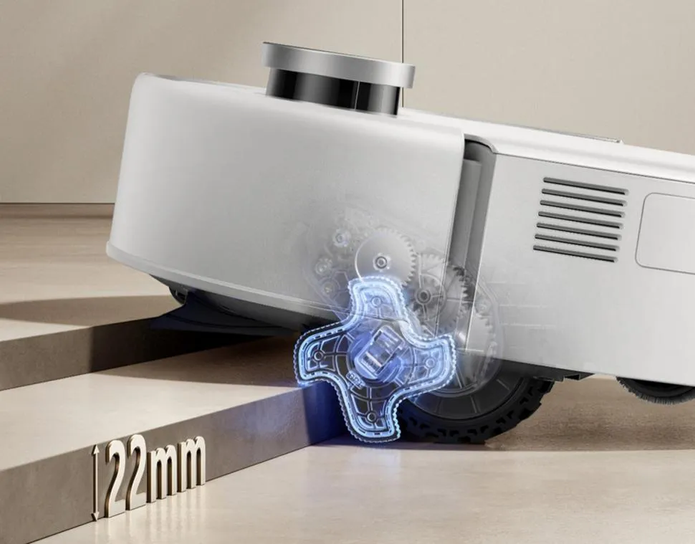

A robot vacuum and mop handles door thresholds by combining wheel traction, chassis movement, and enough underside clearance to get over a raised edge without getting stuck. Height matters, but it is not the only factor. The shape of the threshold, the flooring on each side, and whether the robot can return across the same doorway all affect real cleaning performance. If a threshold is too sharp, too tall, or too narrow underneath, the robot may climb partly, scrape, or stop before entering the next room. Understanding these factors helps you judge whether a robot can move room to room reliably in your home.
Why Some Door Thresholds Are Harder to Cross
Sharp Edges Create a Different Challenge From Sloped Transitions
Not all door thresholds challenge a robot vacuum and mop in the same way. A gently sloped transition lets the front wheels rise gradually, so the robot can keep traction while the body angle changes. A sharp edge creates a more abrupt climb. The wheels must grab quickly, and the front underside must avoid catching on the lip. Metal tracks, stone saddles, and tall wood strips often feel harder than their measured height suggests because the robot meets a nearly vertical face first. Even a moderate doorway can interrupt cleaning if the edge is narrow and steep. For dependable room-to-room travel, edge profile matters almost as much as the threshold height itself in practice.
Grip and Underside Clearance Affect the Whole Crossing
Crossing a threshold is not just about getting the front wheels up. The robot also needs enough grip to push forward and enough underside clearance so the center does not drag on the highest point. Smooth floor surfaces, dust on the doorway, or slick metal tracks can reduce traction right when the wheels need it most. At the same time, a raised strip with limited clearance underneath can contact the robot’s base before the rear wheels finish climbing. That contact can slow momentum or stop the crossing entirely. A robot vacuum and mop that starts over a threshold but cannot complete it often needs better traction, a more flexible chassis, or more clearance below.
How Robot Design Helps It Move Between Rooms
Wheels and Chassis Movement Help Clear Raised Edges
Robot design plays a major role in crossing door thresholds smoothly. Larger drive wheels can maintain contact with the floor longer as the robot starts climbing, while a well-tuned suspension or floating wheel setup helps balance the body over uneven transitions. Chassis geometry matters too. A front edge with better approach clearance can meet a raised doorway without scraping, and enough center clearance reduces the chance of getting high-centered midway through the crossing. These design details help a robot vacuum and mop move from hard floors to rugs, over room dividers, and across modest doorway strips. In practical use, stable wheel contact and controlled body movement usually matter more than speed or force.
Assisted Climbing Extends Access Within Defined Limits
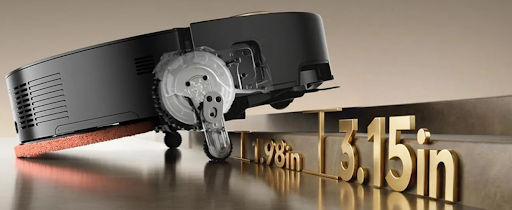
Some models go beyond standard wheel-driven climbing by actively changing body position to clear larger obstacles. The MOVA MOBIUS 60 Robot Vacuum uses StepMaster™ System 2.0, with robotic legs that lift the chassis to cross steps, thresholds, door tracks, U-shaped furniture legs, and obstacles up to 3.15 inches high. That kind of assisted climbing can expand access between rooms where ordinary designs would stop. Even so, the stated limit should be matched against the real doorway shape. A broad, rounded rise is easier than a tall, sharp lip near the same height. Assisted systems improve mobility, but reliable threshold crossing still depends on approach angle, traction, and clearance during the full movement.
Check Whether Your Doorways Allow Reliable Cleaning
Measure Each Threshold Against the Relevant Specification
Before you schedule whole-home cleaning, measure each doorway rather than estimating by eye. Check the highest point of the threshold and look closely at the front edge the robot meets first. A ruler or caliper helps you capture both height and profile. Also note whether the transition is flat on top, sharply peaked, or sloped from one floor to the next. If the threshold includes a door track, measure the full obstacle the robot must cross, not just the visible lip. Compare those measurements with the relevant climbing specification for your robot vacuum and mop. This simple check gives a clear answer about whether room-to-room cleaning should work consistently in everyday use.
Test the Return Journey Before Scheduling Cleaning
A doorway is only truly manageable if the robot can cross it in both directions. Test the return journey before relying on an automatic schedule, because some thresholds are easier to climb from one side than the other. Differences in floor height, rug thickness, or edge shape can change how the robot approaches the same opening on its way back. Watch whether it clears the threshold smoothly, hesitates, scrapes, or needs repeated attempts. Also check that it can return to its base or continue to the next room without intervention. A quick manual test reveals real behavior in your home and helps confirm dependable cleaning coverage, not just one successful crossing under ideal conditions.
Conclusion
A robot vacuum and mop can handle door thresholds well when height, edge shape, traction, and underside clearance all work together. The best way to judge performance is to look beyond a single climbing number and evaluate the full doorway. Sloped transitions are usually easier, while sharp lips and slick tracks create more demanding crossings. If your robot includes assisted climbing, that can widen access, but measured thresholds and real-world testing still matter. Check each doorway carefully and confirm two-way travel, and you will know whether reliable room-to-room cleaning is realistic.