
Understanding Liability and Fault in Complex Multi-Vehicle Crashes
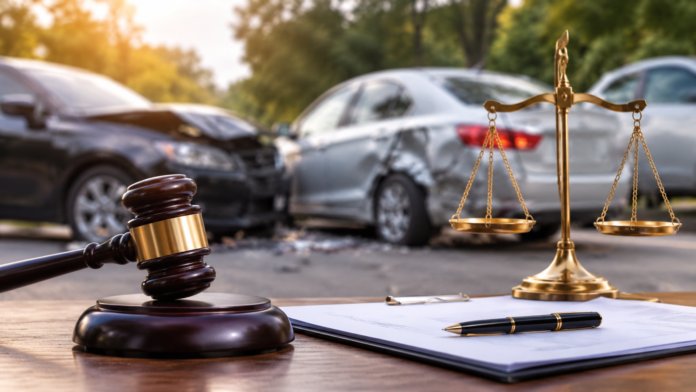
Chain-reaction collisions and pile-ups often feel chaotic, but they are governed by specific legal principles. Unlike a simple fender-bender, these accidents involve multiple defendants, each with their own insurance providers attempting to minimize their liability. Determining who caused the initial impact—and who contributed to subsequent collisions—requires analyzing police accident reports, witness testimony, and the physics of the crash.
Assessing Comparative Negligence and Shared Fault
In Illinois, the legal framework for compensation relies on “modified comparative negligence.” This means that even if you are partially at fault for an accident, you may still recover damages as long as you are not more than 50% responsible. If your share of fault is 51% or higher, your ability to recover any compensation is barred. Liability is apportioned among all involved drivers, and your final settlement or jury award is reduced by your percentage of fault.
Key Evidence Required for Proving Liability
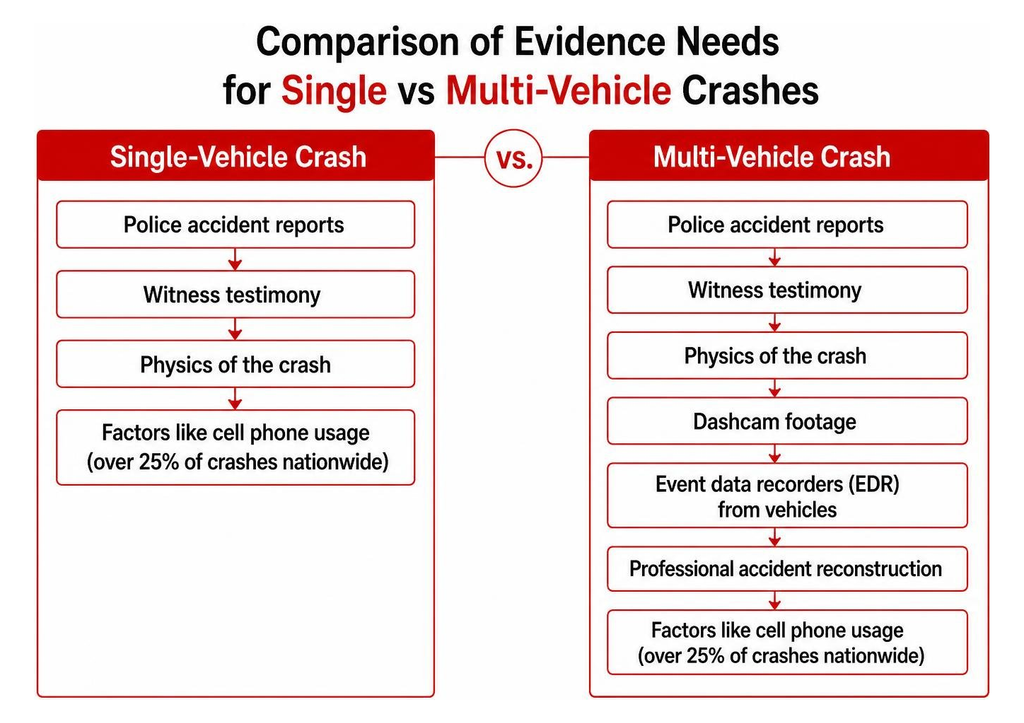
Proving liability in a multi-vehicle scenario requires objective evidence. While witness accounts are helpful, they are often inconsistent. Instead, attorneys rely on dashcam footage, event data recorders (EDR) from vehicles, and professional accident reconstruction. We must also investigate factors like cell phone usage, which contributes to over 25% of crashes nationwide.
The Essential Role of Personal Injury Legal Representation
When you are involved in a multi-party accident, you are essentially fighting a war on multiple fronts. Insurance companies for every driver involved will be looking for ways to shift blame onto you to protect their bottom lines. By securing personalized legal representation, you ensure that your side of the story is backed by professional advocacy, from initial claim evaluation to potential trial preparation.
Securing Comprehensive Damages Through Personal Injury Legal Representation
A multi-vehicle crash often results in significant economic and non-economic damages. Beyond immediate medical expenses and lost wages, you may be entitled to compensation for pain and suffering, long-term rehabilitation, and property loss. Having legal counsel helps ensure that every aspect of your recovery is accounted for in your demand package.
Navigating Insurer Tactics with Personal Injury Legal Representation
Insurance adjusters are trained to use “blame shifting” to confuse the facts. They may offer lowball settlements early on, hoping you will sign a release before you realize the full extent of your injuries. An experienced attorney acts as a buffer, preventing you from falling for these traps and ensuring that multi-party disputes are handled with a focus on your best interests rather than the insurer’s profit.

Navigating Deadlines and Legal Procedures After a Collision
Illinois law imposes strict deadlines, known as the statute of limitations, for filing personal injury claims. Missing these windows can permanently forfeit your right to compensation. The litigation process involves filing a formal complaint, entering the discovery phase to exchange evidence, and potentially participating in depositions. Staying organized with a clear timeline is essential.
Frequently Asked Questions About Multi-Vehicle Accident Claims
What should I do immediately after a multi-vehicle crash?
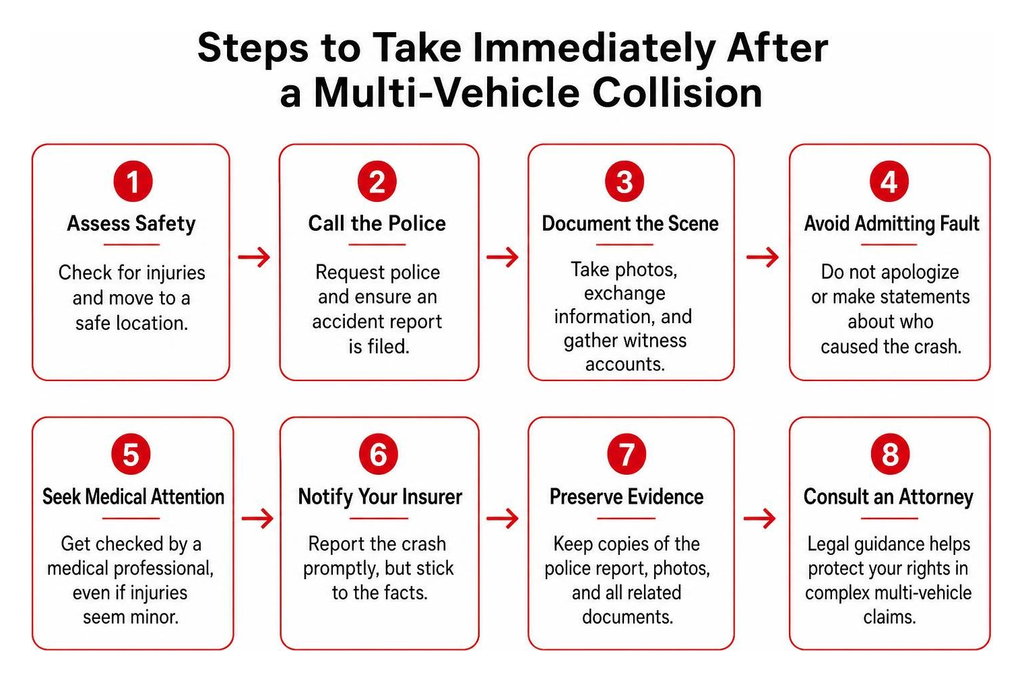
Prioritize scene safety and seek medical triage for all involved. Once stable, contact emergency dispatch to ensure a police report is filed. Document the scene by taking photos of vehicle positions and damage. Exchange contact and insurance information with all drivers, but avoid making statements about fault, as these can be used against you later.
Can I still recover damages if I was partially responsible for the crash?
Yes. Under Illinois law, if you are 50% or less at fault, you can still recover a portion of your damages. Your final award will simply be reduced by your percentage of responsibility.
How long do I have to file a personal injury claim after an accident?
In Illinois, the standard statute of limitations for personal injury claims is generally two years from the date of the accident. However, specific circumstances—such as claims against government entities or cases involving minors—may have different timelines. Consult with an attorney immediately to preserve your rights.
Conclusion
The aftermath of a multi-vehicle crash is inherently complex. Between determining liability among multiple parties and navigating the intricacies of comparative negligence, the path to recovery is rarely straightforward. By prioritizing professional legal advocacy, you protect your financial future and ensure that your rights are vigorously defended against those who would seek to minimize your losses.