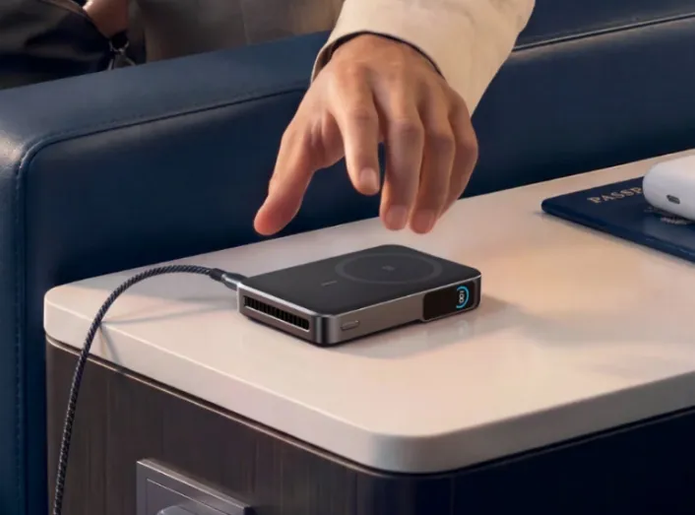

A power bank keeps your devices charged when wall sockets are unavailable. Whether you’re commuting, travelling or working away from home, the right model provides convenient backup energy without adding unnecessary weight to your bag.
However, choosing a power bank involves more than comparing battery capacities. Charging speed, device compatibility, portability and safety all affect its usefulness. This guide explains how to choose the right capacity, understand charging specifications and identify the features worth paying for.
Alt: Anker power bank
Which Power Bank Capacity Do You Need?
Battery capacity determines how much energy a power bank stores. Manufacturers commonly advertise capacity in milliampere-hours (mAh), but the right choice depends on your devices and charging habits.
5,000mAh vs. 10,000mAh vs. 20,000mAh
A 5,000mAh power bank is compact and suitable for occasional phone charging. A 10,000mAh model offers a balance between capacity and portability, making it useful for daily commuting and short trips.
A 20,000mAh model stores more energy for longer journeys or multiple devices, although it generally weighs more and takes longer to recharge.
Remember that advertised mAh usually refers to the battery cells’ nominal voltage, not the energy delivered through USB ports. Conversion losses reduce the usable output.
How Many Times Can a Power Bank Charge Your Phone?
The number of charges depends on the power bank’s energy capacity, conversion efficiency and your phone’s battery size.
For example, a 10,000mAh power bank with a nominal voltage of 3.7V stores approximately 37Wh. Assuming 80% efficiency, around 29.6Wh reaches connected devices. If your phone has a 15Wh battery, that is enough for roughly two full charges under idealised conditions.
Actual results vary with charging losses, device usage and battery condition. Comparing watt-hours (Wh) provides a more reliable way to evaluate stored energy.
Choosing Capacity for Tablets and Laptops
Tablets generally need more energy than phones, while laptops can require substantially more. If you plan to charge a laptop, check both battery capacity and USB-C output power.
Some laptops require 45W, 65W or more. A power bank may store enough energy but lack the output wattage needed to charge the laptop properly. Choose a model that meets your device’s charging requirements and provides enough energy for the time you’ll spend away from a socket.
Power Bank Charging Speed and Compatibility
Capacity tells you how much energy a power bank stores, while output specifications determine how quickly it can charge devices. Check supported charging protocols, maximum wattage and available ports before buying.
USB-C Power Delivery and Fast Charging
USB-C Power Delivery (PD) allows compatible devices and chargers to negotiate suitable voltage and current levels for faster charging.
However, USB-C describes the connector, not a guaranteed charging speed. Check that your device supports the power bank’s charging protocol and that your cable supports the required power. Your device will generally draw only the power it can safely accept.
How to Choose the Right Wattage
Power output, measured in watts (W), indicates how quickly a power bank can supply electricity. Calculate it using this formula:
Power (W) = Voltage (V) × Current (A)
For example, a 9V, 2A output supplies 18W, while a 20V, 3.25A connection supplies 65W.
Phones often work well with lower-wattage outputs, whereas laptops may require higher power. Check your device’s recommended charging specification before choosing a power bank. A higher wattage rating will not guarantee faster charging if your device cannot support it.
Charging Multiple Devices at Once
If you regularly charge a phone, tablet and wireless earbuds together, check how the power bank distributes its output across multiple ports.
Some models reduce the power available to each port when several devices are connected. Compare both individual port ratings and total output to ensure the power bank can charge your devices at useful speeds simultaneously.
Size, Safety and Travel Requirements
A suitable power bank should match your charging needs and the way you carry it. Capacity, physical dimensions, battery protection and airline rules all matter.
Balancing Battery Capacity and Portability
Higher capacity generally means more stored energy but also greater weight and size. A compact 5,000mAh model may suit a small bag, while a 20,000mAh unit is better for longer trips.
Consider how frequently you’ll use the power bank and how much weight you’re comfortable carrying. For occasional emergency phone charging, portability may matter more than maximum capacity.
Power Bank Safety and Battery Lifespan
Choose a power bank with appropriate overcurrent, overvoltage and temperature protection. Buy from a reputable seller and follow the manufacturer’s charging and storage instructions.
Avoid using a power bank that becomes unusually hot, swells or shows signs of damage. Keep it away from excessive heat and moisture. Like all rechargeable batteries, its capacity gradually declines with age and use.
Airline Rules and Watt-Hour Limits
Airlines commonly regulate power banks according to their watt-hour rating. Batteries up to 100Wh are generally permitted in carry-on baggage without special approval, while larger units may require airline authorisation.
Power banks generally must be carried in hand luggage rather than checked baggage. Rules can vary between airlines and destinations, so check current requirements before flying. If capacity is listed in mAh, convert it to Wh using the battery’s nominal voltage.
How to Choose the Best Power Bank for Your Needs
The right Power Banks matches your devices, daily routine and budget. Focus on the specifications that matter instead of paying for features you won’t use.
Power Banks for Everyday Use and Commuting
A compact 5,000mAh or 10,000mAh model may provide enough energy for daily phone charging. USB-C support and a convenient port layout can make it easier to carry and use.
Power Banks for Travel and Extended Outings
For holidays and long days away from sockets, consider a 20,000mAh model or another capacity suited to your needs. Laptop users should check output wattage and airline restrictions before travelling.
Features Worth Paying More For
Higher USB-C PD output, useful port options and reliable battery protection can justify a higher price when they match your needs. A clear capacity rating and suitable warranty are also valuable. Avoid paying extra for specifications your devices cannot use.
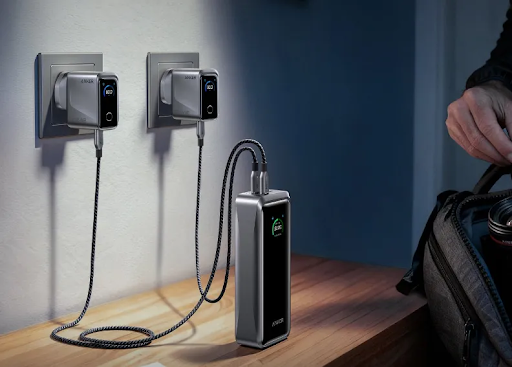
Alt: Anker power bank charging
Conclusion
Choosing the right power bank means balancing battery capacity, charging speed, compatibility, portability and safety. Compare watt-hours to understand stored energy and check output wattage to ensure your devices can charge at the required speed.
A compact model may suit everyday commuting, while travel and laptop charging may justify greater capacity. Check airline restrictions before flying and choose a power bank that meets your requirements without unnecessary size or expense.