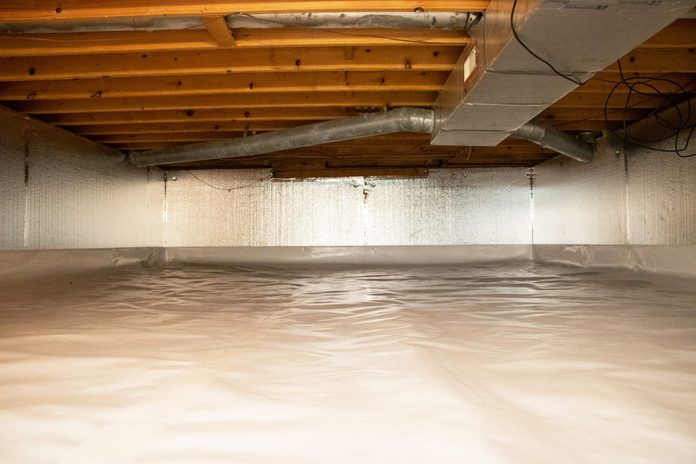

A comfortable, healthy home in Henrico, NC often comes down to what happens under your feet. Crawl space insulation can steady winter floor temperatures and cut down on musty odors, but only when it is matched to the mixed-humid climate and paired with moisture control. The key decision is where to place the thermal boundary: in the floor system with batts, or along the foundation walls as part of an encapsulated crawl. This article explains how Henrico’s climate affects a crawl space, compares floor-joist and wall insulation, shows how vapor barriers and air sealing fit in, and highlights mistakes that undermine performance at the rim joist, vents, and liner seams.
- What Henrico’s mixed-humid climate does inside a crawl space
Summers around Lake Gaston and the Roanoke River valley bring high outdoor humidity that can enter through open foundation vents and unsealed rim joists. Warm, moisture-laden air condenses on cool ductwork, galvanized hangers, and the band joist, while water vapor also evaporates from exposed soil. In winter, stack effect pulls air up through plumbing and wiring penetrations, making floors feel cold and amplifying air leaks around the sill plate. These swings drive up relative humidity, raise wood moisture content in joists, and create conditions for mold and wood decay. A thorough assessment typically includes checking grade and gutters, observing condensation on supply ducts, and taking moisture and temperature readings before deciding how to insulate. For homeowners who prefer a coordinated evaluation and corrective plan, local providers offering Henrico crawl space services from Capps Crawlspace can measure humidity, spot air leaks at the rim, and identify water entry points.
- Floor-joist insulation vs. foundation-wall insulation
Insulating the floor system keeps the thermal boundary at the subfloor. Fiberglass batts fitted between joists can temper winter floors when they are covered by an intact air barrier above (subfloor and sealed penetrations) and protected from moisture below by a ground vapor barrier. The rim joist is a weak link here: it should be air-sealed and insulated, often with closed-cell spray foam or carefully cut rigid foam sealed at the edges. Without air sealing and vapor control, fiberglass can absorb moisture, slump out of contact with the subfloor, and lose much of its insulating value.
Insulating the foundation walls moves the thermal boundary to the crawl perimeter and usually pairs with full encapsulation. Rigid foam boards mechanically fastened to masonry and sealed at seams with compatible tape or mastic create a durable thermal layer, while closed-cell spray foam can conform to irregular walls and the rim joist. This approach makes sense when HVAC ducts, a water heater, or plumbing traps run through the crawl because it brings those components into a more stable environment. It does require attention to termite inspection practices: maintain a visible inspection gap near the top of the wall so pest professionals can see the sill and band area. Compared with floor batts, wall insulation and encapsulation often perform better in humid summers but come with higher materials and labor costs.
- Pair insulation with vapor control: liners, air sealing, and dehumidification
Insulation alone cannot fix a wet crawl. Before installing batts or foam, address liquid water by improving grading, extending downspouts, or adding a perimeter drain and sump pump if needed. Next, cover soil with a reinforced polyethylene vapor barrier that is sealed at seams, wrapped and sealed to piers, and mechanically fastened and sealed to the foundation walls. Air seal gaps at the sill plate, around plumbing and wire penetrations, and at the access door. If you insulate the floor only, vents may remain open seasonally, but monitor humidity closely. For wall insulation and encapsulation, close and seal foundation vents and control humidity with a crawl space dehumidifier set to maintain roughly 50 percent relative humidity, with condensate routed to a drain or sump. These steps reduce the moisture load so fiberglass does not sag, spray foam does not hide ongoing leaks, and rigid foam adhesives and tapes remain bonded.
- Mistakes that ruin crawl space insulation performance
Common errors include pushing batts into place without sealing the subfloor penetrations first, leaving paper facings oriented incorrectly, and skipping the rim joist entirely. The result is cold air bypassing insulation and batts wicking moisture from exposed soil. Another mistake is installing wall foam without a sealed ground liner; the crawl behaves like a damp basement, and condensation still forms on metal ductwork. Blocking vents without adding a dehumidifier traps humidity inside, and taping a liner to a dusty wall without mechanical fasteners leads to peeling seams. Finally, encapsulating right up to the sill plate can hide termite activity; leave a visible inspection gap as required locally. Corrective steps include air sealing before insulating, adding or repairing the vapor barrier, insulating and air sealing the rim, and ensuring a dedicated path for humidity removal.
Two real-world scenarios and how to decide
Scenario one: A two-story home near the lake has supply ducts, a gas furnace, and multiple P-traps in the crawl. Summer condensation on the ducts drips onto the liner, and winter floors over the kitchen feel chilly. Here, insulating the foundation walls with rigid foam or closed-cell spray foam, sealing vents, and installing a dehumidifier creates a semi-conditioned crawl that protects ducts and plumbing while stabilizing floor temperatures. The trade-off is upfront cost and the need to maintain the dehumidifier filter and condensate line, but energy losses from leaky, sweating ducts drop substantially.
Scenario two: A small ranch with no ductwork in the crawl has occasional musty odors after spring rains but otherwise stays dry. The budget favors targeted improvements. Air seal the subfloor penetrations, insulate the rim joist, install well-supported fiberglass batts that contact the subfloor, and add a properly sealed ground vapor barrier. Keep vents open in mild weather and monitor humidity with a simple hygrometer. If summer humidity spikes regularly, consider vent closures and a right-sized dehumidifier later. This path balances cost with comfort while keeping future upgrades possible.
Whichever route you choose, think sequence and maintenance. Fix water entry, seal the ground, then air seal and insulate. Pay special attention to the rim joist, access door, and duct connections. Afterward, check relative humidity periodically, look for tape or mastic separating at liner seams, clean dehumidifier filters as recommended, and re-seal any service penetrations opened by plumbers or electricians. In Henrico’s climate, the crawl space that stays dry stays insulated; get the moisture control right, and both floor-joist and wall insulation strategies can deliver quieter rooms, steadier floor temperatures, and healthier air above.
<iframe src=”https://www.google.com/maps/embed?pb=!1m18!1m12!1m3!1d3097.79276971205!2d-77.8500662!3d36.5217725!2m3!1f0!2f0!3f0!3m2!1i1024!2i768!4f13.1!3m3!1m2!1s0x45e5afe980a3b6cd%3A0xc13c6599fb932c47!2sCapps%20Crawlspace%20and%20Construction!5e1!3m2!1sen!2sph!4v1792569336408!5m2!1sen!2sph” width=”600″ height=”450″ style=”border:0;” allowfullscreen=”” loading=”lazy” referrerpolicy=”strict-origin-when-cross-origin”></iframe>