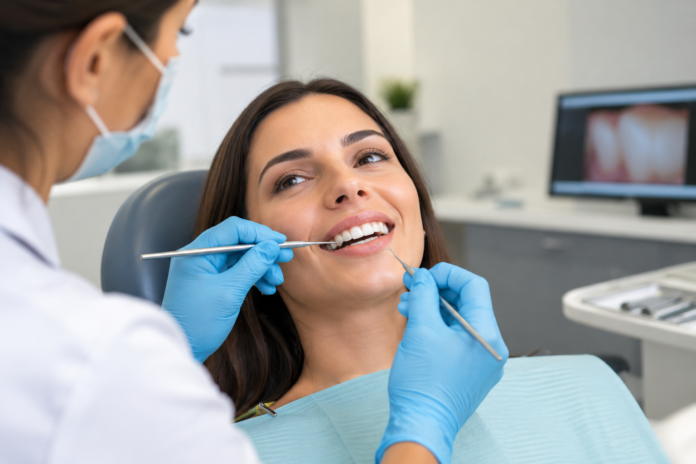

A small chip, uneven edge or visible gap can make bonding seem like a straightforward cosmetic choice. Yet the appearance of a tooth is only one part of the decision. A dentist also needs to consider whether the tooth is healthy, how it meets other teeth and what the patient hopes to change. Those checks help distinguish a situation where adding tooth-coloured material may be reasonable from one where another concern needs attention first. Understanding the questions behind an assessment can make a consultation more useful, without assuming that every mark or irregularity needs treatment.
What is the patient hoping bonding will change?
Assessment starts with a conversation about the particular feature that bothers the patient. Is it a rough edge felt by the tongue, a chip that catches the light, or a gap visible in photographs? The answer matters because bonding changes the shape or appearance of a tooth; it cannot address every reason a tooth looks different. A stain within the tooth, for example, raises different considerations from a small missing corner.
A dentist may ask how long the concern has been present and whether it has changed. A recently broken edge deserves a different discussion from a shape the tooth has had for years. It also helps to describe the result you would find acceptable, rather than asking simply for a ‘perfect’ tooth. Natural teeth vary in colour and shape, and any proposed addition needs to sit comfortably alongside its neighbours. Photographs or a mirror can help you point out a concern, but they cannot replace an examination.
Is the tooth healthy enough to consider cosmetic work?
Before discussing the finish of a bonded surface, a dentist looks for problems that may affect the underlying tooth. They may examine the area for decay, cracks, weakened edges or existing restorations, and check the surrounding gum. Sensitivity, pain on biting or a change in the tooth’s appearance should be mentioned, even if the main reason for the appointment is cosmetic. The dentist can then decide whether further investigation or care is needed before any appearance-focused work is considered.
The amount and position of sound tooth structure also matter. Bonding is often discussed as a way to make relatively modest changes, but suitability cannot be judged from the size of a chip alone. A fracture may extend further than it first appears, while a small visible defect may sit in an awkward place. Depending on what the examination shows, a dentist might discuss monitoring, a different restoration or addressing an underlying issue instead.
How does the tooth meet its neighbours?
Teeth are not static objects on display: they touch, slide and absorb forces during everyday use. A dentist may check where the upper and lower teeth contact when you close your mouth and how they move against each other. Material added to an edge that takes substantial biting force may face different demands from material placed on a less exposed surface. The assessment is therefore about function as well as appearance.
It is worth mentioning any tendency to clench or grind your teeth, bite your nails, chew pens or use your teeth to open packaging. These details do not automatically rule out bonding, but they can affect the discussion about likely wear and maintenance. A dentist may also ask about an old repair that repeatedly chips. Rather than assuming it simply needs replacing, they may look for a reason that spot keeps failing.
Will the proposed change look balanced?
A suitable tooth is not necessarily a suitable canvas for every requested change. The dentist may consider the width, length, colour and position of nearby teeth, along with the amount of space available. Closing a gap by adding material to one or both teeth, for instance, can alter their apparent proportions. A change that looks appealing from the front may also need to feel comfortable at the sides and when speaking.
This is a useful point to ask what bonding can realistically achieve in your particular mouth. Colour matching can be considered, but an exact visual match in every light should not be assumed. If whitening is being considered too, raise it during planning so the sequence of decisions can be discussed rather than treated as an afterthought.
What choices follow the assessment?
Once the clinical and cosmetic questions are on the table, the conversation can turn to options. For a modest change, composite bonding may be one possibility to discuss alongside leaving the tooth as it is or considering another approach. The relevant comparison is not simply which option sounds quickest. Ask what each would change, how much of the existing tooth it would involve and what upkeep might be needed.
Bonded material can stain, wear or chip, and it may need attention over time. How it performs depends on factors such as its position, the forces on it and personal habits; a dentist can explain the uncertainties for the tooth being examined. Other approaches have their own trade-offs. If there is no pressing clinical concern, taking time to understand those differences is reasonable. You can ask whether a proposed result is intended to be a subtle repair or a more noticeable change to your smile.
What should you take away from the visit?
A useful assessment should leave you clearer on both the recommendation and its limits. You might ask which findings make bonding suitable or unsuitable, whether anything needs checking first, and what might cause the proposed repair to need maintenance. If the tooth is painful or has changed suddenly, say so explicitly rather than treating the appointment as purely cosmetic.
The central question is not whether bonding can cover what you see. It is whether adding material is a sensible choice for this tooth, in this position, with your goals and oral health in mind. That answer depends on an individual examination and an honest discussion of alternatives, including the option of doing nothing when treatment is not needed.