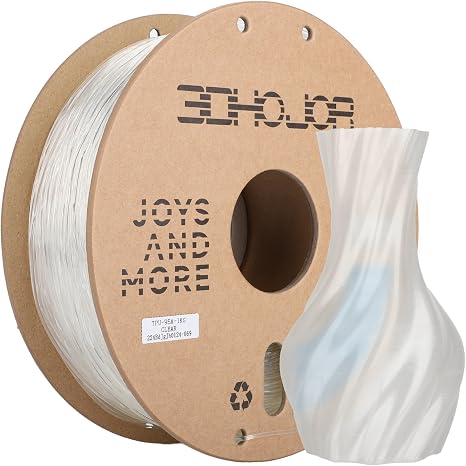

Choosing the right material is essential for achieving high-quality results in 3D printing. While rigid materials such as PLA and PETG are popular for many projects, flexible materials offer additional possibilities for creating bendable, impact-resistant, and durable parts. Among these options, TPU-95A is a popular choice for users who need a balance of flexibility and strength.
Whether you are a beginner or an experienced maker, selecting the best TPU filament for your needs can help you produce functional parts with reliable performance. In this guide, we will explore the features, benefits, applications, and practical tips for using TPU 95A filament in your 3D printing projects.
What Is TPU Filament?
TPU stands for thermoplastic polyurethane, a flexible thermoplastic material known for its elasticity, abrasion resistance, and durability. Unlike rigid filaments, TPU can bend and compress under pressure, making it suitable for applications where flexibility is important.
The 95A designation refers to the material’s Shore A hardness rating. TPU-95A is generally firm enough to maintain its shape while remaining flexible for many everyday applications. This combination makes it useful for printing protective accessories, grips, flexible covers, and functional prototypes.
The final flexibility of a printed part depends on several factors, including wall thickness, infill percentage, print orientation, and the geometry of the design.
Key Features of TPU 95A Filament
Before selecting a flexible filament, it is helpful to understand the features that influence its performance.
1. Balanced Flexibility and Firmness
One of the main advantages of TPU 95A filament is its balance between softness and structural stability. It can flex under pressure while remaining firm enough for many functional designs. This makes it suitable for projects that require both shape retention and flexibility.
2. Abrasion Resistance
TPU is often selected for components exposed to friction and repeated handling. Its abrasion resistance can help printed products withstand everyday wear, making it useful for grips, protective parts, and selected mechanical components.
3. Impact Absorption
Flexible materials can absorb some energy from impacts and vibrations. TPU-95A is therefore useful for designing bumpers, protective cases, and cushioning components. Actual impact performance depends on the filament formulation and printed part design.
4. Good Layer Adhesion
When printed with appropriate temperatures and settings, TPU can produce well-bonded layers. Good layer adhesion contributes to the durability of finished parts, especially when they are exposed to repeated bending.
Benefits of Using TPU 95A Filament
The best TPU filament for 3D printing should offer practical advantages for your specific project. TPU 95A filament provides several benefits.
Versatile design options: Its flexibility allows you to create parts that are difficult to produce using rigid materials alone.
Durable performance: TPU can withstand repeated handling and movement in many suitable applications.
Customizable flexibility: Adjusting wall thickness, infill, and geometry allows you to change how a printed object bends and compresses.
Wide application range: From everyday accessories to functional prototypes, TPU supports many creative and practical uses.
Reduced risk of brittle failure: Compared with many rigid plastics, TPU can tolerate substantial deformation without behaving as a brittle material, although performance varies by design and loading conditions.
Common Uses of TPU-95A
TPU is widely used in projects where a combination of flexibility and durability is desirable.
- Protective cases: Create flexible covers for electronic devices, tools, and accessories.
- Phone accessories: Print customized cases, bumpers, and protective components.
- Flexible grips: Design comfortable handles and grips for tools or equipment.
- Gaskets and seals: Produce custom parts for suitable sealing and cushioning applications.
- Wearable accessories: Make flexible straps, bands, and other wearable components.
- Shock-absorbing parts: Create bumpers and components intended to reduce vibration or soften impacts.
- Functional prototypes: Test flexible designs before moving to more advanced manufacturing processes.
For specialized applications involving food contact, high temperatures, or safety-critical components, check the manufacturer’s specifications before choosing a material.
Tips for Printing TPU 95A Successfully
Although TPU is versatile, flexible filament can be more challenging to print than rigid materials. Proper settings can help improve print quality.
Use the Recommended Temperature
Follow the temperature range specified by the filament manufacturer. The ideal setting depends on the material formulation, printer, and hotend. Test small prints to find a temperature that provides consistent extrusion and good layer bonding.
Reduce Printing Speed
Printing TPU at a slower speed can improve extrusion consistency and reduce the risk of filament buckling. Begin with conservative settings and increase the speed gradually if your printer handles the material reliably.
Check Extruder Compatibility
Direct-drive extruders often provide better control over flexible filament because the filament travels a shorter distance before reaching the hotend. Some Bowden-style printers can also handle TPU, but careful setup may be necessary.
Keep the Filament Dry
TPU can absorb moisture from the air. Moist filament may cause stringing, surface defects, or popping sounds during printing. Store the spool in a dry, sealed container and follow the manufacturer’s drying recommendations when needed.
How to Choose the Best TPU Filament
When comparing TPU products, consider hardness, dimensional consistency, printing temperature, spool quality, and printer compatibility. Check whether the manufacturer provides clear instructions and technical specifications.
If you need a material for everyday flexible accessories and functional components, TPU 95A filament can be a practical option. Make sure the material’s properties match your intended application, and print a small test piece before committing to a large project.
Conclusion
The best TPU filament for 3D printing offers a useful combination of flexibility, durability, abrasion resistance, and impact absorption. With its balanced hardness and versatility, TPU-95A is suitable for many applications, including protective cases, grips, gaskets, and functional prototypes.
By choosing a suitable filament, following recommended printing settings, and storing the material correctly, you can achieve better results and produce dependable flexible parts. Whether you are experimenting with new designs or creating functional products, TPU 95A filament is worth considering for your next 3D printing project.