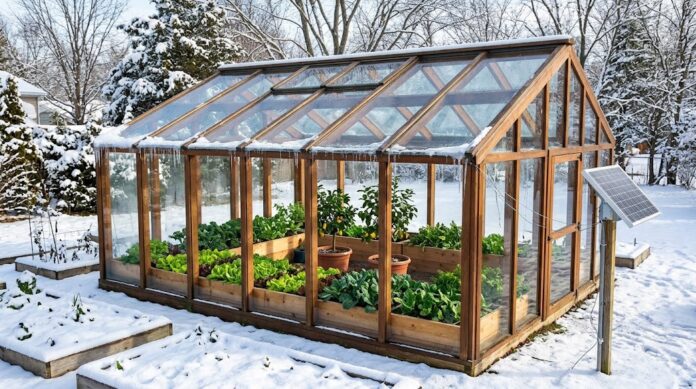

For many home gardeners, autumn marks the end of the season. Tomato vines wither, the last herbs get picked, and the garden goes quiet until spring. Grocery store produce fills the gap for months, often shipped long distances and picked well before it was ripe.
A growing number of people are refusing to accept that pause. Backyard greenhouses have become a popular project for homeowners, schools, and community groups who want fresh greens in January and seedlings ready long before the last frost. The challenge is that keeping a greenhouse productive through winter can be surprisingly expensive, and many first attempts end with frozen plants or alarming energy bills.
Why Most Greenhouses Struggle In Winter
A traditional greenhouse is very good at one thing: letting light in. Clear walls and roofs capture sunshine and warm the space during the day. The problem is what happens after sunset.
Glass and thin plastic hold very little heat. Once the sun goes down, warmth escapes quickly through every surface. On a cold, clear night, the inside of a basic greenhouse can drop close to the outdoor temperature within hours. Gardeners respond by running electric or propane heaters through the night, which keeps plants alive but drives up costs.
Summer brings the opposite problem. A structure designed to trap heat can overheat on sunny afternoons, stressing or scorching plants unless vents and fans work hard to cool it down. The result is a space that swings between too hot and too cold, with inconsistent harvests across the seasons.
Working With The Sun Instead Of Against It
Passive solar design takes a different approach. Rather than relying mainly on heaters and fans, the structure itself is shaped and built to manage heat.
The basic ideas are simple. Glazing is concentrated on the side that faces the sun, usually the south in the Northern Hemisphere, where it collects the most light during short winter days. The walls facing away from the sun, which receive little useful light anyway, are insulated to stop heat from escaping. The roof angle is chosen to capture low winter sunlight while limiting the harsh overhead sun of summer.
Inside, materials that store heat, such as water, soil, or masonry, soak up warmth during the day and release it slowly at night. That smooths out temperature swings and keeps the space more stable without constant input from heaters.
The payoff is a growing environment that is easier to control, uses less energy, and supports steady production throughout the year rather than in short seasonal bursts.
Heating Still Has A Role
None of this means heat is never needed. In very cold climates, a run of cloudy days can drain stored warmth faster than the sun can replace it. Many growers keep some form of backup heating on hand for those stretches.
When planning that backup, some gardeners look at a solar powered greenhouse heater kit that uses panels to run a small heater or fan. Others choose electric heaters tied to a thermostat or controllers that monitor temperature and humidity automatically. The key insight from passive solar design is that the better the structure holds heat, the smaller and cheaper any supplemental system needs to be. Fixing heat loss first almost always costs less than paying to replace that lost heat every night.
Where Year-Round Growing Makes Sense
Energy-efficient greenhouses aren’t just for dedicated hobbyists. They suit a range of settings.
Backyards. Homeowners can grow salad greens, herbs, and starts for the summer garden, reducing trips to the store and the waste that comes with packaged produce.
Schools. A greenhouse gives students hands-on lessons in biology, nutrition, and sustainability, and can supply fresh food for school programs.
Community gardens and urban plots. Shared greenhouses let neighbors extend the growing season together, often in spaces where outdoor growing is limited.
Aquaponic setups. Systems that raise fish and plants together need stable temperatures to keep both healthy, making efficient climate control especially valuable.
Kits Versus Building From Scratch
Some gardeners enjoy designing and building every part of a greenhouse themselves. Others prefer a kit, which offers a tested design with components that fit together as intended.
Kits built on steel frames tend to be sturdy and long-lasting, and many can be scaled from a small backyard size up to larger multi-bay structures as needs grow. Installation options vary, from doing the work yourself to hiring professional help.
Cost is worth weighing honestly. An energy-efficient greenhouse often costs more upfront than a simple traditional one. The return comes later, through lower heating and cooling bills, more consistent harvests, and in some designs reduced water use. For anyone planning to grow year-round for many years, those savings add up.
Questions To Ask Before You Build
Where on your property does the sun shine longest in winter?
How cold do your nights typically get, and for how long?
What do you want to grow, and does it need extra warmth or light?
How much time can you spend checking and adjusting the space?
Will you need backup heat, and what will it cost to run?
Is the size right for your needs today and a few years from now?
A Small Step Toward Food Independence
Interest in home food production keeps growing, from backyard beekeeping to raised vegetable beds. A year-round greenhouse takes that idea further, turning a few square feet of yard into a reliable source of fresh food through every season.
The most successful projects start with a simple principle: design the space to hold onto the sun’s energy, and the rest becomes much easier. Plan carefully, size any heating to fit the structure, and winter can become just another growing season.