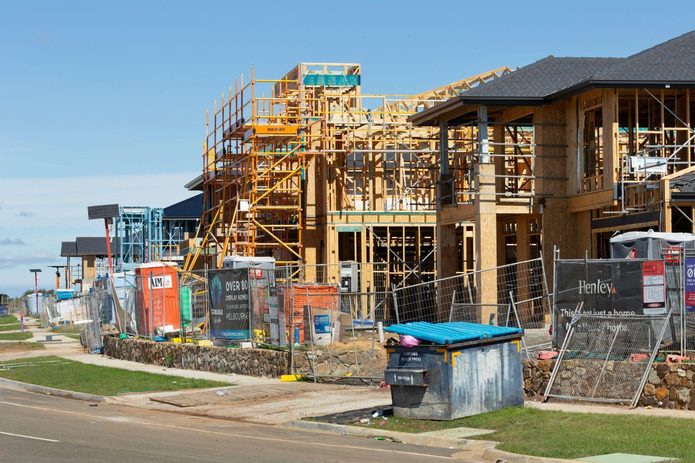

There’s a quality to a well-run construction site that experienced builders, architects, and project managers recognise immediately and that homeowners often feel without being able to identify the source of it. The materials are organised. The work areas are clear. The waste from the previous phase isn’t competing for space with the current one. The site looks like somewhere that work is being done deliberately rather than somewhere that things are happening in spite of the conditions.
This quality isn’t accidental and it isn’t primarily about aesthetics. It’s the visible result of a project management approach that treats site conditions as a variable within the builder’s control rather than a consequence of the work that can’t be managed. The builders who keep their sites clear do so because they understand that site conditions affect every dimension of how the project runs, from the quality of the work to the safety of the people doing it to the experience of the homeowner who visits mid-build and forms an impression that persists through completion.
Why a Clear Site Produces Better Work
The connection between site conditions and work quality is specific and practical rather than philosophical, and understanding it explains why the clear site is a performance condition rather than a presentation choice.
Each trade that arrives on a construction project is performing work that depends on the conditions in the space where that work happens. The plasterer working in a room that has been cleared of the preceding phase’s debris is a plasterer who can set out correctly, move freely, and assess their work accurately as it progresses. The one working in a space that still contains evidence of the framing and electrical rough-in that preceded them is doing the same work in conditions that introduce friction into every part of the process.
The quality of the finished surface is directly connected to the quality of the preparation conditions. A floor that was laid in a space where dust and debris from previous phases hadn’t been adequately cleared will show that in its finish. A paint job applied in a space that wasn’t properly prepared because the space wasn’t adequately clear won’t achieve the result that the same painter would achieve in better conditions. These aren’t excuses. They’re the predictable outcomes of conditions that professional site management prevents.
Trade sequencing is the project management dimension where site conditions have the most direct timeline effect. Construction projects are sequenced so that each phase creates the conditions for the next one, and any disruption to that sequence adds time to the project. When waste from a completed phase occupies the space where the next phase needs to begin, the sequence stalls at exactly the point where it needs to flow. The electrician who arrives to start first fix while demolition debris is still in the space has two options: wait or start somewhere else. Neither option is on the programme.
The Waste Planning That Happens Before the First Tool Is Picked Up
The site conditions that characterise a well-run construction project are the result of decisions made before the project generates any waste, not responses to waste that has already accumulated. This is the distinction that separates builders who consistently run clear sites from those who manage waste reactively.
The waste assessment happens during the pre-project planning phase. An experienced builder looks at the project scope and identifies what waste each phase will generate, at what rate, and in what material categories. A bathroom renovation will generate tiles, plasterboard, fixtures, and plumbing components. A structural renovation will generate framing timber, concrete, and masonry. A full interior fit-out will generate packaging, off-cuts, and the accumulated debris of multiple concurrent trades. Each of these profiles requires different bin specifications, and knowing the profile before the project starts is what allows the right bins to be in place before the project needs them.
The bin placement decision is made with the site’s workflow in mind rather than with convenience as the primary consideration. A bin positioned to allow direct loading from the primary work area removes the staging step that doubles the handling of every piece of waste. A bin that sits between the main work area and the access point creates an obstacle rather than a solution. The placement that works for the project is the placement that was thought through before delivery rather than accepted wherever the driver could put it on arrival.
Collection scheduling is planned around the project’s phase transitions rather than left to a default timing. A collection timed to clear the site between the demolition and installation phases gives the installation trades the starting conditions their work requires. A collection that happens on the provider’s standard schedule may or may not align with these transitions, and the difference is felt in how each subsequent phase begins.
For builders across Sydney managing residential and commercial construction projects that require reliable, scheduled waste removal that keeps sites clear throughout the build, builders waste removal Sydney through Sydney Waste Aus provides skip bins across the full size range, same-day delivery where the schedule requires it, and the consistent service that active construction sites depend on to keep phases moving without waste-related interruptions.
What a Well-Managed Site Tells a Homeowner About Their Builder
The homeowner who visits their renovation or new build mid-project and finds a clear, organised site is receiving information about their builder that the quote and the contract didn’t fully convey. Site management is the dimension of a builder’s professionalism that can only be observed in practice rather than evaluated in advance, and it’s one of the more reliable proxies for the overall quality of how the project is being run.
A builder whose site is clear at each phase transition is a builder who planned for the phase transitions rather than managing them reactively. A site where each trade arrives to clear conditions is a site whose project manager is coordinating the workflow actively rather than responding to the conflicts that arise when it isn’t coordinated. These are the same qualities that produce accurate scheduling, responsive communication, and the delivery of the finished result on time and to specification. The clear site is a symptom, and the underlying condition it reflects is what produces the entire project experience.
The questions worth asking a builder before a contract is signed include how they manage waste removal during the project, what bin sizes they typically use for the project type being proposed, and how they coordinate waste collection with phase transitions. The builder who has clear, specific answers to these questions has thought about waste as a project management variable. The one who gives a vague answer about organising it as needed hasn’t, and the mid-project site that results will reflect that.
The homeowner who visits a site mid-project and finds rubble from last week’s demolition still in the space where this week’s installation is supposed to be happening should ask the question rather than assuming it will be resolved. The answer to that question, and more importantly the site conditions that produced it, tells more about how the rest of the project will unfold than any progress update the builder might provide.
Why This Reflects Something Deeper Than Tidiness
The clear construction site is not the goal of professional waste management. It’s the result of an approach to project management that treats every variable within the builder’s control as something to be managed rather than accepted. Waste is one of those variables, and the builders who manage it well do so because they manage everything else well too.
The connection between site conditions and project outcomes is well understood by the people who work on construction sites every day. The plasterer who commented to a colleague that this is a good site to work on is rarely commenting on the quality of the tools or the specification of the materials. They’re describing the conditions, the organisation, the clarity of the workflow, and the absence of the friction that poorly managed sites introduce into every trade’s experience of the work. Those conditions are produced deliberately, and waste management is a significant part of how they’re produced.
The homeowner who ends up with a finished result they’re genuinely proud of is almost always the one whose project was run on a site like that.