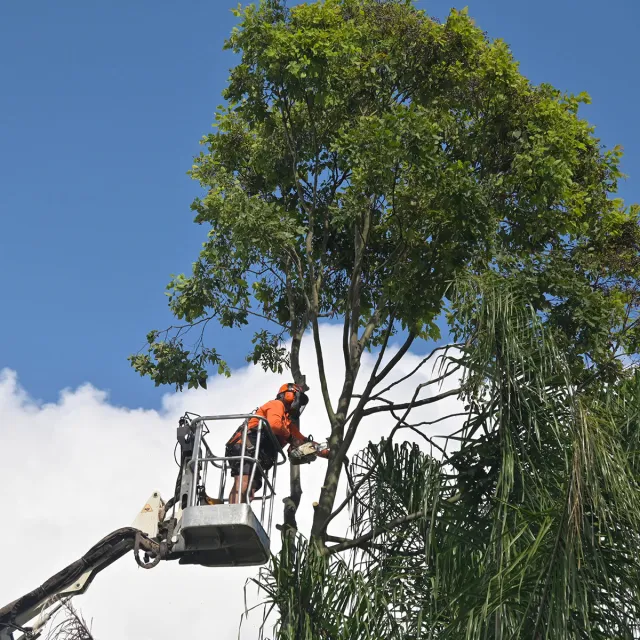

Along the central Gulf Coast, trees face saturated soils, salt-laden winds, and sudden tropical weather. In Mobile, common species such as live oak, water oak, and loblolly pine can thrive for decades, but their structure and site conditions often determine how they perform when tropical-storm-force gusts arrive. Homeowners weigh questions like whether to thin a canopy, cable a split-prone union, or remove a declining tree near a roof. Good decisions start with understanding wind-risk factors, how different pruning cuts change load on the tree, when support systems help, and how soil and roots drive stability. With a plan in place before the first hurricane watch, you can often reduce the chance of branch failure, protect nearby structures, and prioritize work that delivers the most risk reduction per hour spent.
- Spotting Wind Risk Features Before the First Tropical Watch
Look for codominant stems that form tight V-shaped crotches with included bark, long, overextended limbs without strong lateral branches, and deadwood snagged high in the crown. At ground level, a fresh lean, soil heaving around buttress roots, or fungal conks on the trunk can signal internal decay. A water oak over a driveway with a pronounced V-union and bark wedged between stems is a classic split risk in a squall line. When you see these signs, talk with an arborist or a local Mobile Tree service about whether to reduce, support, or remove specific parts. Early evaluation matters because scheduling fills quickly once a storm enters the Gulf, and some fixes, like structural pruning to build better branch architecture, work best before severe weather.
Imagine a loblolly pine that developed a slight lean after last season’s tropical storm. If the lean increases and the root plate shows fresh cracking or uplift on the tension side, the tree’s anchorage may be compromised. By contrast, a static lean with no recent soil movement and a wide, undisturbed root flare might be acceptable to monitor. Another scenario involves a live oak canopy extending well over a roof with dead stubs left by past topping. Here, risk concentrates at those weak stubs and at long, end-heavy limbs. Each sign tells a story about failure mode and timing, helping you choose between reduction cuts, selective removal, or support hardware instead of a one-size-fits-all approach.
- Pruning That Reduces Sail Load Without Weakening the Tree
In Mobile’s winds, the goal is to cut wind sail while preserving structure. Structural pruning focuses on reduction cuts back to well attached laterals, shortening overextended limbs to shift weight closer to the trunk. Light crown thinning, which removes small, interior branches evenly across the canopy, can improve airflow. Avoid lion tailing, which strips interior foliage and concentrates weight at the tips, increasing bending stress and breakage. Where branches brush shingles or gutters, clearance pruning can stop friction damage and reduce the chance of a limb levering against the roof in high winds. Retain branch collars to speed closure, and favor smaller cuts over large wounds that invite decay in species like water oak.
Consider a mature live oak whose main lateral over a garage has grown heavy without strong subordinate branches. One option is to carefully reduce it back to a suitable lateral, possibly in two rounds over multiple seasons to minimize shock. The tradeoff is appearance and shade versus risk reduction: removing too much foliage at once can stress the tree, while doing too little leaves wind leverage in place. A better balance is modest, well-placed reduction combined with removing dead stubs and weakly attached sprouts from past topping cuts. In fast-growing species, plan a follow-up check in a year or two, because regrowth can quickly restore sail if not guided by selective pruning.
- Soggy Soils, Shallow Roots: Managing Stability at the Base
High rainfall and seasonal saturation affect how roots anchor in coastal soils. Shallow root systems are common where a perched water table or compacted subsoil limits depth, making trees more vulnerable to uprooting in storms. Maintain a broad mulch ring 2 to 4 inches deep, keeping mulch off the trunk to avoid rot, and never “volcano” mulch against the bark. Avoid parking vehicles or stacking heavy materials under the canopy drip line, which compacts soil and starves roots of oxygen. Exposed root flares and buttress roots generally indicate good anchorage; if the trunk looks like a telephone pole with soil piled high, the tree may have been planted too deep, increasing decay risk at the base.
Root pruning around sidewalks and driveways can relieve hardscape conflicts, but cutting large structural roots near the trunk can destabilize a tree. A scenario: a sidewalk lifted by live oak surface roots tempts a deep root cut. Before any saw work, have underground utilities located and evaluate whether ramping the pavement or rerouting the walk preserves more structural roots. The tradeoff is immediate hardscape relief versus long-term stability: a single severed root on the windward side can change how a tree behaves under load. If roots must be cut, smaller cuts farther from the trunk are generally safer than large cuts close to the root collar, and follow-up monitoring after heavy rains makes sense.
- Cabling and Bracing for Codominant Crowns
Support systems can mitigate, not eliminate, the chance of failure in specific defects. Static cabling with extra-high-strength steel, thimbles, and lag or through bolts in the upper canopy can share the load between codominant stems. Brace rods installed across a weak union add shear resistance when a split is already developing. Dynamic cabling systems use synthetic lines and shock-absorbing components that allow some movement while limiting peak loads. Hardware typically sits in the upper third to half of the crown; placement depends on limb length and defect location. After major wind events, inspect for frayed cable, loose lags, and crushed wood around hardware, and combine support with strategic reduction to lower end weight on supported limbs.
Picture a sprawling live oak shading a patio where two main leaders meet with included bark. A pair of through-bolted brace rods near the union, backed by a higher static cable where the leaders diverge, can reduce the chance of a sudden split. Still, without pruning to shorten long lever arms, the benefit is limited. Expect periodic inspections, as salt air and humidity can accelerate corrosion, and trees continue to grow around hardware, changing load paths. If the union opens further despite bracing, or if decay advances around the attachment points, the risk may outpace what cabling can reasonably address.
When Removal Is the Responsible Choice
Some conditions tip the scales toward removal: advanced trunk decay visible as a large cavity, a fresh lean with cracked soil and lifted roots on the side opposite the lean, or a dead top shedding branches over a play area. Targets matter too. A moderate defect in a seldom-used back corner is different from the same defect over a roof, service drop, or busy driveway. If removal is on the table, plan logistics early: crane access through a gate, rigging over a pool enclosure, turf and irrigation protection, and a safe place for a chipper or stump grinder to operate. Scheduling before peak hurricane season can also reduce the scramble to address hazards when crews are booked solid by emergency work. Mobile’s trees can handle Gulf weather when structure, roots, and site conditions are actively managed. Regular checks for included bark, overextended limbs, and soil movement, along with thoughtful reduction cuts and, where appropriate, cabling or bracing, can meaningfully lower storm risk. In saturated soils, protect the root zone with mulch and minimal compaction, and be cautious with root pruning that trades stability for hardscape convenience. When defects, targets, and decay align against a tree, plan removal carefully and confirm any local ordinances or homeowner association rules before work begins. A measured, pre-season approach keeps shade where it belongs and reduces surprises when the next band of storms pushes ashore.
<iframe src=”https://www.google.com/maps/embed?pb=!1m18!1m12!1m3!1d878395.759297582!2d-88.09888995!3d30.68370755!2m3!1f0!2f0!3f0!3m2!1i1024!2i768!4f13.1!3m3!1m2!1s0x8313178a52e4d505%3A0xeae0427f05c63610!2sWiese%20Tree%20Service%20LLC!5e0!3m2!1sen!2sno!4v1791236569722!5m2!1sen!2sno” width=”600″ height=”450″ style=”border:0;” allowfullscreen=”” loading=”lazy” referrerpolicy=”strict-origin-when-cross-origin”></iframe>