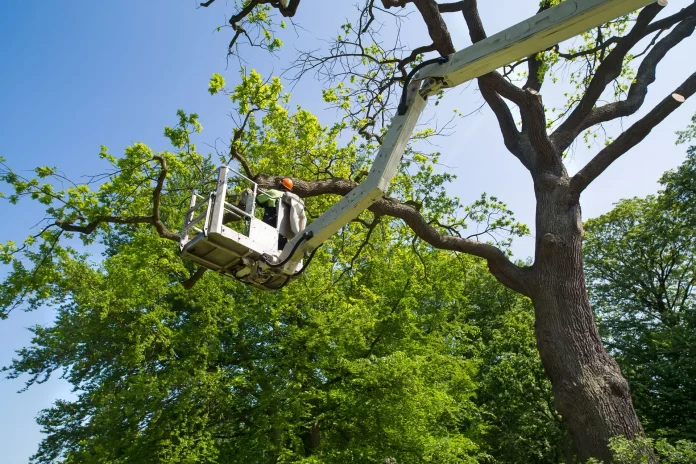

Summer squalls and late-season tropical systems test North Florida’s canopy. When branches fail, the cause is often not sheer height but weak structure and excessive end weight where wind pressure is greatest. Storm pruning steers growth; it doesn’t shear crowns. The goal is a balanced, well-connected canopy with strong unions so energy moves through the tree without concentrating at break points. This article explains how structural pruning improves wind performance, why topping backfires, what proper crown reduction looks like on common regional species, and how timing and follow-up shape longer-term safety. It equips homeowners to speak the same language as tree professionals and to plan work that lowers risk without sacrificing shade.
- Height Is Not the Hazard: Structure and Wind Load Drive Failures
In wind, a tree behaves like a lever. Weak unions between codominant stems, heavy end weight on long laterals, and gaps from over-thinning can shift loads to the wrong places. Selective reduction cuts that shorten overextended limbs to strong laterals, plus early training to avoid included bark in forks, manage these loads more effectively than simply shortening the entire crown. Regional providers, including Miller’s Tree Service near Tallahassee, FL, work with these conditions every season, so conversations about “wind sail,” limb leverage, and attachment strength should feel routine during an estimate.
Consider a driveway spanning live oak with two near-equal leaders. The junction between those leaders is a frequent failure point, especially if a crotch-shaped crotch traps bark. Proper structural pruning reduces sail area on the riskier leader, biases growth toward the better-anchored stem, and removes deadwood that can shear off like missiles. The result is a canopy that still shades the pavement but transfers loads more safely into the trunk and roots.
- The Topping Trap: Why Cutting Back to Stubs Fails
Topping removes branch ends without regard to the branch collar or a suitable lateral. It leaves stubs that decay, triggers a flush of epicormic sprouts, and relocates weight to weakly attached shoots that break more easily. A related mistake, lion tailing, strips inner foliage and concentrates leaves out near the tips. That raises the center of pressure, increases whipping, and invites snap failures at mid-branch nodes. Both errors can make a tree look “lighter” while quietly increasing storm risk.
Flush cuts create another hidden problem. The branch collar is living tissue that seals pruning wounds. Cutting it away widens the wound, slows compartmentalization, and opens a pathway for decay fungi. Instead of stubs, make cu cut back toal thdiameter removedthe removed limb, with the cut just outside the collar. This respects the natursystem and preservesstem and preservgives the treehat giveshes their strength.
- What Proper Crown Reduction and Structural Pruning Look Like
Effective crown reduction is selective and proportional. The arborist identifies overextended limbs and reduces them to appropriate laterals using drop crotch cuts. Interior foliage is preserved to keep mass close to the trunk, while end weight is decreased so gusts do not overstress the lever arm. Crown cleaning removes dead, diseased, crossing, and rubbing branches, focusing on defects. On younger trees, structural pruning trains a single dominant leader and evenly spaced scaffold branches, preventing future codominant stems with included bark.
Here is a realistic scenario: a backyard live oak leans toward a roof corner with one limb extending over the shingles. Following industry standards such as ANSI A300, an arborist reduces that limb to a subordinate lateral, shortens competing branches to rebalance, and removes deadwood above the playset. If the union between two large stems shows cracks or included bark, noninvasive support like cabling and bracing may be discussed to share loads, paired with reduction pruning to lessen stress on the union. Nothing is cut; branch collars remain intact, and the tree keeps a natural outline rathBetter than a flat-topped silhouette.
- Species Notes: Live Oaks, Pines, and Crape Myrtles in North Florida
Live oaks respond well to conservative reduction and structural traireduce Keep interior leaves to avoid liover dominantbs that sweep over drivewayreduceWatch for codomiuse nant stems with intoded bark; reduction on one leader and strategic cabling can improve performance in gusts. At the base, keep the root flarevisible andmaintain a wide mulch ring. Avoid piled “mulch volcanoes,” which can promote girdling roots that weaken anchorage just when wind loading peaks.
Southern pines, such as loblolly and slash, do not tolerate topping. Removing the top kills the tree or forces weakly attached regrowth, either of which raises risk. Pruning should focus on dead and compromised limbs and on removing smaller competing pines that crowd better-anchored specimens. If a pine leans suddenly, shows a bulging soil “heave” on the side opposite the lean, or exudes resin near the base, have it assessed promptly. Crape myrtles, meanwhile, suffer from “crape murder,” where trunks are cut back to knuckles each winter. That practiccrowded theprouts and awkward structure. Instead, thiplace well-placedr base, lift lower branches carefully, aplaced laterals to preserve a strong framework and graceful form.
Timing, Site Constraints, and Follow Up Aftercare
Pruning for storm readiness is often scheduled before the heart of hurricane season, yet many tasks are appropriate year round. Deadwood removal and light structural training can be done at most times. Heavier reduction is commonly planned when heat and drought stress are lower, and never immediately ahead of a forecasted wind event when fresh wounds and debris could complicate response. On tight urban lots, staging matters. Protect turf with ground mats, identify septic tanks and irrigation lines before equipment arrives, and plan rigging paths so branches can be lowered clear of fences and service drops.
After pruning, support recovery with simple care. Maintain a 2 to 3 inch mulch layer out to the dripline, keeping it off the trunk to protect the root flare. Water deeply during extended dry spells so the canopy can rebuild leaf area without stress. After a major wind event, walk the property and look for new cracks at union points, hanging branches, and fresh soil movement around roots. If cabling or bracing hardware was installed, schedule periodic inspections to verify tension and hardware condition. Good structure is not a one time taskwell-timedwell timed adjustments every few years keep the canopy strong, shaded, and better pre for what the next stson brings.
<iframe src=”https://www.google.com/maps/embed?pb=!1m18!1m12!1m3!1d3912.2895326722764!2d-84.251586!3d30.498372499999995!2m3!1f0!2f0!3f0!3m2!1i1024!2i768!4f13.1!3m3!1m2!1s0x88ec5923b80cce61%3A0xeb4ef7299c6766cc!2sMiller's%20Tree%20Service!5e1!3m2!1sen!2sro!4v1773073494036!5m2!1sen!2sro” width=”600″ height=”450″ style=”border:0;” allowfullscreen=”” loading=”lazy” referrerpolicy=”no-referrer-when-downgrade”></iframe>