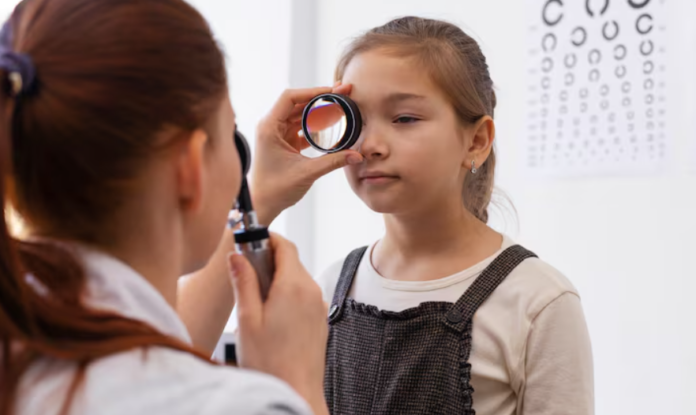

A child’s eye exam is not just a vision screening. It is a comprehensive health evaluation that affects their ability to learn, develop, and engage with the world. Choosing the right provider for this exam means more than finding the nearest location. These seven factors distinguish providers who are well-suited for pediatric patients from those who are not.
1. Experience With Pediatric Patients
The techniques used to assess vision and eye health in children differ significantly from those used with adults, particularly for young children who cannot reliably read letters or respond to the verbal instructions that adult vision testing depends on. Providers who regularly see pediatric patients have the experience and the equipment to obtain accurate assessments from children at different developmental stages.
Ask specifically about the provider’s experience with the age of your child before booking, particularly for children under five.
2. Child-Friendly Environment
A clinical environment that feels welcoming and non-threatening to children reduces the anxiety that can affect the quality of the exam. Waiting areas with age-appropriate activities, examination rooms with child-scale equipment, and staff who are comfortable communicating with children at different developmental levels all contribute to an exam that produces better information because the child is calm and cooperative.
3. Comprehensive Testing Rather Than Vision Screening
School vision screenings test visual acuity at distance and catch obvious myopia, but they miss many vision problems that affect children including farsightedness, astigmatism, amblyopia, binocular vision dysfunction, and color vision deficiency. A comprehensive eye exam tests a broader range of visual functions and should be the standard for children, not the abbreviated screening that school programs provide.
4. What Happens During an Eye Exam?
Pearle Vision’s kids eye exam near me appointments include a complete evaluation of visual acuity at distance and near, assessment of eye alignment and the ability of the eyes to work together as a team, examination of color vision, testing of depth perception, evaluation of the eye’s ability to change focus between near and distant objects, and thorough examination of the external and internal eye health structures.
For young children, eye drops that temporarily dilate the pupils may be used to allow a more thorough examination of the internal eye and to obtain an accurate measurement of the child’s prescription without the influence of the child’s accommodation.
5. Willingness to Explain Findings to Parents
After the exam, the provider should clearly explain what was found, what it means for the child’s vision and development, what treatment or correction is recommended, and what the follow-up schedule should be. A provider who rushes through the findings or uses terminology that parents cannot understand without explanation is not serving the family effectively.
6. Insurance Participation and Transparency About Costs
Understanding what the exam will cost before the appointment, including which services are covered by insurance and which are not, prevents surprise bills after the visit. Most vision insurance plans cover annual comprehensive eye exams for children, and the provider’s billing staff should be able to verify coverage and explain any out-of-pocket costs before the appointment.
7. Follow-Up and Ongoing Care
Vision problems in children often require monitoring over time, particularly during growth phases when prescriptions change frequently or when conditions like amblyopia are being treated. A provider who sees the child as an ongoing patient rather than a one-time visitor, maintains records across visits, and provides continuity of care produces better outcomes than one where the child sees a different provider at every visit.