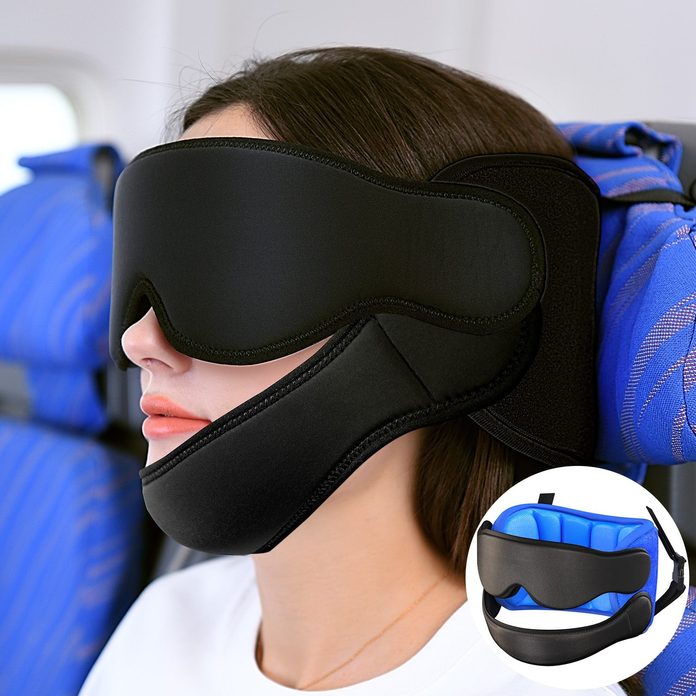

There is a specific kind of sleep failure that almost every frequent flyer knows: you doze off sitting upright, and within minutes your chin drops toward your chest. You jerk awake, reposition, and the same thing happens again a few minutes later. This forward head drop is one of the most common and most disruptive sleep interruptions on planes, buses, and trains, and it is different from the sideways tipping that most standard neck pillows are built to prevent.
Most travel pillows are shaped like a horseshoe, which does a reasonable job stopping your head from falling to the left or right. But that same shape does almost nothing to stop your chin from dropping straight down, which is exactly the problem for people who naturally sleep with their head tilted forward. Understanding why this happens, and what kind of support actually addresses it, can make a noticeable difference on your next long trip.
Why Standard Travel Pillows Miss This Problem
The classic U-shaped travel pillow was designed decades ago around a fairly generic assumption about how people sleep while seated: mostly upright, with occasional tipping to one side. It works reasonably well for that specific case. But a large number of travelers do not sleep that way at all. Instead, their head tips forward and down, chin toward chest, which a U-shaped pillow barely touches since its main support sits behind and beside the neck rather than underneath the jaw.
This gap matters because forward head drop is not just uncomfortable, it can also mildly restrict breathing by compressing the airway, leading to lighter, less restorative sleep even when you do not fully wake up. Anyone who has landed feeling like they barely slept despite closing their eyes for hours has likely experienced this exact issue without realizing what caused it.
Identifying Your Own Sleep Pattern
A simple way to check which pattern applies to you is to think back on past trips, or ask a travel companion to notice where your head ends up once you fall asleep. If it consistently drops forward rather than to either side, a standard side-support pillow is solving the wrong problem, and switching to a design built around chin support will likely make a much bigger difference than trying yet another U-shaped pillow.
How Chin Support Pillows Are Built Differently
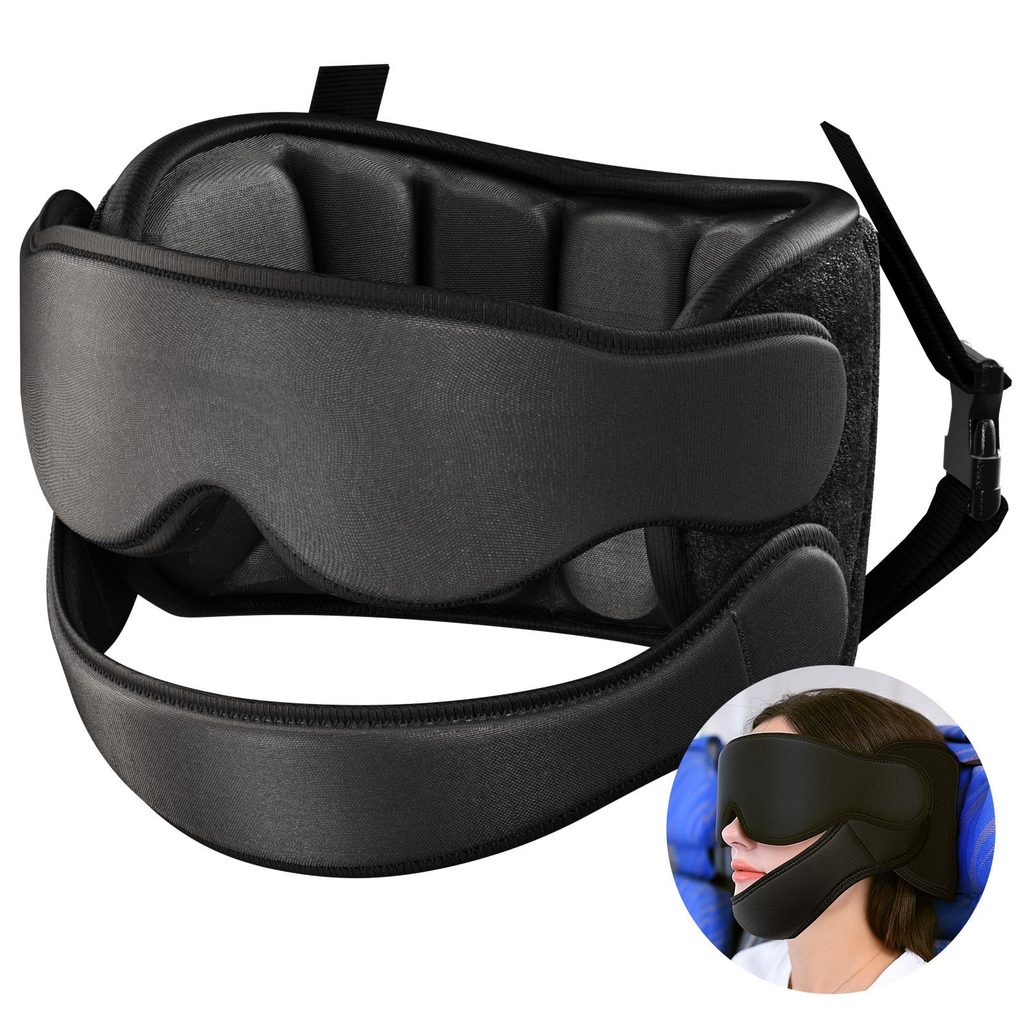
A chin hold travel pillow adds a structural element beneath the jaw that a standard design lacks. Instead of relying only on side panels, it includes support that catches your chin before it can drop fully forward, keeping your head in a more neutral position throughout sleep. This changes the entire mechanics of how your neck holds weight while you rest.
The adjustment mechanism matters here as well. Because chins and jaw shapes vary quite a bit between people, a fixed, non-adjustable chin support can end up feeling too tight for some travelers and too loose for others. Look for a design with an adjustable strap or clip so you can fine-tune exactly how much support sits under your chin, rather than accepting a one-size-fits-all fit that may not match your face shape.
Balancing Chin Support With Overall Comfort
Chin support needs to be firm enough to actually catch your head, but not so rigid that it feels like a brace. The best designs use a semi-firm structure that holds its shape under the weight of a dropping head while still feeling soft against the skin. Materials matter here, since a hard plastic support would feel intrusive, while a fully soft one would compress too easily to do its job over a multi-hour flight.
Getting the Fit Right Before You Fly
Adjusting a chin support pillow correctly takes a bit more attention than a standard travel pillow, since the fit needs to match your specific jaw position. Before your flight, sit in a similar upright position to how you will be seated on the plane, and adjust the strap or clip so the support sits just below your chin without pressing uncomfortably into your throat. Sarisun’s chin hold design was built with this adjustability in mind, giving travelers room to fine-tune the fit rather than forcing a single fixed shape on every face.
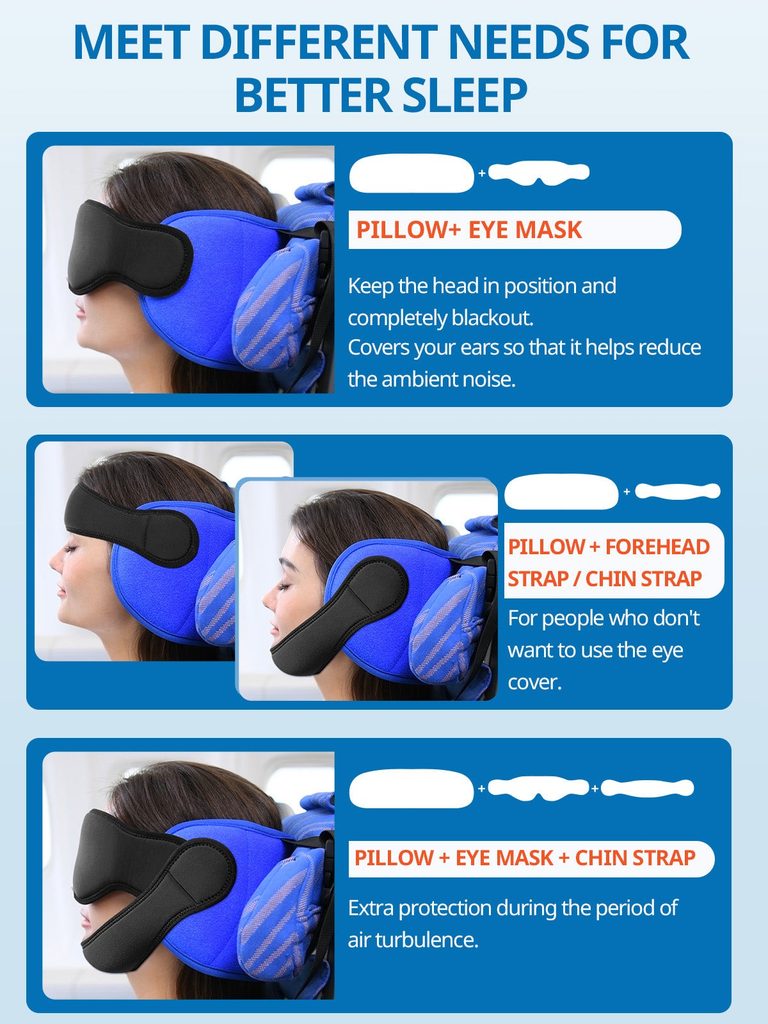
It is worth testing the fit at home or during a short trip before relying on it for a long-haul flight. A few minutes of adjustment ahead of time means you will already know how it feels and can settle in quickly once you are on board, rather than fiddling with straps mid-flight.
Matching Support to How You Actually Sleep
Forward head drop is a distinct problem that calls for a distinct solution, and no amount of side support will fix it if that is not where your head naturally falls. Recognizing your own sleep pattern is the first step, and choosing a pillow built with actual chin support is what closes the gap that standard designs leave open.
If you have tried multiple travel pillows and still wake up with a sore, forward-bent neck, the issue is likely the shape of the support rather than the effort you have put into finding a solution. A chin-focused design addresses the specific mechanics of how your head moves, and that targeted fix tends to matter far more than switching between generic pillow shapes.