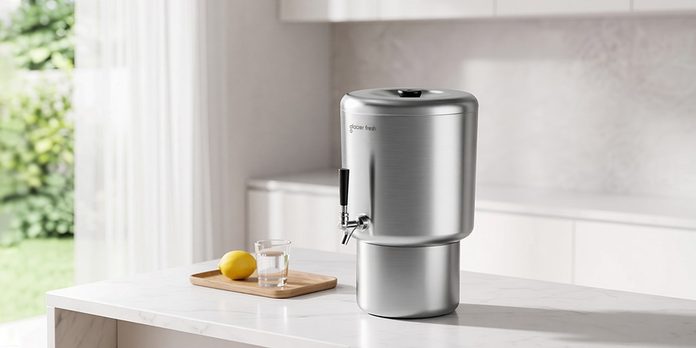

Clean drinking water is an important part of everyday household life. From preparing morning tea to filling reusable bottles, families depend on convenient access to water throughout the day. Although municipal water supplies are treated, some households prefer additional filtration to address concerns about taste, odor, or particulate contaminants. Gravity-fed filtration offers a practical option for people who want a simple countertop solution.
Convenient Water Filtration Without Electricity
One of the main advantages of the gravity water filter system is its straightforward operating process. Water is added to an upper chamber and gradually moves through filtration elements into a lower storage compartment. The system uses gravity rather than an electric pump, making it convenient for locations where a powered appliance may not be necessary or practical.
A gravity water filter system can fit into a household routine without requiring a permanent connection to the plumbing. Many countertop models are designed to be assembled and used on a stable surface. Users can fill the upper chamber and allow sufficient time for the filtration process to finish before dispensing water.
Because the system does not depend on electricity, it may also provide additional convenience during temporary power interruptions. However, the suitability of the system still depends on the source water and the contaminants the filter is designed to reduce.
A Practical Addition to the Kitchen
A dedicated filtration unit can make drinking water readily accessible to family members. Instead of filling a small pitcher several times a day, households can choose a reservoir with a capacity that matches their needs.
When selecting a model, consider the number of people who will use it, daily water consumption, and available countertop space. The position of the dispensing tap and the ease of refilling the upper chamber can also affect everyday convenience.
Some systems feature stainless-steel housings that provide a simple, durable-looking design. Buyers should compare construction quality, cleaning requirements, and replacement-filter availability alongside appearance.
Understanding Water Filtration Performance
Not all water filters perform the same function. Certain filtration materials may improve taste and odor, while other designs are intended to reduce specific chemicals, particles, or other substances. A product’s actual performance depends on its filtration technology and testing.
Before purchasing a gravity fed water filter, review the manufacturer’s documented claims and any relevant independent certifications. Check which contaminants have been tested and under what conditions. Do not assume that a filter designed to improve taste will also remove bacteria, viruses, dissolved salts, or every heavy metal.
If your water comes from a private well or another source with uncertain quality, appropriate testing can help identify the treatment required. A filter should never be selected based solely on broad claims about producing pure or completely safe water.
Simple Maintenance and Filter Replacement
Regular cleaning helps keep a gravity filtration system in good condition. Follow the manufacturer’s instructions for washing the chambers, cleaning the dispensing components, and preparing replacement filters.
The recommended replacement interval depends on the filter model, water quality, and amount of water processed. Some filters may experience reduced flow when their surfaces accumulate particles, while others may reach their recommended service life without an obvious change in appearance.
Use compatible replacement elements and inspect the unit periodically for leaks or damage. Keeping the storage chamber and tap clean is also important because filtered water can become contaminated through poor handling or inadequate cleaning.
Considering Long-Term Value
The cost of a filtration system includes more than the initial purchase. Replacement filters, routine maintenance, and the expected service life of the equipment should also be considered.
Compare the price and availability of replacement elements before choosing a product. A model that appears affordable initially may be less convenient if its replacement filters are expensive or difficult to obtain.
It is also useful to consider how much water the system can store and process. Choosing an appropriate capacity can help avoid unnecessary refilling while preventing the purchase of a unit that is larger than the household requires.
Conclusion
A gravity-based filtration system can offer convenient water storage, straightforward operation, and independence from electrical power. A gravity fed water filter may suit households seeking a countertop option, while a gravity fed water filter can help address particular water-quality concerns when its capabilities are verified.
Before making a purchase, compare filtration performance, reservoir capacity, maintenance needs, and replacement costs. Choosing a system based on documented evidence and the actual characteristics of your water can help you make a more informed decision for your home.