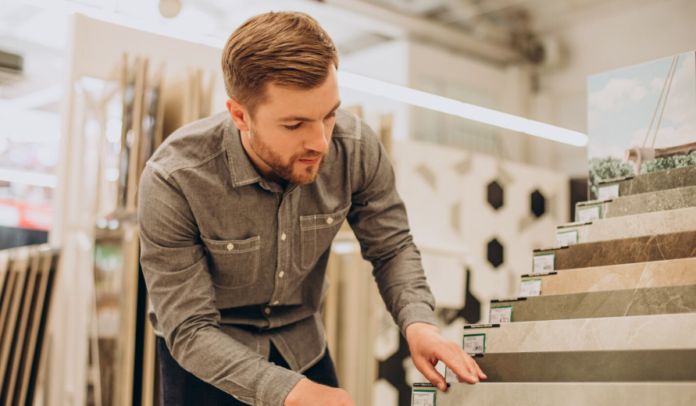

Tiles are the one part of a renovation you cannot swap easily. When glued in place, one lives with them for many years indeed. According to a 2026 Melbourne price guide, laying tile labor costs approximately $37 to $94 per square meter – on top of your standard flooring tiles. Tiles Melbourne shoppers can browse range from cheap to fancy, so settle your budget, quantities, and floor condition before you fall in love with a sample.
How much will the job really cost?
Tile prices really draw the spotlight – but labor and preparation work quite frequently costs even more. These are 2026 Melbourne labour ranges from one cost guide, GST included.
| Job | Cost per square metre |
|---|---|
| Standard floor tiling | $37 to $94 |
| Wall tiling | $42 to $105 |
| Waterproofing wet areas | $37 to $84 |
| Removing old tiles | $21 to $58 |
Waterproofing represents an additional itemized cost itself. Some other guides give even higher figures – so consider these your starting points rather than guarantees. An affordable tile installed over an excellent base outperforms an expensive tile placed on a poor base. Place most of your budget in preparation work itself. Tile stockpiles sit on top with prices varying approximately from $20 to $180 per square meter based upon the material used.
How many extra tiles should you order?
Order 10% more than your measurements – even after double-checking them! Cuts and breakages eat tiles. For herringbone or diagonal layouts, go to 15%, because the cuts are fiddly. Your floor measures 9 square meters – and you’ve picked 300mm tiles. That’s 100 tiles, so get about 110. Really let your tiler calculate the quantity for you, then check it against what you calculated before you pay. Get all materials in one go, because tiles are manufactured in lots – and a subsequent batch might have a very slightly different colouring. Hold onto a spare box from the initial lot in your garage. When a tile breaks after three years time, you’ll be grateful indeed.
What should you read on the tile box?
The box is a spec sheet in disguise. Everyone reads the price. Few read the rest. Look for these.
- Slip rating: wet floors need P3 or higher on the pendulum test.
- Rectified: the edges are cut square and exact, so grout lines can be as thin as 2 or 3 millimetres.
- Real size: a tile sold as 600 by 600 millimetres may measure 598 by 598.
- Shade code: V1 means every tile looks alike. V4 means a random mix on purpose.
- Thickness: tile and glue raise the floor, so check how it meets the hallway and the doors.
- Finish: polished tiles look great but get slippery when wet, so keep them for dry rooms.
Is your old floor ready for tiles?
Melbourne has lots of old houses, and old timber floors flex. Tile does not. Building experts warn that tiled floors crack when the floor under them moves. Here is a quick test. The tiler’s plan for the base tells you more about the real price than the per square metre rate does. A cost guide says levelling a rough floor adds $10 to $30 per square metre, on top of the tiles. Boring? Yes, totally. It is also the cheapest insurance in the whole job, by far.