

The Strategic Flywheel: Integrating Corporate Growth and Networking
Many businesses aim for growth. But often, the path feels unclear. We know that simply collecting business cards is not enough. True corporate growth comes from strategic connections. These connections build lasting relationships and open new doors for your company.
This article shows you how to turn networking into a powerful growth engine. We will explore a “flywheel” model for accelerated expansion. This model makes networking a key part of your business strategy. This begins with strong strategic planning and brand development.
We will also cover how to approach networking with a “value-first” mindset. This helps build trust and drives referrals. You will learn how to pick the best channels for your efforts. We will also detail how to use structured follow-up systems. Our goal is to help you build a network that truly fuels your company’s success.
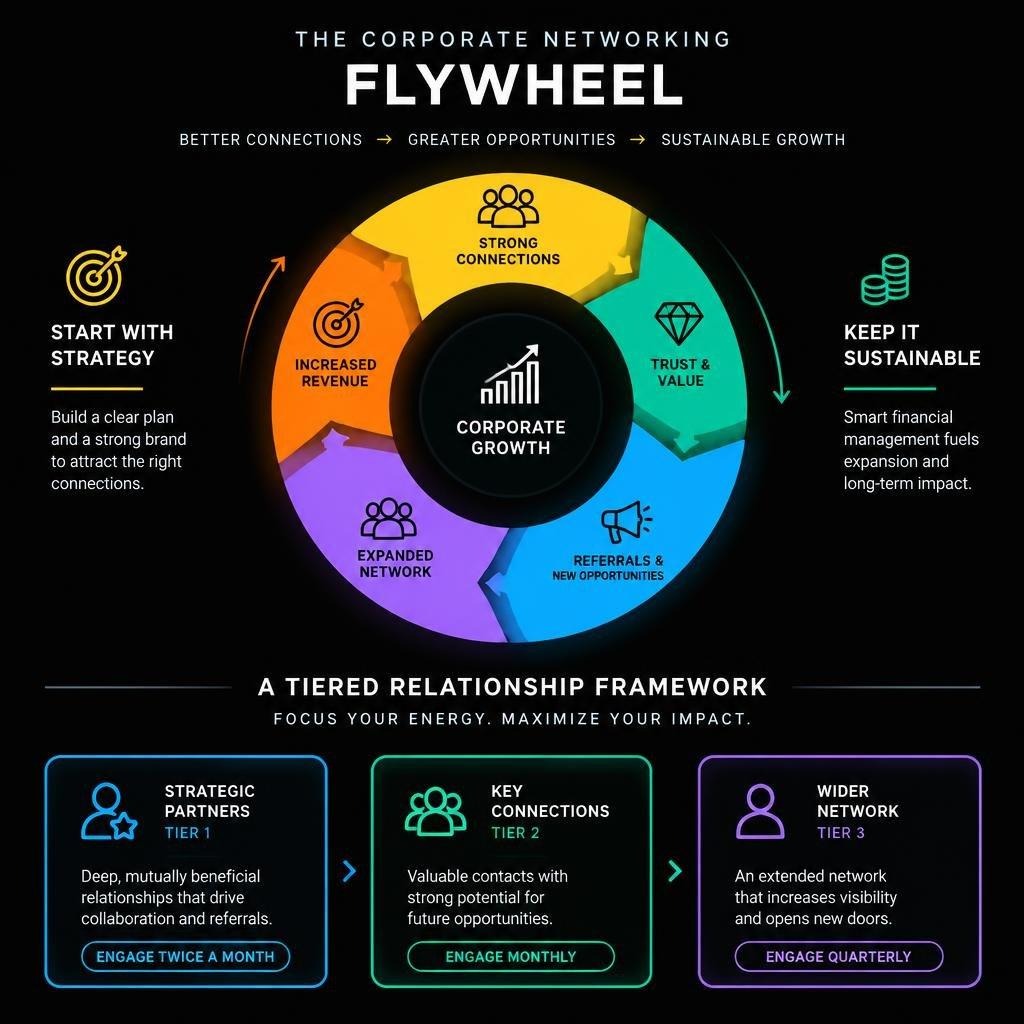
We believe that for corporate growth and networking to be truly effective, it must operate like a flywheel. A flywheel gains momentum with each rotation, creating a compounding effect that accelerates growth. In this model, every successful connection, every value-first interaction, and every referral strengthens the network, leading to more opportunities, greater brand alignment, and ultimately, enhanced revenue. This isn’t about one-off transactions; it’s about building a self-reinforcing system where satisfied members or partners generate more referrals, attracting new, high-quality connections, and so on.
Consider the example of Corporate Connections Mexico, which has set an ambitious “Big Hairy Audacious Goal” (BHAG) to represent 1% of Mexico’s GDP collectively within its chapters, equating to approximately $17 billion. Mexico, currently the world’s 13th largest economy at around $1.7 trillion, offers significant growth potential. Their strategy isn’t just about adding members; it’s about building a high-satisfaction, referral-driven flywheel. This approach emphasizes that member satisfaction is paramount, as engaged members are the engines of future referrals and growth. By focusing on a clear brand promise and shared values, they ensure that the network remains high-quality and productive.
Optimizing cash flow is another critical component of this flywheel. Corporate Connections, for instance, charges an annual membership fee of $10,000, paid upfront. This strategy provides a stable influx of capital, which can then be reinvested into expanding operations, improving member services, and further strengthening the network. Shifting the fiscal year to align with peak renewal periods can further optimize this upfront capital, ensuring resources are available when most needed for expansion and member support. This deliberate financial management, combined with a focus on strategic planning and brand development, creates a robust foundation for the networking flywheel to spin faster and generate compound growth. The sheer scale of BNI’s success, having helped 2.28 million businesses garner over $228 billion USD in revenue since its inception in 1985, underscores the power of this model when executed effectively.
Structuring Tiered Relationship Frameworks
An effective networking strategy moves beyond a flat list of contacts to a dynamic, tiered relationship framework. This approach distinguishes an effective corporate networking strategy from a mere waste of time by prioritizing attention and effort where it yields the most impact. We advocate for a three-tier model:
- Strategic Partners (Tier 1): These are individuals or organizations with whom you have deep, mutually beneficial relationships. They are often referral sources, collaborators, or key influencers. These relationships require proactive engagement, perhaps twice a month, including direct outreach, shared projects, or personal check-ins.
- Active Network (Tier 2): These contacts are valuable, but the relationship is less intensive. They might be past clients, industry peers, or potential future partners. Regular engagement, such as a monthly touchpoint via personalized email or a quick call, helps maintain these connections.
- Warm Contacts (Tier 3): This tier includes a broader group of acquaintances, event connections, or social media followers. While less frequent, quarterly check-ins or value-add content sharing can keep these relationships warm, ready to be elevated when an opportunity arises.
To manage this effectively, a robust CRM system is essential. It allows for a multi-dimensional tagging taxonomy, categorizing contacts by geography, service offering, ideal client type, industry, and role. This granular tagging enables quick and relevant introductions, transforming your network into a powerful matchmaking tool. By systematically segmenting and nurturing relationships based on their strategic importance, organizations can optimize their networking efforts, ensuring that valuable connections don’t go cold and that the right amount of attention is allocated to maximize return.
Scaling Franchise and Multi-Market Chapter Models
Scaling a networking organization, particularly one based on franchise or chapter models, presents unique challenges and opportunities. The goal is to expand geographically while maintaining the quality and integrity of the network. Corporate Connections Mexico, for example, aims to expand to 10 major cities in Mexico by 2028, tripling its size. This ambitious growth requires a clear “critical number” to track progress, such as the number of memberships outside the core city, as a key performance indicator.
A critical aspect of scaling is the rigorous screening process for new members. Corporate Connections targets firms with annual revenue of $5 million or more, differentiating itself from networks focused on smaller businesses. This ensures a high-quality, engaged network where members are genuinely capable of generating significant referrals and business for one another. The screening process goes beyond professional qualifications to include cultural fit, ensuring alignment with core values and the “Givers Gain” philosophy, which is central to many successful networking models like BNI. BNI itself is a testament to scalable networking, operating in 77 countries with over 11,800 chapters and 355,000 member-businesses. In Q2 2026 alone, BNI members generated over 4 million referrals globally, demonstrating the immense power of a well-scaled network.
Localized governance, often through peer councils or national member councils, plays a crucial role in maintaining quality and relevance. These councils provide decentralized input on prospective members and ensure that the network remains attuned to local market dynamics. By empowering local leadership and maintaining strict entry criteria, organizations can scale their networking models across multiple geographies without diluting the quality or effectiveness of the network. This strategic expansion creates a powerful ecosystem of high-value connections, driving collective corporate growth across diverse markets.
Systematic Execution: From Value-First Outreach to Pipeline Conversion
Effective corporate networking is not about chance encounters; it’s about systematic execution. We shift from merely collecting contacts to intentionally cultivating relationships that drive pipeline conversion. This begins with a “value-first” engagement approach. Instead of leading with a sales pitch, we prioritize offering introductions, sharing resources, or providing insights without immediate expectation of return. This builds trust signals, demonstrating genuine interest and a willingness to contribute before asking for anything. Research indicates that 92% of B2B buyers prefer engaging with trusted advisors over vendors, highlighting the importance of this approach.
This value-first mindset naturally leads to warm introductions and a higher quality of referrals. When you consistently provide value, your network becomes a powerful engine for reciprocal giving. We advocate for a 3:1 giving ratio – for every referral or introduction you seek, aim to give three. This creates a culture of generosity that reinforces the network’s strength. For instance, a $32,000 deal was closed after a live introduction during a “Connection Blitz” event, showcasing the direct impact of such practices.
Integrating networking with outbound efforts further amplifies its impact. Instead of cold outreach, leverage your network to secure warm introductions to target prospects. This significantly reduces the sales cycle, potentially saving up to 40 days per deal compared to traditional cold outreach. By tracking these interactions within a relationship management workflow, organizations can clearly see the progression from initial connection to pipeline opportunity. This systematic approach transforms networking from an ad-hoc activity into a predictable, revenue-generating process.
Aligning Leadership Objectives for Corporate Growth and Networking
For networking to be truly impactful, it must be aligned with clear leadership objectives and corporate growth goals. This means moving beyond generic networking to a highly targeted approach. The first step is to develop clear target lists. Before attending any event or engaging online, we identify 10-20 named prospects per quarter. These lists are built using various sources: event attendee lists, LinkedIn Sales Navigator, industry databases, and mutual connections. This precision ensures that networking efforts are directed towards individuals who can genuinely contribute to or benefit from your strategic objectives.
Once target lists are established, defining specific networking objectives for each interaction is crucial. This could involve seeking an introduction to a specific decision-maker, gathering market intelligence, or exploring a potential partnership. A powerful tool for initial meetings is the “five-question framework”:
- What do you do and who do you serve?
- How did you get here?
- Where are you going?
- What challenges are in your way?
- What would be a good connection for you?
This framework encourages a value-first conversation, focusing on understanding the other person’s needs before discussing your own. For organizations targeting enterprise buyers, this structured approach is vital. It allows for account prioritization, ensuring that efforts are concentrated on high-value prospects and decision-makers. By aligning networking activities with these clear objectives, organizations can ensure every interaction contributes meaningfully to their corporate growth strategy.
Operationalizing High-ROI Networking Channels
Choosing the right channels is paramount for maximizing the return on investment (ROI) from networking efforts. Not all platforms or events are created equal, and a strategic selection ensures that time and resources are spent where ideal clients and partners congregate.
For B2B organizations, LinkedIn is non-negotiable. It serves as a digital identity, a research tool, and a direct communication channel. Maintaining a consistent, non-promotional presence, engaging with target contacts’ content, and publishing valuable insights establishes LinkedIn authority. This platform is often the first point of contact and validation for potential partners and clients.
Beyond digital, in-person events and conferences remain highly valuable. However, the strategy here is critical: research attendee lists beforehand, schedule pre-event meetings, and consider volunteering. Volunteering at a conference, for example, can lead to three times more valuable meetings than simply attending, as it positions you as a contributor and facilitates introductions.
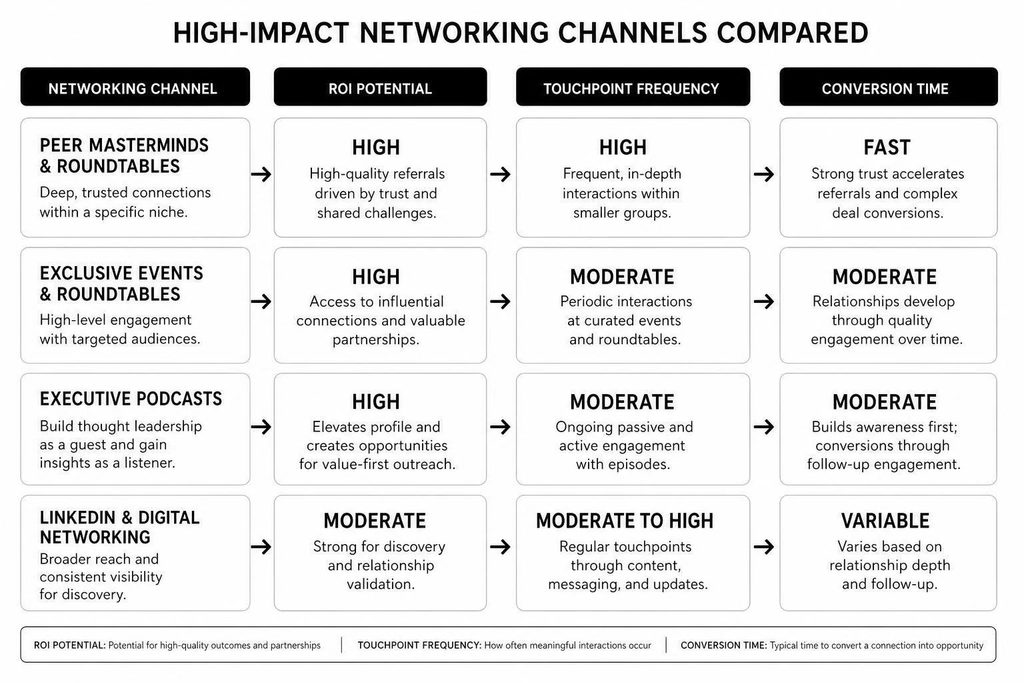
Peer masterminds and industry roundtables offer deep, trusted connections within a specific niche. These smaller, curated groups foster collaboration and often lead to high-quality referrals due to shared challenges and mutual respect. Similarly, participating in or hosting exclusive networking events can create unique opportunities for high-level engagement. For those seeking to connect with influential figures and thought leaders, attending or speaking at such gatherings can be invaluable. We recognize the importance of these platforms and often recommend our clients explore exclusive networking events that align with their strategic goals.
Finally, executive podcasts, both as guests and listeners, provide a powerful channel for thought leadership and connection. Being a guest elevates your profile, while listening allows you to understand the perspectives of potential partners and identify opportunities for value-first outreach. By strategically combining these high-ROI channels, organizations can build a diverse and robust network that consistently fuels corporate growth.
Operationalizing Relationship Nurturing and Retention Architecture
Building initial connections is only the first step; the true value of corporate networking lies in nurturing and retaining those relationships over time. This requires a structured architecture that ensures consistent engagement and prevents valuable contacts from going cold. Our approach involves systematic follow-up cadences and leveraging CRM tools to automate and personalize interactions.
A common pitfall is the lack of a clear follow-up plan after an initial meeting. We recommend a multi-stage cadence: a personalized follow-up within 24 hours, a value-add touchpoint within one week (e.g., sharing a relevant article or introduction), and then integrating them into a longer-term nurture sequence. A highly effective strategy is the “six-week nurture email.” This simple, personalized check-in email, sent every six weeks to your entire CRM, can yield response rates as high as 60%. The key is to keep it genuinely value-first, asking how they’re doing or if there’s anything you can help with, rather than pitching.
CRM tools are indispensable for operationalizing this. Automated tagging, bidirectional email sync, and scheduled reminders ensure that no contact is forgotten. Tagging contacts by attributes like “referral source,” “potential partner,” or “industry influencer” allows for highly targeted communication. Furthermore, tracking relationship health within the CRM—monitoring engagement levels, response rates, and introduction ratios—provides valuable insights into the strength and activity of your network. This structured approach to nurturing and retention ensures that initial connections evolve into lasting, revenue-generating relationships, forming the backbone of sustainable corporate growth.
Driving Accountability Through Critical Numbers and Gamification
To ensure networking efforts translate into tangible corporate growth, accountability and motivation are key. We employ “critical numbers” and gamification techniques to keep teams focused and engaged. A critical number is a single, measurable metric that directly reflects a core growth objective. For Corporate Connections Mexico, a critical number is memberships outside Mexico City, driving their expansion strategy. This provides a clear, quantifiable target that aligns everyone’s efforts.
Gamification transforms routine networking tasks into engaging challenges. Obregon’s team at Corporate Connections Mexico, for instance, uses a “Mario Party”-style game to incentivize specific behaviors. Employees earn “stars” for meeting members in person, attending events, or securing referrals. These points can then be exchanged for bonuses or recognition, creating a fun, competitive environment that reinforces desired actions. This approach is particularly effective for team incentives, as it fosters collaboration while driving individual performance.
Performance benchmarks are established for various networking activities, such as the number of new connections made, value-first introductions given, or referrals generated. These benchmarks, combined with quarterly themes that align with broader corporate objectives, ensure that networking remains a strategic priority. By making progress visible and rewarding consistent effort, gamification techniques keep teams motivated and focused on achieving their networking and growth goals, turning what could be perceived as a soft skill into a quantifiable, results-driven activity.
Channel Performance and Relationship Model Comparison
Understanding the performance of different networking channels is crucial for optimizing corporate growth strategies. Not all channels deliver the same ROI, touchpoint frequency, or conversion time, and a strategic mix is often most effective.
For instance, highly structured, in-person peer groups or masterminds, while requiring significant time investment, often yield the highest stakeholder trust and fastest conversion times for complex deals due to the deep relationships fostered. LinkedIn, on the other hand, offers broad reach and consistent visibility, with a moderate touchpoint frequency, and is excellent for initial discovery and relationship validation, though conversion time can vary. Exclusive events or industry roundtables provide high-quality, targeted connections with a moderate frequency, often leading to valuable partnerships.
We can illustrate this with a comparison:
- Channel Velocity: This refers to how quickly a connection made on a channel can translate into a meaningful business opportunity. Direct referrals from trusted sources typically have the highest velocity.
- Stakeholder Trust: Channels that foster deeper, more personal interactions (e.g., peer groups, one-on-one meetings) naturally build higher levels of trust.
- Partner Ecosystems: Some channels are inherently better for building broader partner ecosystems, such as industry associations or digital platforms that facilitate collaboration.
By analyzing channel performance against these metrics, organizations can strategically allocate resources, focusing on channels that align best with their specific growth objectives and target audience. This data-driven approach ensures that networking efforts are not just widespread, but also deeply impactful, contributing directly to a predictable pipeline and sustained growth.
Measuring and Benchmarking Network-Driven Enterprise Expansion
To truly understand the impact of networking on corporate growth, robust measurement and benchmarking are essential. We move beyond anecdotal evidence to quantifiable metrics that demonstrate ROI and inform strategic adjustments. Key indicators include member retention rates within networking programs, referral velocity (the speed and volume of referrals generated), and the reduction in customer acquisition cost (CAC) for network-derived leads.
For organizations like BNI, the numbers speak for themselves. With over 4 million referrals generated globally in Q2 2026 alone, and a track record of helping businesses garner over $228 billion USD in revenue since 1985, the sheer volume of activity provides a strong benchmark. However, beyond raw numbers, we also consider the quality of referrals and the resulting deal cycle reduction. Referrals sourced through a trusted network can shorten the sales cycle by up to 40 days, significantly impacting efficiency and revenue acceleration.
Furthermore, member satisfaction, often measured through Net Promoter Score (NPS) or similar surveys, is a critical health indicator. High satisfaction correlates with higher retention and more active participation, which in turn fuels the networking flywheel. For chapter-based models, metrics like revenue per chapter or the collective GDP contribution (as Corporate Connections Mexico aims for 1% of Mexico’s GDP) provide macro-level benchmarks. By continuously tracking these metrics, organizations can assess the health of their networking programs, identify areas for improvement, and demonstrate the direct financial impact of their relationship-building efforts.
Measuring the Financial ROI of Corporate Growth and Networking
The goal of corporate networking is to drive financial returns. Measuring the financial ROI requires a clear attribution model that links networking activities directly to revenue. This involves tracking the attributed pipeline value that originates from network connections, the close rate of referred deals, and the acceleration of the sales cycle.
A value-first approach, where giving precedes asking, inherently drives referrals and business development because it establishes trust and reciprocity. When you consistently provide value, you become a trusted resource, making others more inclined to refer business to you. This trust velocity reduces friction in the sales process, leading to pre-qualified referrals that often have a higher close rate and a shorter sales cycle. The 40-day acceleration in deal closure for network-derived leads is a powerful example of this financial impact.
Beyond immediate sales, we also consider the multi-year Lifetime Value (LTV) of clients acquired through networking. These relationships often lead to repeat business, upsells, and further referrals, contributing significantly to long-term margin expansion. By diligently tracking these metrics – from the initial connection to the final revenue attribution – organizations can clearly demonstrate how their networking investments translate into measurable financial success, validating the strategic importance of a relationship-centric growth model.
Frequently Asked Questions About Corporate Growth and Networking
We often encounter common questions from executives and teams looking to optimize their networking strategies for enterprise growth. Here, we address some of the most pressing inquiries.
What distinguishes an effective corporate networking strategy from traditional business development?
An effective corporate networking strategy fundamentally differs from traditional, often transactional, business development by prioritizing relational leverage over direct sales. Traditional business development frequently focuses on cold outreach, lead generation funnels, and immediate conversions, which can introduce transactional friction. In contrast, strategic networking cultivates long-term relationships built on trust and mutual value. It aims to become a trusted advisor within your network, leading to warm introductions and pre-qualified referrals. This approach creates a compounding effect, where relationship capital grows over time, accelerating revenue and providing a more predictable pipeline, rather than relying on high-volume, low-conversion tactics.
How does a value-first networking model accelerate enterprise sales cycles?
A value-first networking model significantly accelerates enterprise sales cycles by reducing friction and building trust early in the process. Instead of pushing a product or service, the “give-first” framework focuses on understanding the needs of others, offering assistance, sharing insights, or making relevant introductions without immediate expectation of return. This approach establishes credibility and goodwill, transforming initial interactions into trusted relationships. When a referral or introduction eventually comes, it arrives with inherent trust and a pre-qualified context, effectively bypassing many early-stage sales hurdles. This trust velocity means prospects are more receptive, diligence is often shortened, and the overall sales cycle can be accelerated by as much as 40 days, as seen in many B2B contexts.
What core metrics best determine the health of an organizational networking ecosystem?
To accurately gauge the health of an organizational networking ecosystem, we look beyond simple connection counts to a set of core metrics that reflect engagement, value generation, and sustainability. Key indicators include nurture response rates (e.g., the 60% response rate on a six-week nurture email), introduction ratios (the balance between introductions given and received, ideally a 3:1 giving ratio), and the achievement of critical number milestones (specific, measurable targets like new memberships in target geographies). Additionally, chapter retention benchmarks, referral velocity, and member satisfaction scores (like NPS) provide crucial insights. These metrics collectively paint a comprehensive picture of whether the network is active, valuable, and contributing effectively to corporate expansion.
Conclusion
We’ve explored how to transform corporate networking from a series of casual encounters into a powerful, systematic engine for growth. By adopting a strategic flywheel model, organizations can create a self-reinforcing cycle where value-first engagement, rigorous member screening, and structured follow-up systems drive compounding returns. The success stories of BNI and Corporate Connections Mexico underscore the immense potential of this approach, demonstrating how clear objectives, gamified incentives, and a focus on high-quality relationships can lead to significant revenue generation and market expansion.
From structuring tiered relationship frameworks and operationalizing high-ROI channels to leveraging critical numbers and robust CRM tools, every component plays a vital role in building a predictable pipeline. It is the cultivation of relationship equity and the strategic integration of networking into the core business strategy that enables sustainable scale and long-term commercial success. By embracing these principles, we can ensure that our networking efforts not only build connections but also solidify the foundation for enduring corporate growth.