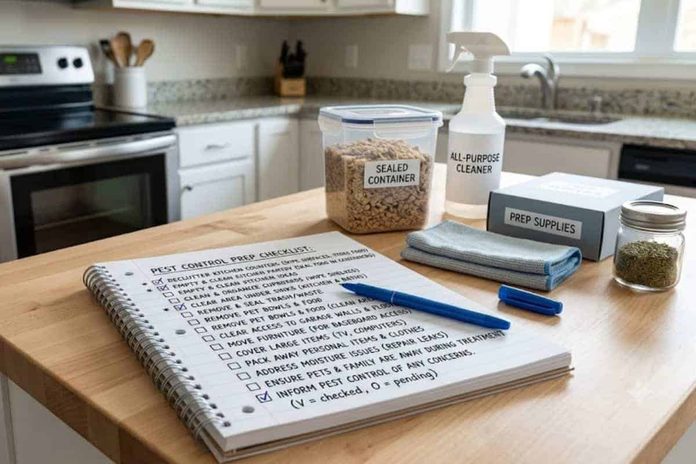

A good treatment starts before anyone opens a sprayer. Small steps you take in the days leading up to a service visit can make an immediate difference in how well technicians find and address ants, roaches, spiders, mice, and other pests. This preparation is not about using stronger chemicals or buying more gadgets. It is about making your home easier to inspect, reducing the food, water, and shelter that keep pests comfortable, and sealing the gaps that let them in. Here is a practical, room-to-room checklist any Michigan homeowner can follow to help a professional inspection and treatment work cleanly and quickly.
- Pinpoint activity by matching what you see with where you see it.
Start with a flashlight and a few sticky monitors (often called glue boards). Place them at baseboard edges behind a trash can, under a sink, near the water heater, and next to the garage entry. Check for frass (fine sawdust from wood-boring pests), tiny dark droppings, smear marks along baseboards, and shed wings on windowsills. Note the time you see movement; German cockroaches are most active at night near warm motors, while odorous house ants often trail along kitchen counters during the day. If you plan to schedule an inspection with a local provider such as Patriot Pest Control of Lansing, a simple map of where monitors catch activity can speed decision-making on treatment placement.
Two quick examples show why location matters. If you find winged insects losing their wings on a basement sill plate and pencil-thin mud tubes along the foundation, that pattern points to a termite issue that requires structural attention, not just a surface spray. By contrast, a steady line of small brown ants traveling from a south-facing window to a sugar spill on the counter suggests an ant colony foraging from outdoors, where targeted exterior baiting and sealing will be the focus.
- Remove moisture that keeps pests comfortable.
Fix the easy leaks first. Tighten a weeping P-trap under the kitchen sink, replace a cracked dishwasher drain hose, and wrap sweating HVAC lines so condensation doesn’t drip onto subflooring. Run a dehumidifier in a damp basement or crawlspace, and make sure the sump lid is closed. Outside, add downspout extenders so water discharges away from the foundation, keep mulch a couple of inches below siding, and move stacked firewood off the ground and away from the house. Cockroaches, silverfish, camel crickets, and carpenter ants all thrive where humidity is high, and wood stays damp.
Consider a common scenario: a first-floor powder room with a slow leak at the toilet’s supply valve has warped the baseboard. You now see silverfish at night and a few carpenter ants in spring. Drying the area, replacing the damaged trim, and correcting the leak removes the conditions that attract both moisture-loving insects and wood-tunneling ants. Treating without fixing the drip keeps the moisture beacon on, and the problem returns.
- Seal entry points without creating new problems
Exclusion is more than foam in a hole. Add door sweeps to exterior doors so light does not show underneath, and replace brittle weatherstripping around frames. Seal hairline cracks where the foundation meets the sill with a quality sealant. Around utility penetrations, pack copper mesh or stainless steel wool before sealing with caulk; rodents can chew through ordinary foam. At dryer vents and gable vents, repair or replace damaged screens and confirm backdraft flappers close fully. For larger gaps, fasten hardware cloth with screws and washers so it cannot be pushed aside.
Keep this trade-off in mind: sealing everything indiscriminately can trap moisture where it needs to escape. Do not fill brick weep holes or block attic soffit vents; instead, use purpose-made weep inserts or fine stainless mesh that stops insects while allowing airflow. Similarly, avoid sealing over an active roof leak from inside the attic. Close gaps that let pests pass, but preserve designed drainage and ventilation so you do not create a future mold or rot issue.
- Make interiors less inviting right before service.
Clean strategically rather than perfectly. Vacuum crumbs from under the stove and refrigerator, wipe sticky spills inside cabinets, and store pantry items like cereal and pet food in sealed canisters. Reduce clutter in closets and under beds so technicians can inspect baseboards and treat voids. For suspected bed bugs, launder bedding and bag it clean, vacuum mattress seams and the bed frame, and pull the bed a few inches off the wall to expose the perimeter. Empty the area under sinks so you can apply traps, baits, or dusts to plumbing penetrations and wall voids.
A common mistake is using total-release foggers. Foggers rarely reach cockroaches packed deep inside wall joints or bed bugs in furniture seams, and they can scatter pests to adjacent rooms while leaving residue where you don’t want it. Instead, keep monitors in place and make access easy. Professionals can then use targeted methods such as baits, crack-and-crevice applications, or insect growth regulators where they will do the most good.
- Document details and time the visit for smooth access
Photos help. Snap close-ups of droppings on the pantry shelf, a mud tube on the joist, or gnaw marks behind the washing machine, and note the day and time. Unlock fences and sheds for exterior inspection, clear a path to the attic hatch, and move storage bins a few inches away from basement walls. Crate pets or arrange boarding during treatment; cover aquariums and turn off air pumps if you will use interior products nearby. Make sure the dishwasher is empty, and countertops are reachable so bait placements will not be disturbed immediately after a visit.
After the appointment, follow any written instructions you receive. Keep people and pets off treated surfaces until they are dry, and avoid mopping baseboards or heavy washing of treated exterior foundations right away, so any residual barrier can do its job. Continue to use a few glue boards in the weeks after service; a declining catch rate is a useful sign that corrective steps are working. If monitors still show steady activity in a particular room, that focused feedback helps guide the next follow-up.
Seasonal timing and simple habits that keep gains from slipping
Michigan homes see cycles. In late summer and fall, mice and spiders look for warm overwintering spots; in spring, ants expand foraging after warm rains. Plan exclusion tasks like door sweeps and utility sealing before the first cold snap, and refresh exterior caulk when temperatures are mild. Inside, make small habits routine: wipe the pet’s water dish area nightly, run the garbage disposal with a little soap and hot water, and rotate pantry goods so forgotten bags do not become insect buffets. These habits do not replace professional work, but they extend its impact between visits.
Preparation does not have to be complicated. By documenting where activity happens, removing moisture, sealing practical gaps, simplifying interiors for access, and planning your timing, you give any technician a clearer picture and a cleaner canvas. The result is typically fewer surprises, more precise placements, and less disruption at home. Whether you are dealing with a mouse in the garage or ants in the kitchen, use this checklist to get your house ready, then let a trained pro match targeted methods to what your inspection revealed.
<iframe src=”https://www.google.com/maps/embed?pb=!1m18!1m12!1m3!1d4453.958687813197!2d-84.5921841!3d42.7219294!2m3!1f0!2f0!3f0!3m2!1i1024!2i768!4f13.1!3m3!1m2!1s0x8822c120a24cf809%3A0x39f473c6b1f6a761!2sPatriot%20Pest%20Control!5e1!3m2!1sen!2s!4v1785322586555!5m2!1sen!2s” width=”600″ height=”450″ style=”border:0;” allowfullscreen=”” loading=”lazy” referrerpolicy=”strict-origin-when-cross-origin”></iframe>